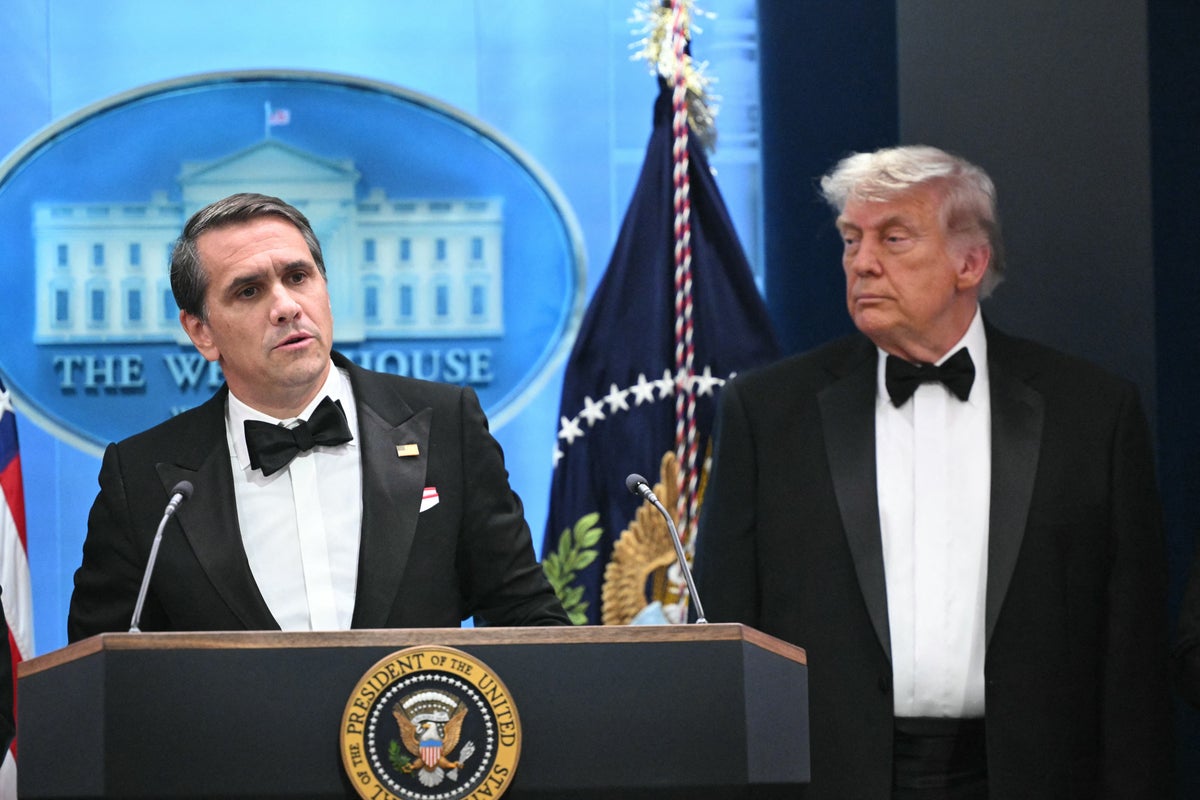
Todd Blanche is about to face a grueling political trial that will reshape the American legal system. As he steps before the Senate Judiciary Committee for his confirmation hearings, the stakes extend far beyond whether a former defense lawyer can secure a Cabinet post. The real conflict centers on a fundamental question of allegiance. Critics argue that Blanche has systematically converted the Department of Justice from an independent arbiter of the law into a protective shield and an enforcement arm for the White House.
His ascent has been rapid. He transitioned from defending Donald Trump in a Manhattan courtroom to managing the daily machinery of federal law enforcement as Deputy Attorney General, and then took over as Acting Attorney General following the sudden dismissal of Pam Bondi. Now, his nomination for the permanent role of Attorney General faces fierce resistance. The opposition is not merely partisan theater. It is driven by serious, documented concerns regarding the mishandling of the Jeffrey Epstein files, the sudden termination of investigators linked to January 6, and unprecedented IRS settlements that benefit the president.
The Epstein Files Betrayal
The most emotionally charged and legally damaging controversy surrounding Blanche involves the Department of Justice’s handling of records connected to convicted sex offender Jeffrey Epstein. Under the Epstein Files Transparency Act, the department was legally mandated to review and release hundreds of thousands of documents. What actually happened under Blanche’s watch has drawn condemnation from survivors and lawmakers alike.
When the files were released, a pattern emerged. The personal, unredacted information of the victims was exposed to the public, while the identities of wealthy and powerful men accused of participating in or enabling the abuse were heavily obscured.
The fallout was immediate. Survivors stated that this was not a technical oversight but a deliberate effort to shield influential figures while exposing the vulnerable. The family of Virginia Giuffre, along with early survivors like Jess Michaels and Liz Stein, sent formal statements to the Senate Judiciary Committee strongly opposing Blanche’s confirmation. They pointed out a glaring contradiction in his record. While Blanche claimed to have met with survivors to guide the process, the victims' families stated they were unaware of a single survivor he actually consulted.
The problem deepens when looking at what was left out of the public record. Investigative leads provided by victims to the FBI years ago were reportedly omitted or ignored, prompting survivors to submit specific questions for senators to demand answers to during the hearings. Reports from organizations like the New York City Bar Association indicate that Blanche held undisclosed meetings in the White House Situation Room with senior staff. The purpose of those meetings was allegedly to manage the political fallout and protect the administration from any compromising disclosures hidden within the files.
Blanche has publicly dismissed the controversy. He claimed the department completed its review and found insufficient evidence to pursue further charges, asserting that the Epstein files should not be part of any future department business. For survivors, that position looks like an door slammed in the face of accountability.
Purges and Retaliation Over January 6
The internal restructuring of the department under Blanche has raised alarms throughout the federal legal establishment. Since moving into leadership, Blanche has overseen a quiet but thorough reassignment of personnel. Lawyers, career prosecutors, and investigators who were deeply involved in the January 6 Capitol insurrection investigations have been systematically removed from their positions or pushed out of the department entirely.
The institutional memory of the department is being erased. Career officials who spent years tracking down and prosecuting individuals involved in the events of January 6 are being replaced by individuals whose primary qualification appears to be absolute loyalty to the current administration.
This internal shift aligns with a broader push for political retribution. The department has initiated aggressive investigations into former high-ranking intelligence and law enforcement officials. Former CIA Director John Brennan and former FBI Director James Comey have found themselves under the federal microscope for their past roles in investigating ties between Russian agents and the 2016 Trump campaign. Even mid-level staffers, such as Cassidy Hutchinson, have faced scrutiny after testifying before Congress and contradicting the president's narrative.
Blanche has maintained that these actions are entirely free of political bias. He stated that while the department is pursuing individuals the president has publicly criticized, it is the president's right and duty to ensure these matters are investigated. This perspective directly challenges the traditional wall of separation between White House political interests and the Justice Department's prosecutorial decisions.
The IRS Settlement and Private Interventions
Beyond criminal prosecutions and document redactions, Blanche’s actions in civil and administrative matters have provided substantial benefits to his former client. The most striking example is the recent settlement of a long-running lawsuit between Donald Trump and the Internal Revenue Service.
As Acting Attorney General, Blanche signed off on a highly unusual deal. The settlement effectively bars the IRS from pursuing future litigation against Trump, his family members, or his various business entities permanently. Legal experts note that such sweeping, permanent immunity from future tax litigation is virtually unprecedented for a private citizen, let alone a sitting president.
This action exemplifies the dual role Blanche has played since entering government service. He has treated the office as an extension of his previous defense work. In addition to the IRS agreement, Blanche has taken steps to curtail federal oversight in sectors favored by the administration. He ordered the closure of the specialized Justice Department unit tasked with investigating fraud within the cryptocurrency market, a move that directly protected digital asset ventures linked to the administration's allies.
For months, Blanche also championed the creation of an anti-weaponization fund. This proposed 1.8 billion dollar fund was designed to financially compensate individuals who claimed they were unfairly targeted or prosecuted by previous federal investigations, potentially including those convicted in connection with the January 6 insurrection. While the plan has faced significant hurdles, its mere promotion by the top law enforcement official in the country shows how far the department's priorities have shifted.
The Fractured Senate Math
Securing a confirmation will not be a simple walkover, despite a Republican majority in the Senate. The upcoming hearings will force lawmakers to go on the record regarding the boundaries of executive power and the independence of the judiciary.
The numbers are tight. Democrats are united in their opposition, viewing Blanche as the embodiment of a weaponized justice system. To block the nomination, they need to convince only a handful of Republicans to break ranks.
Several key conservative senators have already signaled deep discomfort. Senator Thom Tillis of North Carolina, Senator John Cornyn of Texas, and Senator John Kennedy of Louisiana have all expressed public skepticism or outright opposition to Blanche taking the permanent role. Their concerns are rooted in institutional preservation. If the Justice Department becomes an open tool of the presidency, the legislative branch loses its primary mechanism for checking executive overreach. Centrist Republicans like Susan Collins of Maine and Lisa Murkowski of Alaska are also uncommitted, meaning Blanche cannot afford to lose any more support within his own party.
The administration is putting heavy pressure on wavering senators. Trump has used social media to demand an immediate confirmation, calling Blanche brilliant, tough, and completely loyal. This open insistence on loyalty underscores the very objection raised by the nomination's critics. The Senate is being asked to confirm a man who, when asked what he would do if the president chose someone else for the job, responded openly on television that he would say, "Thank you very much. I love you, sir".
The hearings will test whether the Senate still believes the Attorney General's true client is the Constitution and the American public, or if the office has permanently devolved into the president’s personal defense firm.


