China just posted growth numbers that caught the global markets off guard, outperforming expectations while the West remains bogged down by the explosive volatility of the West Asia conflict. On the surface, the data looks like a victory for Beijing. Underneath, it reveals a massive, calculated pivot toward a wartime-adjacent economy that relies on manufacturing dominance to offset a crumbling domestic property market. While analysts point to the 5.3 percent expansion as a sign of resilience, the reality is a story of aggressive state intervention and a desperate search for new markets as traditional trade routes face the heat of geopolitical friction.
The surge isn't fueled by happy consumers spending money in Shanghai malls. It is the result of a massive redirection of capital into factory floors and high-tech hardware. Beijing has essentially decided that if the world is going to be unstable, China will become the world's indispensable workshop for the green transition, regardless of whether the rest of the world wants those goods or not.
The Manufacturing War Chest
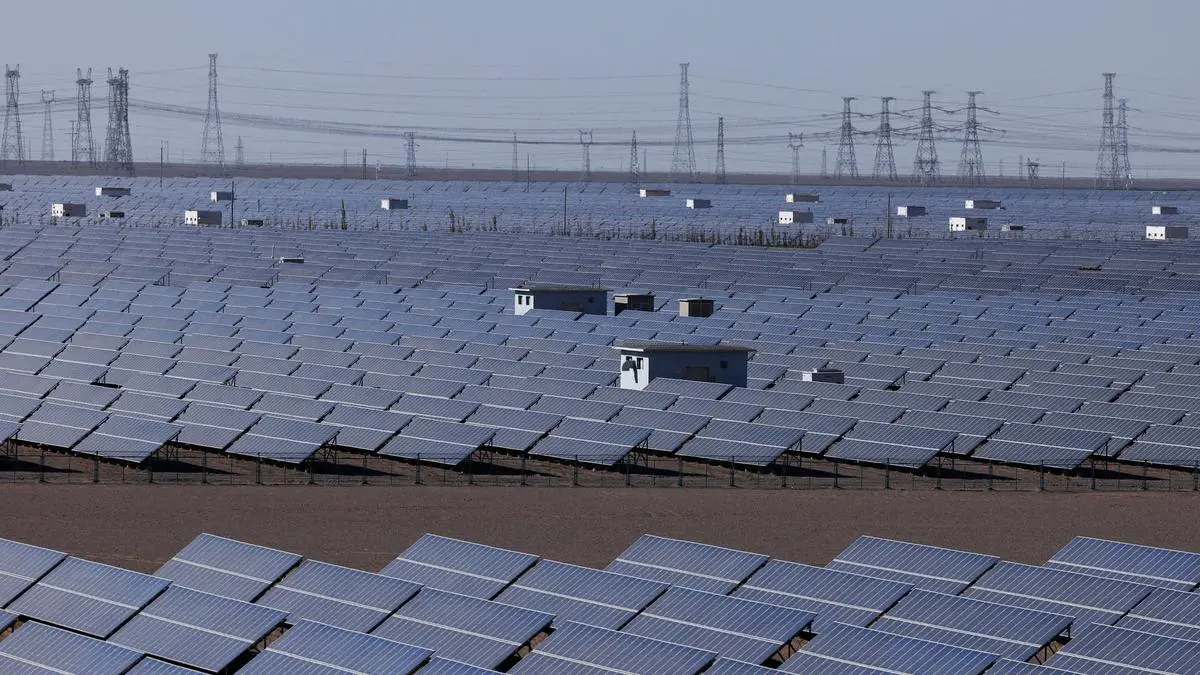
The secret to the latest beat lies in the industrial sector. Investment in high-tech manufacturing grew by double digits, specifically in areas like solar cells, electric vehicles, and lithium-ion batteries. This is the "New Three" strategy in action. By flooding these sectors with cheap credit, the state has ensured that even if the domestic housing market—once the bedrock of Chinese wealth—remains in a coma, the GDP numbers stay afloat through sheer output.
This creates a massive global imbalance. When a country with the size and scale of China over-invests in production while its own citizens aren't buying, those goods have to go somewhere. They are currently being dumped into global markets at prices that Western firms cannot match. This isn't just business; it’s a survival tactic. By dominating these supply chains, Beijing builds a layer of protection against foreign sanctions and economic isolation.
The West Asia Ripple Effect
The conflict in West Asia has inadvertently aided this narrative. As energy prices fluctuate and shipping lanes like the Red Sea become treacherous, global inflationary pressures have stayed high. This makes the cheap, subsidized goods coming out of Chinese factories even more attractive to price-sensitive markets in the Global South. While the United States and Europe struggle with "higher for longer" interest rates to combat inflation, China is exporting deflation.
Beijing is also capitalizing on the diplomatic vacuum. By maintaining a neutral-to-supportive stance toward regional players in West Asia, China ensures its energy supplies remain steady while positioning itself as the "stable" alternative to a West that is stretched thin by military and financial commitments. The growth beat is, in many ways, a byproduct of Western distraction.
The Ghost in the Machine
We have to talk about the quality of this growth. GDP is a measure of activity, not necessarily a measure of health. You can grow a forest by planting trees, or you can grow it by pouring toxic fertilizer on a few select saplings. China is currently doing the latter.
The property crisis hasn't gone away. It has simply been moved off the front page. Values are still sliding, and the "wealth effect" that used to drive Chinese consumer spending is dead. The average family in Beijing or Shenzhen feels poorer because their primary asset—their apartment—is worth 20 percent less than it was three years ago. To mask this, the government is forcing banks to lend to state-owned enterprises.
The Debt Trap at Home
This creates a circular economy of sorts. The state lends money to factories, the factories produce goods, the goods are exported at a loss or thin margins to keep people employed, and the GDP number goes up. But the debt remains. Local governments, which used to rely on land sales to fund their budgets, are now drowning in trillions of dollars of "hidden debt" through Local Government Financing Vehicles (LGFVs).
We are seeing a shift from a "bricks and mortar" economy to a "chips and batteries" economy. While this is more productive in the long run, the transition is incredibly painful and relies on the rest of the world continuing to accept Chinese exports without slapping on massive tariffs. That is a very dangerous bet to make.
The Export Pressure Valve
The global pushback has already begun. From Brazil to Turkey to the European Union, nations are starting to raise trade barriers against Chinese EVs and steel. They see the writing on the wall: China is trying to export its way out of an internal recession.
If the "New Three" exports are blocked, China loses its primary engine of growth. The West Asia conflict provides a temporary smokescreen, drawing eyes away from this trade friction, but it won't last forever. The current growth beat is a sprint, but the Chinese economy needs to run a marathon with a heavy backpack of debt.
A Fragmenting Global Market
The result is a world splitting into two distinct trading blocs. One side is increasingly wary of Chinese overcapacity, while the other—the Belt and Road partners—becomes a captive market for Beijing's surplus. This fragmentation is accelerated by the instability in West Asia. As shipping costs rise, regionalized trade becomes the norm. China is aggressively building out infrastructure to bypass traditional maritime chokepoints, investing in overland routes through Central Asia that are immune to naval blockades or Middle Eastern instability.
Why the Forecasts Were Wrong
Most Western analysts underestimated China's ability to pivot. They expected the property slump to drag the entire economy down into the 3 or 4 percent range. They didn't account for the sheer scale of the credit redirection. Beijing has effectively decoupled its industrial growth from its domestic consumption.
This isn't a return to the "miracle" years. It is a managed transition into a high-stakes, state-led industrial model. The goal isn't prosperity for the masses anymore; it’s national self-sufficiency and dominance in the technologies that will define the next century. The growth beat is a signal of intent, not necessarily a signal of strength.
The Margin of Error
There is no safety net here. If global demand craters or if a "Green Trade War" shuts off the tap for Chinese batteries, the internal pressures within China will become unbearable. The government is essentially front-loading growth today at the expense of a massive debt reckoning tomorrow.
They are betting that they can reach technological supremacy before the debt bubble pops. It is a race against time, played out against a backdrop of global chaos.
Keep a close eye on the producer price index (PPI). While GDP is up, factory-gate prices have been falling for months. This is the clearest sign that China has too many factories and not enough buyers. It is a classic overproduction trap. When you see growth going up while prices are going down, you aren't looking at a booming economy; you are looking at a desperate one.
The numbers look good on a spreadsheet in a government office in Beijing. They look much different when you realize they are built on the back of a manufacturing sector that is being forced to run at 110 percent capacity just to keep the lights on. The rest of the world should stop marveling at the 5.3 percent figure and start preparing for the deflationary wave that is about to hit their shores.
Move your capital into high-value services and specialized manufacturing that China cannot easily replicate through state-subsidized brute force. The window for competing on scale is closed.