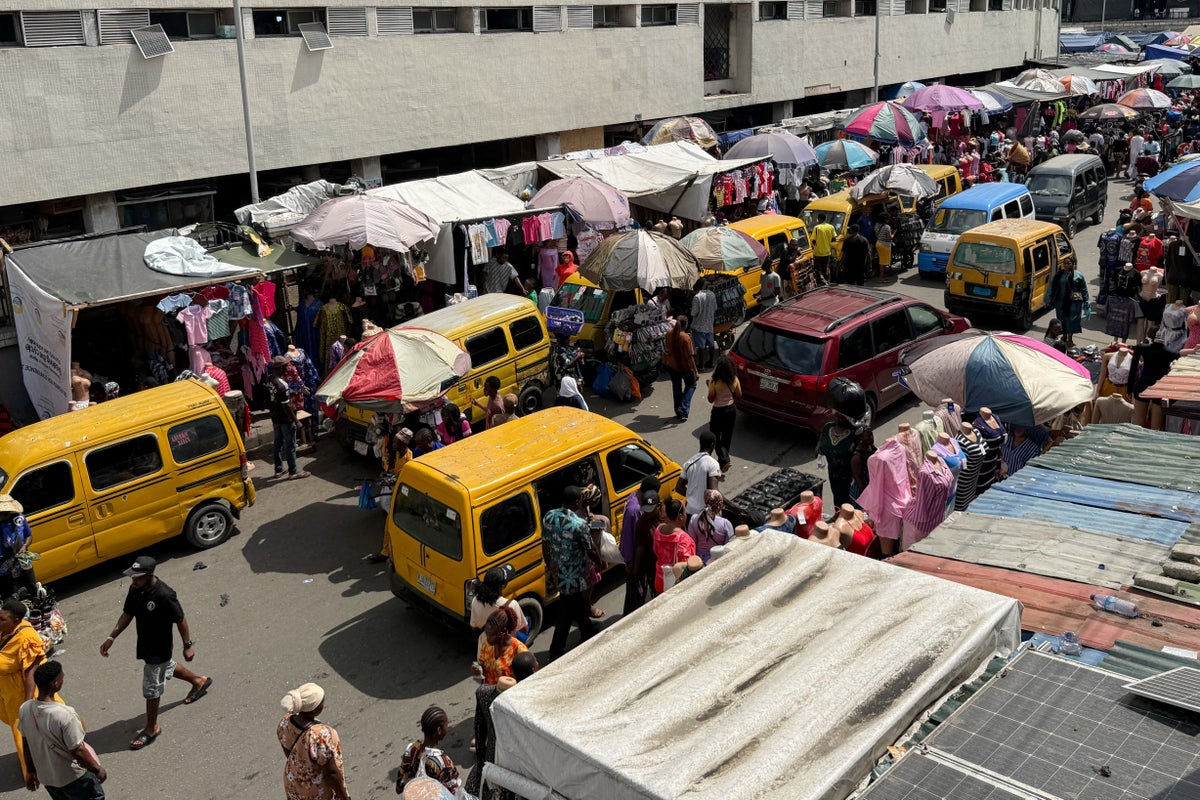
A quiet restructuring of foreign assistance is underway across British policy circles, forcing clean technology firms to abandon traditional grant dependencies and chase institutional capital. British green infrastructure firm MOPO recently secured a package scaling toward 55 million pounds to expand its solar-powered battery rentals and micro-grid architecture across Nigeria and neighboring states. This capital injection arrives not from charity, but from a calculated pivot by development finance institutions including the International Finance Corporation and Norway's Norfund. For decades, foreign aid budgets treated energy poverty in Sub-Saharan Africa as a humanitarian crisis requiring endless subsidization. Today, institutional backers view it as a massive, underserved utilities market ripe for decentralized commercial capture.
The Mechanics of Decentralized Power
Traditional central grids in developing economies fail because they are capital-intensive, highly centralized, and plagued by transmission losses. Building out high-voltage transmission lines across rural expanses requires billions in sovereign debt that local utilities cannot service. Sheffield-based MOPO bypasses this physical bottleneck by shifting the burden of infrastructure to the hyper-local level. Their model relies on solar-powered battery charging hubs stationed directly within communities where the state grid fails or never existed.
Small business owners, such as artisans and merchants operating outside Lagos, trade depleted lithium-iron batteries for fully charged units on a pay-per-use basis. This approach solves two distinct failure points of developing market commerce. First, it eliminates the upfront capital barrier of purchasing solar panels or industrial storage outright. Second, it replaces erratic internal combustion generators that run on volatile fossil fuel imports.
Consider a hypothetical tailoring workshop operating in a peri-urban district with zero grid connectivity. Running an industrial sewing machine on a diesel generator costs roughly three times the hourly rate of a swappable battery subscription, factoring in frequent mechanical maintenance and unpredictable fuel price spikes. By decentralizing generation at the neighborhood hub, the economics shift from macro-state planning to micro-retail efficiency.
Shifting Aid Priorities and Private Risk
The timing of this financial expansion highlights a broader transformation in how Western governments handle international development. Traditional bilateral aid allocations are shrinking significantly, driven by domestic fiscal pressures and redirected priorities toward defense. Foreign Office strategies now emphasize blended finance instruments. Instead of gifting cash to foreign ministries, development agencies deploy public funds as first-loss guarantees to de-risk private venture capital investments in frontier markets.
This transition carries distinct trade-offs. Private equity investors demand predictable yields and scalable unit economics, which can conflict with the absolute poorest populations who cannot afford commercial tariffs. While corporations target urban fringes and productive commercial clusters where cash flow is stable, remote agrarian communities often remain unserved. The market solves for profitability before it solves for equity.
Furthermore, scaling decentralized infrastructure across multiple sovereign jurisdictions introduces severe operational friction. Regulatory frameworks for energy storage and micro-grid distribution vary wildly between West and Central Africa. Importing hardware components through congested ports, navigating local tax codes, and managing foreign exchange volatility present constant threats to operational margins. Currency depreciation in target markets can instantly devour a quarter's worth of localized revenue when converted back to British pounds or US dollars for international investors.
Building the MOPOGrid Architecture
Moving beyond portable battery rentals requires a structural leap into cabled micro-distribution networks, branded as the MOPOGrid initiative. Partnering with entities like Nigeria's Rural Electrification Agency signals an intent to bridge the gap between portable storage and permanent local grids. These localized mini-grids tie solar generation and centralized hub storage directly to overhead distribution lines serving clusters of commercial workshops and households.
This hybrid methodology mimics the leapfrog effect seen during the telecommunications boom. Just as much of the continent bypassed landline infrastructure entirely to adopt mobile cellular networks, energy consumers are bypassing national power monopolies to plug straight into solar micro-utilities. Yet, managing a network of interconnected micro-grids demands sophisticated load management and real-time telemetry to prevent system overload during peak demand cycles.
The success of these ventures depends entirely on whether private infrastructure providers can maintain hardware resilience under harsh environmental conditions while keeping maintenance costs low. Dust, extreme ambient temperatures, and heavy cyclical usage degrade battery chemistry faster than standard laboratory projections anticipate. Companies that survive this landscape will not be traditional aid recipients, but disciplined logistics operators capable of running industrial-grade infrastructure in fragile environments without the safety net of state subsidies.