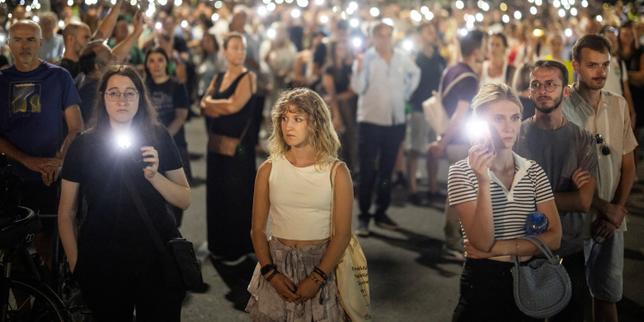
The coffee in the corner café on Kneza Miloša is always too bitter, but Milena drinks it anyway. Outside, the autumn air smells of wet asphalt and low-hanging coal smoke, that familiar Belgrade scent of things burning slowly underneath the surface. She watches a delivery van navigate a pothole that has been there since the winter of twenty-two. Nothing changes, yet everything is about to break.
On Wednesday, the President will sign a paper. The National Assembly, that grand, solemn hall where speeches echo like hollow timber, will dissolve into silence. By October twenty-fifth, the citizens will be summoned back to the ballot boxes for early parliamentary elections. Again.
To an outsider sitting in a sterile office in Brussels or Washington, this looks like routine European political friction. Another headline about Balkan turbulence. A data point in a quarterly stability report. But for Milena, who teaches high school history and watches her best students pack their bags for Munich or Vienna with one-way tickets, it is something much heavier. It is the sound of a clock being smashed and reset just as you were finally learning to read the time.
To understand why a country chooses to tear down its own legislature on a random Wednesday in autumn, you have to look past the official press releases. You have to look at the geometry of power in a society where the future feels perpetually rented rather than owned.
Imagine living in a house where the doors are constantly being unhinged and rehung by a landlord who promises that the next layout will finally stop the draft. You grow tired of buying rugs. You stop hanging pictures on the walls. Why bother? The nails will only have to be pulled out soon anyway.
This is the psychological reality of snap elections. They are not merely democratic exercises. They are instruments of perpetual motion designed to keep the opposition breathless and the public perpetually off-balance. When you call an election every two years, you force every political party into a permanent campaign mode. There is no time for policy nuance. There is no room for quiet, unglamorous legislative work that takes a decade to bear fruit. There is only the megaphone, the billboard, the televised shouting match, and the frantic scramble for allegiance.
The math of it is dizzying. Serbia has held parliamentary elections in 2012, 2014, 2016, 2020, 2022, and now another looms. Count them. That is six cycles in a little over a decade for a parliament designed to sit for a stable four-year term.
Stabilocracy, the political scientists call it. A system that uses the machinery of democracy to prevent democracy from ever taking deep, stubborn root. It is brilliant, in a dark, cynical way. Whenever public frustration reaches a boiling point over inflation, infrastructure failures, or environmental scandals, the pressure valve is pulled. The parliament is dissolved. The anger is redirected into the theater of the campaign. New promises are minted, old grievances are weaponized, and the clock is reset to zero.
Consider what happens to a community when every civic interaction becomes a loyalty test. In towns outside the capital, like Kragujevac or Niš, public sector employment is often the only game in town. If you work at the hospital, the municipal water board, or the local school, election season is not an ideological debate. It is a quiet, sweaty anxiety. You are expected to deliver a quota of votes, or at least show up at the rally and hold a plastic flag for the cameras.
Milena knows a nurse at the emergency clinic who keeps a second burner phone in her locker. One phone is for her family, her real life, her quiet evenings listening to acoustic jazz. The other is for the party coordinator who texts instructions before every major political gathering. Be at the central square by five. Wear the dark jacket.
The tragedy is that everyone knows. The politicians know the nurse doesn't want to be there. The nurse knows the politicians know. The students know their teachers are exhausted. It creates a vast, suffocating theater of compliance where dignity is quietly traded for job security.
And yet, beneath the cynicism, there is an obstinate, stubborn hope that refuses to die out. That is the paradox of the Balkans. People here are world-class cynics who still hold on to a romantic, almost foolish belief that justice might actually arrive one Tuesday afternoon.
When the decrees are signed and the campaigns kick into gear this autumn, the streets will flood with posters. Faces of leaders will look down from billboards with airbrushed optimism, promising European standards, economic miracles, and national dignity. The debates will rage on television stations where opposing voices are given three minutes of airtime to defend themselves against thirty minutes of character assassination.
Foreign diplomats will issue measured statements. They will call for free and fair conditions, knowing full well that the playing field was sloped years ago. They will accept the result because stability—even a brittle, manufactured stability—is preferable to chaos in Europe's backyard.
Milena walks home from the café as the streetlights flicker on, casting long, bruised shadows across the pavement. She passes a group of young men sitting on a concrete wall outside a betting shop, arguing loudly about a football match. For a moment, they are just kids arguing about goals and fouls. But then the conversation shifts, as it always does here, to who is leaving for Germany next month and whether the new border checks will make it harder to send money back to their mothers.
October twenty-fifth is coming. The ballots will be printed, the boxes will be sealed, and the results will be tallied in rooms that smell of stale tobacco and institutional coffee. The faces in the assembly might shift by a few seats. The majorities will be claimed. The speeches will be given.
And then, the quiet will return. Not peace, just the sound of a country holding its breath, waiting for the next time the glass breaks.