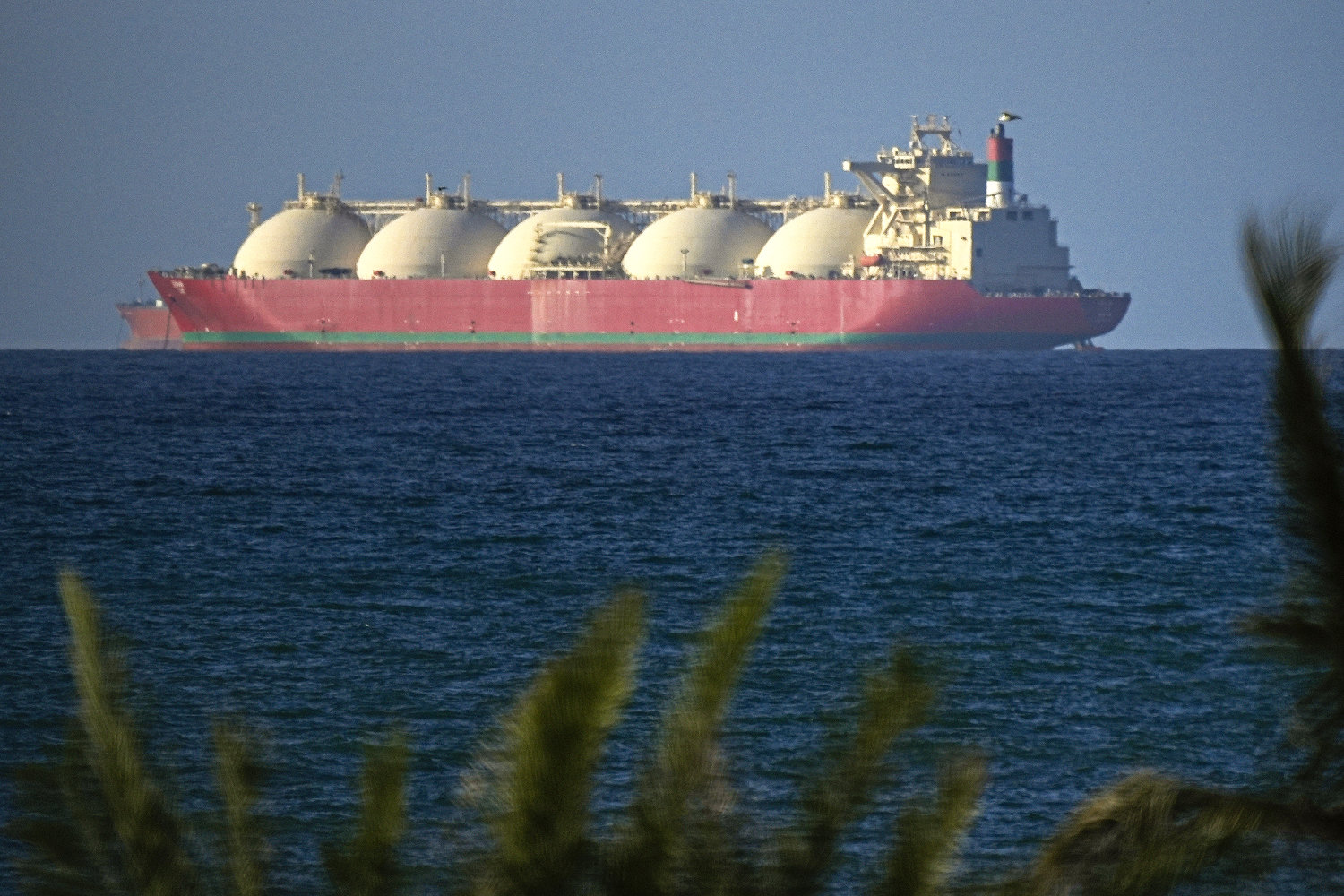
Geopolitics and rocket science share a common trait. Both are governed by inertia. While the headlines suggest a sudden shift in the Middle East following a fragile ceasefire, the reality on the water in the Strait of Hormuz tells a different story. Shipping lanes remain ghost towns. At the same time, miles above the atmosphere, NASA is grappling with a different kind of stubborn reality. A critical design flaw in the Artemis II heat shield has forced a re-evaluation of how we bring humans back from the moon. The "Morning Rundown" of global stability is currently a list of delayed arrivals and technical retreats.
The Ghost Lanes of Hormuz
Ceasefires are ink on paper. Logistics is iron on water. Despite the formal cessation of hostilities that recently dominated the news cycle, the Strait of Hormuz is not seeing the immediate bounce-back that commodity traders expected. Tanker traffic remains sluggish, hampered by a cocktail of sky-high insurance premiums and a deep-seated distrust of the current "peace."
The bottleneck is not physical. It is psychological and financial.
Maritime insurance underwriters haven't lowered their risk ratings. To them, a ceasefire is simply a period of reloading. When a VLCC (Very Large Crude Carrier) moves through the Strait, it represents billions of dollars in cargo and hull value. Shipowners are refusing to gamble that a piece of paper will stop a drone or a limpet mine. We are seeing a structural shift in how energy is moved, with long-term diversions around the Cape of Good Hope becoming a permanent line item in corporate budgets rather than a temporary detour.
The economic ripple effect is measurable.
- Freight rates stay elevated because the effective supply of ships is lowered by longer transit times.
- Port congestion in alternative hubs is creating a secondary crisis in the global supply chain.
- Energy security strategies in Europe and Asia are being rewritten to prioritize overland pipelines and rail, effectively de-valuing the Strait in the long run.
This isn't a temporary dip. It is the sound of the world's most vital maritime artery hardening.
Artemis and the Heat Shield Crisis
While the maritime world stares at the horizon, NASA is looking at the charred remains of the Orion capsule from the Artemis I mission. The agency recently confirmed that the heat shield on the spacecraft experienced "unexpected liberation" of material—journalistic shorthand for the shield chipping away in chunks rather than eroding smoothly.
This is a catastrophic problem for Artemis II.
Artemis I was an uncrewed test. If the shield fails during Artemis II, the four astronauts on board will face a re-entry temperature of $3,000$ degrees Celsius with a compromised barrier. NASA’s current dilemma is whether to "fly as is" and hope the margins of safety hold, or delay the mission for a complete redesign of the Avcoat thermal protection system.
The Mechanics of Failure
The Orion heat shield uses a material called Avcoat, which is designed to char and slough off in a process called ablation. This carries heat away from the capsule. During the Artemis I re-entry, the material didn't just ablate. It cracked and fell off in large pieces.
This creates an uneven surface. Physics dictates that an uneven surface during hypersonic re-entry creates localized turbulence. This turbulence leads to "hot spots" where the temperature can spike far beyond the design limits of the underlying structure. It is the same fundamental aerodynamic principle that led to the loss of the Space Shuttle Columbia, albeit under different circumstances.
NASA engineers are now stuck in a cycle of "root cause analysis" that is eating into the 2025 launch window. They are investigating whether the voids in the honeycomb structure of the shield caused internal pressure to build up, essentially popping the material off from the inside out.
The Cost of Precedence
The Artemis program is built on the philosophy of "proven" technology. However, the Avcoat used today is not the same as the material used during the Apollo era. Environmental regulations changed the chemistry of the resins. The manufacturing process changed. We are discovering that in the world of high-stakes engineering, there is no such thing as a "solved" problem.
Industry analysts are pointing to a worrying trend of "normalization of deviance." This is the same cultural rot that led to previous NASA disasters—a tendency to accept anomalies as long as they don't result in immediate failure. By even considering a crewed launch with the current shield design, the agency is dancing on a razor's edge.
The Artemis II Delay Ripple
A delay in Artemis II isn't just a calendar shift. It's a financial black hole.
- Contractor Burn Rates: Companies like Lockheed Martin and Boeing continue to charge for standing army costs.
- Lunar Gateway Sequencing: The planned lunar space station depends on a regular cadence of SLS launches.
- The China Factor: Every month NASA spends staring at a heat shield, the CNSA (China National Space Administration) moves closer to its own 2030 lunar landing goal.
The Intersection of Risk
There is a strange symmetry between the tankers idling outside the Strait of Hormuz and the Orion capsule sitting in a clean room in Florida. Both represent a failure of the "expected" path. We expected peace to bring commerce. We expected 1960s technology to work in the 2020s.
In both cases, the risk has been miscalculated. The shipping industry is being honest about that risk by staying away. NASA is currently struggling to find that same level of honesty. The pressure to maintain the schedule is immense, but the physics of re-entry do not care about political deadlines or Congressional funding cycles.
The Strait will eventually see traffic again, but it will be under a new, more expensive paradigm of private security and state-led convoys. The lunar mission will eventually launch, but it will likely be on a timeline that makes the original "Moon to Mars" goals look like ancient history.
We are entering an era where the "Morning Rundown" is no longer a list of progress, but a tally of things we must fix before we can even begin to move forward. The design flaw in Orion is a metaphor for the current global state: the shield is cracking, and the heat is rising.
The immediate priority for NASA is not the moon. It is the integrity of the resin. For the global economy, the priority is not the ceasefire. It is the insurance premium. Until the fundamental safety of the journey is guaranteed, the engines remain cold.


