British Columbia is drying up fast. If you live anywhere between Vancouver Island and the Thompson-Okanagan, you already know this. The air feels like tinder, your lawn is yellow, and the local river looks more like a gravel path than a fish habitat.
While the rest of Canada watches the Prairies celebrate a summer soaked in unexpected, drought-busting rain, B.C. is trapped in a completely different reality. About 80% of the province is classified as anywhere from abnormally dry to being in the grip of extreme drought. That is double the dry footprint we saw back in May. Meanwhile, you can read other stories here: Why Trump Dropped the Hormuz Toll Plan Before It Even Started.
The provincial government just issued a blunt water-scarcity warning. Minister of Water, Land and Resource Stewardship Randene Neill made it clear that voluntary water conservation isn’t just a polite suggestion anymore; it’s a necessity to keep local watersheds from collapsing.
If you think this is just a standard July dry spell, you aren't looking at the numbers. To explore the bigger picture, check out the recent report by USA Today.
The Multi-Year Deficit Nobody Wants to Talk About
Most people think a bad wildfire or drought season is caused by a hot couple of weeks in July. It isn't. The crisis hitting B.C. right now is a compounding debt collector. We are paying the price for an exceptionally dry winter, record-high freezing levels, and a multi-year moisture deficit that hasn't recovered since the previous seasons.
The BC Wildfire Service relies on something called the Drought Code. It doesn't measure how dusty the grass is; it measures the moisture trapped deep in the heavy logs and buried organic layers of the forest floor. Right now, those deep fuel layers are bone dry across a massive swath of the province, particularly from Vanderhoof down through the Chilcotin and into the Fraser Canyon.
Why does this matter? When deep duff layers dry out, fires don’t just burn across the surface. They burn deep into the ground. They smolder. They become incredibly stubborn, vigorous, and almost impossible for ground crews to completely extinguish. The current deep-soil drought conditions look alarmingly similar to the setups we saw before the catastrophic fire seasons of 2017, 2018, and 2021.
The Low Snowpack Catastrophe
We lost this battle back in January and February. The B.C. Interior experienced its warmest winter in recorded history since the late 1800s.
Because freezing levels stayed high up the mountains, valley bottoms got rain instead of snow. The spring snowpack measured in April and June showed severe deficits along the Southern Interior and the Coast. Without a thick blanket of snow melting slowly through May and June, rivers didn't get their usual summer lifeline.
We are seeing record-low stream flows right now in critical salmon habitats like the Koksilah River, Tsolum River, Salmon River, and Bessette Creek. When water levels drop that low, the water heats up fast. It kills fish, starves local agricultural irrigation systems, and leaves communities incredibly vulnerable if a municipal water system fails.
The Brunswick Complex and the Fight for the Fraser Canyon
This isn't a hypothetical threat for the future. The crisis is playing out on the ground right now.
BC Wildfire Service crews are currently dealing with roughly 23 active wildfires across the province, with six of them completely out of control. The most pressing frontline is the Brunswick complex, a massive 189-square-kilometre monster chewing through the Fraser Canyon near Boston Bar. This complex consists of both the Brunswick Creek and Ainslie Creek blazes, which have already forced hundreds of residents into evacuation orders and alerts.
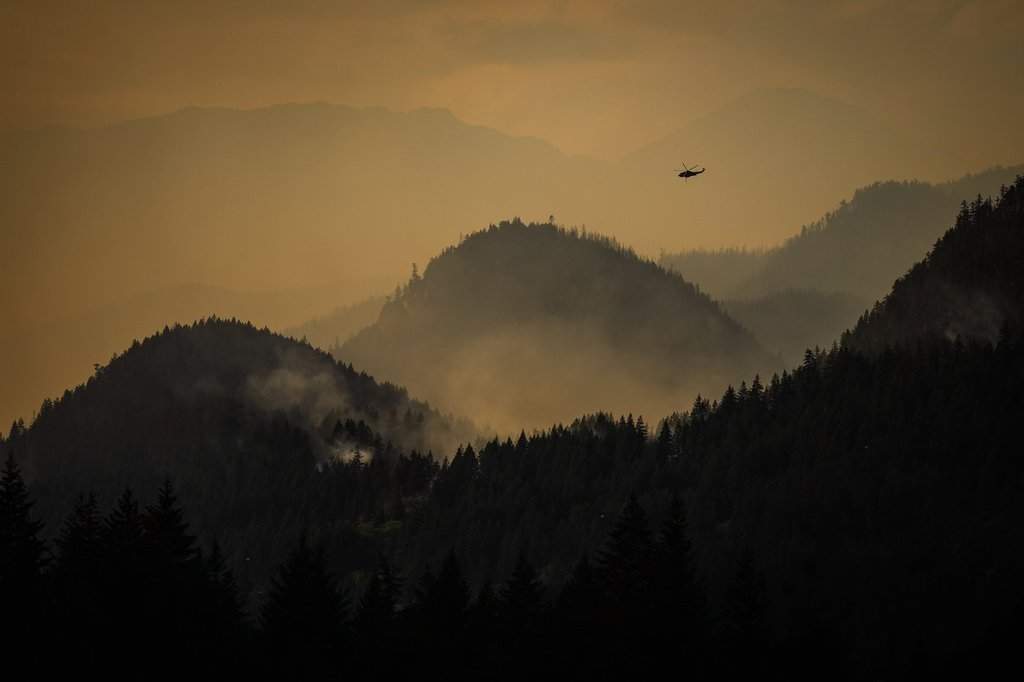
The terrain out there is brutal. It’s steep, rocky, and completely inaccessible to traditional ground crews. Firefighters are relying heavily on massive helicopter bucketing campaigns to stop the flames from jumping east toward Merritt.
Brunswick Fire Complex: Quick Stats
- Size: 189 square kilometres
- Core threat: Pushing east toward Highway 8 and Merritt
- Primary tactic: Heavy helicopter bucketing due to steep, inaccessible terrain
Further north near Lillooet, the French Bar Creek fire has ballooned to 12 square kilometres, triggering fresh evacuation alerts. Crews there are facing the exact same structural bottlenecks: zero road access, extreme terrain, and an acute lack of nearby water to fight the flames.
Lighter winds have given crews a temporary window to conduct mop-up operations near the community of Boothroyd, but the relief is deceptive. Humidity is dropping, temperatures are hovering past 30°C, and the forecast holds almost zero rain for the next week. Any sudden spike in wind will instantly wake these fires back up.
What You Need To Do Right Now
The province is begging for collective action because our infrastructure isn't built to handle this level of prolonged stress. Relying on the government to fix a watershed crisis is a bad strategy. It comes down to individual and community habits.
- Audit Your Irrigation: Lawns are a luxury B.C. can’t afford right now. If you're in Metro Vancouver, restrictions are shifting around, but municipal water conservation needs to remain aggressive. Stop watering lawns entirely and focus strictly on keeping food crops or essential trees alive via targeted drip lines.
- Respect the Prohibitions: Campfire and open-burning bans are active across the Kamloops, Southeast, and Northwest Fire Centres. A shocking number of starts are still human-caused. One stray spark in an Interior valley right now will ignite dry grass instantly.
- Prepare Your Property for Evacuation Alerts: If you live anywhere near the Interior valleys or the Fraser Canyon, don't wait for an official order to pack. Clear dry debris, leaves, and firewood at least 10 metres away from your home structure. Ensure your emergency grab-and-go bags are in your vehicle.
The rain isn't coming to save B.C. this month. The current conditions are a direct result of a multi-year climate pattern that we can't wish away. Survival through August means cutting water consumption immediately and keeping your guard up.