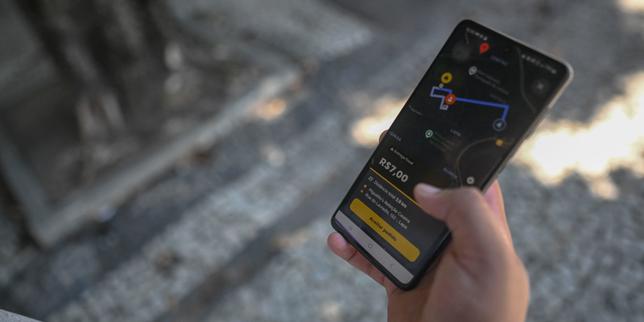
In Brazil, platform work has become a political engine for the right because millions of ride-hail drivers, couriers, and micro-sellers experience daily autonomy as a shield against economic precarity. Traditional union playbooks promised formal protection, yet many workers see bureaucracy, payroll taxes, and court battles as threats to their immediate cash flow.
I have covered Brazilian labor politics and industrial shifts across three decades of booms, austerity, and courtroom turf wars. What looks on paper like classic exploitation often plays out on the street as an urgent fight for self-rule. A driver sitting in São Paulo traffic at midnight does not wait five years for a labor court ruling while a fuel bill comes due at dawn.
How Platform Work Reshaped Working Class Identity
Official data from Brazil's statistics agency IBGE shows 1.8 million people working through digital service platforms as their main job in 2025, up 36.8% from 2022, while many others treat app driving or delivery as a second income stream. Men make up roughly 84% of platform workers, and nearly half fall between ages 25 and 39. Unlike informal street traders with minimal schooling, platform workers skew toward high school graduates and those with incomplete college degrees.
That demographic profile matters. Aspirational workers with secondary schooling who expected upward mobility often feel cheated when formal jobs pay thin wages or vanish during slowdowns. Stepping behind the wheel of a financed compact car or strapping on a thermal backpack feels less like joining a classic factory proletariat and more like running a one-person micro-enterprise.
The entrepreneurial self is not a mere slogan invented by app executives. It is a survival identity hardened by years of weak formal job growth and high turnover. When a political pitch frames workers as "micro-entrepreneurs" defending their own schedule, it speaks directly to pride that formal labor law often overlooks.
Autonomy feels real on the curb even when algorithmic pricing squeezes every mile.
Why Traditional Labor Promises Collide With Street Math
For decades, Brazil's left anchored working-class politics around the CLT formal labor code, which bundles signed work cards, paid vacation, thirteenth-month bonuses, and employer payroll contributions. Those protections carry real value when a company stays solvent and a worker holds steady tenure. On a ride-hail or delivery app, the math works differently.
Drivers and couriers absorb vehicle depreciation, tires, maintenance, data plans, fuel swings, and street theft risk out of gross payouts. IBGE figures show informality among platform workers reaching 71.1% compared with 43.8% for non-platform workers, with far lower social security contribution rates. Many drivers fear that rigid reclassification or steep mandatory deductions could shrink take-home pay or prompt apps to cap active hours and cull accounts.
Legislative fights in Brasília over complementary bills governing app drivers and couriers expose that tension. Negotiators have wrestled over minimum hourly or per-trip floors, social security alignment, and union representation while platforms warn about higher consumer prices and lower demand. In the middle sits a worker who cares less about ideological labels than whether Friday night brings enough cash for groceries and school shoes.
(Hypothetical example: Suppose a São Paulo ride-hail driver nets 220 reais on a heavy shift before paying 65 reais in fuel and setting aside 45 reais for maintenance and loan installments. A proposal that adds 30 reais in mandatory charges without lifting fares looks like a pay cut today, even if a pension benefit arrives decades later.)
The Right's Playbook Around Order, Taxes, and Faith
Right-wing candidates and movements did not invent platform work, yet they have read its grievances sharper than many traditional organizers. Their message bundles anti-statism, tax relief on fuel and vehicles, public security rhetoric, and moral conservatism into a single package.
Street Safety and Public Order
Delivery riders on motorcycles and drivers working late shifts face real violence in major metro areas. Candidates who promise tougher policing, faster street response, and less sympathy for offenders tap into immediate daily fear. Public security frequently outranks abstract labor theory at 2 a.m. on an unlit ring road.
Fuel Costs and State Skepticism
When fuel prices spike or taxes feel heavy, blaming Brasília is easy and visceral. Right-wing rhetoric casts the state as a tax collector that penalizes hardworking people while demanding loyalty. Even when a policy's fiscal trade-offs are complex, a simple promise to cut levies or keep government out of private contracts lands fast.
Church Networks and Individualism
Evangelical congregations and prosperity-oriented coaching culture across Brazil reinforce a worldview centered on personal discipline, household responsibility, and individual grit. That ethos sits closer to self-reliance than to collective union strikes. Political organizers who already operate inside neighborhood church and WhatsApp networks can turn everyday gripe sessions about app pay into aligned votes.
Courts, Pejotização, and the Battle Over Work Rules
The political shift around platform work also feeds a broader legal war over pejotização, the practice of hiring workers through legal entities or service contracts rather than traditional salaried employment. Brazil's Supreme Federal Court has confronted high-stakes disputes over whether labor courts or civil commercial rules govern outsourcing and service contracts, reshaping the boundary of traditional labor law.
Big tech platforms and business associations argue that flexible digital intermediation belongs in a modern category distinct from old-line factory employment. Labor prosecutors and unions counter that algorithmic dispatch, rating penalties, and unilateral deactivations amount to control without accountability. Neither side holds a monopoly on worker sympathy: some couriers organize wildcat protests and cooperative delivery alternatives over low rates, while others vote against rules they fear will curb flexible side income.
| Factor | Traditional CLT Model | Platform Gig Model | Right-Wing Political Pitch |
|---|---|---|---|
| Core Appeal | Legal benefits, job security, collective bargaining | Flexible hours, fast entry, immediate payouts | Low taxes, self-reliance, tough security |
| Primary Risk | Hiring friction, layoffs, rigid schedules | Income volatility, zero paid cushion, vehicle wear | Unfunded promises, weak safety net in crisis |
| Worker Self-Image | Salaried employee with statutory rights | Independent operator or side-hustler | Hardworking citizen fighting state overreach |
What Policymakers Keep Missing on the Curb
Any party that treats platform workers solely as confused victims has already lost half the argument. Most drivers and couriers know the apps take a steep cut and leave them exposed when a tire blows or an illness hits. They reject the right when fuel or fare conditions bite, yet they reject heavy-handed mandates that treat flexibility itself as a crime.
Portable social security, transparent fare formulas, real accident coverage, and safe rest or charging points address concrete pain without pretending every worker wants a nine-to-five cubicle. Until reform protects real livelihoods while respecting practical autonomy, the curb will remain contested ground in Brazilian politics.



