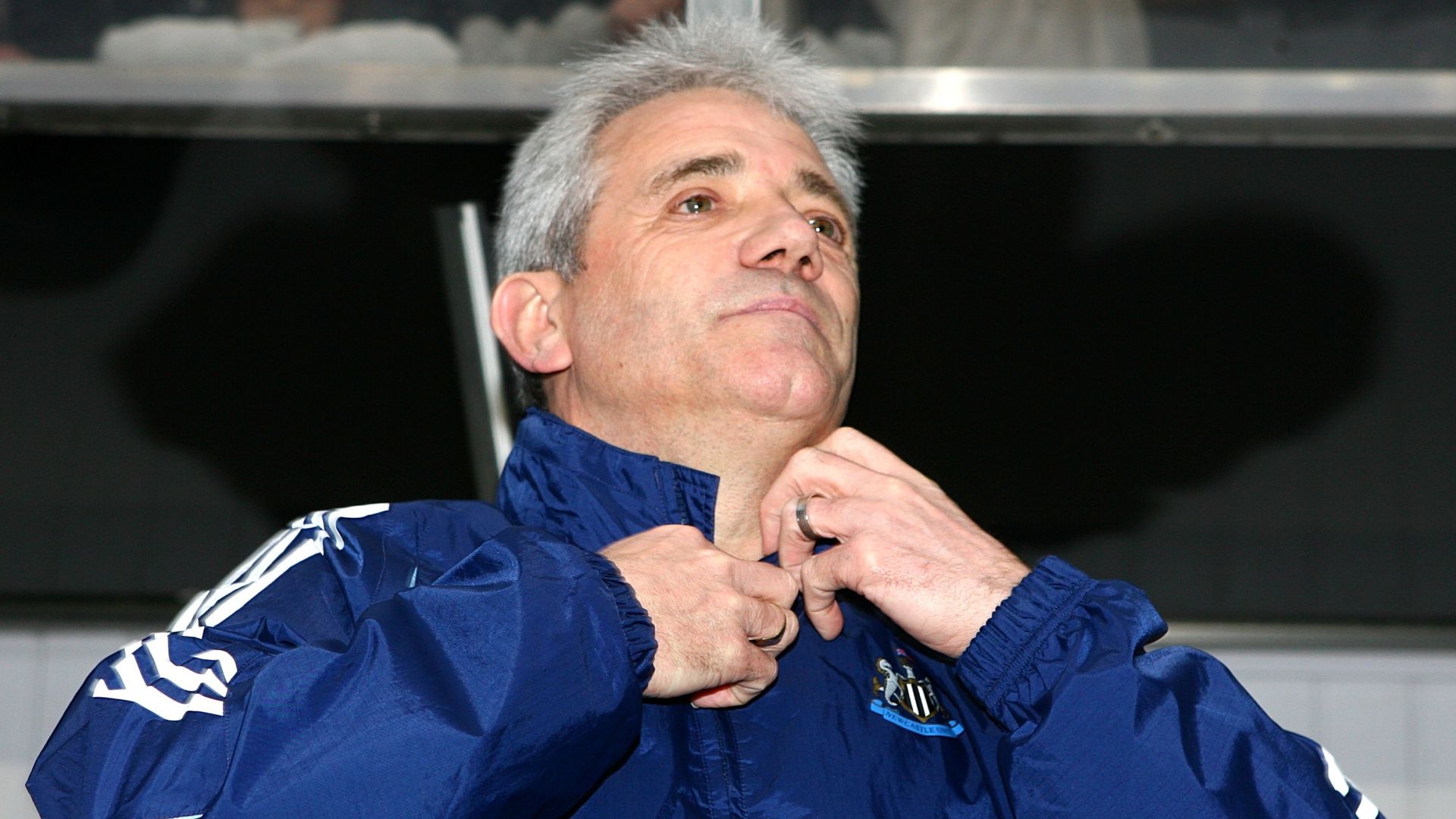
The rain in Newcastle does not fall; it sweeps sideways, driven by a North Sea wind that bites straight through to the bone. For decades, one man could turn that freezing grey drizzle into pure, electric sunshine just by flashing a smile and shaking a mop of dark curls. To a generation of football fans, Kevin Keegan was not just a player or a manager. He was an emotion. He was the embodiment of a beautiful, reckless hope.
When he played, he ran until his lungs burned. When he managed, he stood on the touchline in his drenched tracksuit, arms flung wide, demanding that his teams attack, attack, and attack again. He gave everything to the game.
Now, at 75, the man who lived his life at a breathless sprint is facing a completely different kind of opponent. One that does not play by the rules of fair sport. One that waits in the quiet, microscopic dark.
Kevin Keegan has stage four cancer.
The words themselves feel wrong when attached to his name. Stage four. It sounds like an ending. In the cold, clinical language of oncology, it means the disease has broken out of its original home and traveled to distant parts of the body. It is the point where doctors stop talking about "curing" and start talking about "managing."
But to understand what this diagnosis means to the millions who loved him, you have to understand the sheer volume of life Kevin Keegan occupied.
The Boy from Doncaster Who Captured the World
Imagine standing in the tunnel at Anfield in 1971. The air smells of wintergreen, liniment, and stale cigarette smoke from the crowd. Bill Shankly, the legendary Liverpool manager, grabs a young, unheralded signing from Scunthorpe United by the shoulder.
"Just go out there and run, son," Shankly tells him.
Keegan ran. He did not possess the natural, effortless grace of George Best or the icy, calculating intellect of Kenny Dalglish. Instead, he possessed something far more intoxicating: an unstoppable, infectious fury of effort. He chased lost causes. He threw his relatively small frame into collisions with brutal, towering defenders. He won European Cups. He won the Ballon d'Or. Twice.
He became the country’s first true football superstar, a man whose face adorned everything from cereal boxes to aftershave adverts. Yet, he never lost the aura of the ordinary working-class boy who had struck gold. He belonged to the people.
When he returned to Newcastle United as a manager in the 1990s, he built a team nicknamed "The Entertainers." They did not care about defending. They simply believed they could score more goals than you. It was beautiful, chaotic, and heartbreaking. It was Kevin.
That is why the news of his illness hits with the force of a physical blow. We expect our sporting heroes to remain frozen in time, forever leaping for a header or celebrating under the floodlights. We do not expect them to get old. We certainly do not expect them to get sick.
The Reality of the Modern Battle
To understand a stage four diagnosis today is to understand how radically medicine has shifted. A decade or two ago, a diagnosis of this magnitude was spoken of in hushed, terminal tones. It was a countdown.
Medicine today views the situation through a different lens. Think of it not as a sudden cliff, but as a grueling, tactical campaign. The goal is no longer a swift, decisive victory, but a prolonged, stable truce.
When cancer cells mutate and spread, they mimic the body's own tissue to hide from the immune system. They are masters of disguise. For a long time, the only weapons we had were sledgehammers—traditional chemotherapy that attacked every fast-growing cell in the body, leaving patients exhausted and broken.
But the landscape of oncology has shifted beneath our feet. Today, treatments are highly personalized. Doctors look at the genetic fingerprint of the tumor. They use targeted therapies that act like smart bombs, seeking out specific proteins on the cancer cells while leaving healthy tissue alone. They use immunotherapy, which essentially strips away the cancer's camouflage, allowing the patient's own immune system to recognize the threat and fight back.
This is the treatment Kevin Keegan is currently undergoing. It is not a cure, but it is a powerful brake applied to a runaway train. It turns a terminal crisis into a chronic illness, allowing patients to claw back months, often years, of high-quality life.
Consider what happens next in a patient's daily routine. The battleground is no longer the packed stadium; it is the quiet waiting room of a specialist clinic. It is the steady drip of an IV. It is the anxiety of waiting for the results of a three-monthly PET scan, a psychological tightrope that oncology patients intimately refer to as "scanxiety."
It requires a completely different kind of courage than the type displayed on a football pitch. It requires the stamina to endure nausea, the patience to deal with profound fatigue, and the mental strength to wake up every morning knowing the enemy is still inside you.
The Weight of the Public Eye
Stepping into the public eye to announce such a deeply personal crisis is an act of immense vulnerability. For a man who spent his life being the source of energy for others, admitting to weakness is a heavy burden.
We live in a culture that demands constant strength from its icons. We want them to be invincible. When a public figure reveals a severe health diagnosis, they inadvertently become a mirror for the rest of us. They remind us of our own mortality, of the fragility of the people we love, and of the inescapable passage of time.
But there is a profound utility in this openness.
When a name as massive as Kevin Keegan speaks openly about stage four treatment, it demystifies the condition. It strips away some of the terror. It shows the thousands of ordinary people going through the exact same treatment lines that they are not alone. It normalizes the struggle.
If King Kevin can stand up and face this with dignity, then perhaps a grandmother in Leeds or a factory worker in Bristol can find the strength to face their next round of treatment, too.
The support that has flooded in since the announcement is not just a tribute to his footballing achievements. It is an outpouring of gratitude for the joy he brought into people’s lives. In a world that often feels cynical, fractured, and cold, Keegan represented a time when sports were about passion, romance, and belief.
He once famously declared during a title race that he would "love it" if his team beat their rivals. That raw, unvarnished emotion endeared him to millions forever. Now, those same millions are sending that exact energy back to him. They would love it if he wins this fight.
The Final Third
Life is lived in sections, much like a football match. The early years are the frantic first half, full of energy, mistakes, and boundless potential. The middle years are the tactical second half, where experience takes over and strategy matters.
Then comes the extra time. The period where every single minute is precious. Where the air tastes sweeter, the hugs last a little longer, and the memories become solid gold.
Kevin Keegan is in extra time now.
He is not hiding away in a dark room. He is continuing to speak, to share his stories, and to live his life with the same stubborn defiance that defined his playing career. The hair may be grey now, and the sprint may have slowed to a walk, but the fire in those eyes remains completely undiminished.
The sideways rain will keep falling on Newcastle. The wind will still blow cold off the sea. But as long as Kevin Keegan is fighting, there is a stubborn, beautiful warmth in the hearts of everyone who ever watched him run.
He is still out there on the pitch. Still chasing the ball. Still refusing to give up until the final whistle blows.