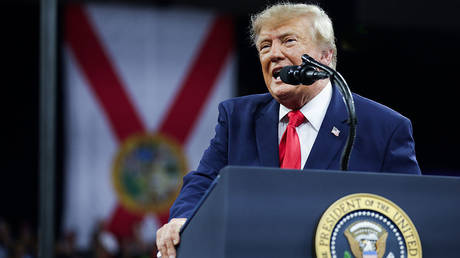
Announcing a $1 million bounty for voter fraud tips that result in arrest and conviction—as President Donald Trump did on Truth Social in late October 2026 ahead of the midterm elections—changes the economics of election reporting overnight without changing the underlying base rate of electoral offenses. Standard coverage of the announcement typically stops at two observations: the headline dollar figure and the lack of operational details regarding funding sources or intake rules. That surface treatment misses the real mechanics at work. A high-nominal bounty aimed at a low-frequency event creates an asymmetric incentive structure that floods election administrators, prosecutors, and media ecosystems with low-precision reports while doing little to deter systemic or individual offenses.
To analyze the announcement rigorously, separate what is established from what remains unproven. It is a known fact that the reward was publicized via social media shortly before the November 2026 midterms, tying payouts to tips that produce both arrest and conviction across past or upcoming elections. It is also established that public announcements of funding mechanics, statutory authority, and administrative rules were not accompanying the initial post, prompting oversight and transparency groups to seek public records. By contrast, any claim that the offer will uncover widespread, outcome-altering fraud—or conversely, that it will produce zero valid convictions—is an educated hypothesis that depends on evidentiary standards, prosecutorial discretion, and enforcement capacity.
The Three Pillars of Bounty Economics in Elections
Any financial reward tied to reporting electoral misconduct operates across three structural pillars: Expected Value, Verification Friction, and Externalized Costs. Evaluating a $1 million headline figure requires examining all three rather than treating the payout as a simple price tag for information.
Expected Value and Base-Rate Mismatch
In standard decision theory, an actor evaluates whether to invest time, social capital, or legal risk into submitting a tip based on the perceived probability of payout multiplied by the reward, minus personal costs. When the nominal reward is $1 million, even a tiny perceived probability of success can feel attractive to an individual tipster.
Yet electoral fraud prosecutions face a steep evidentiary funnel. A tip does not generate a payout upon submission, nor upon an initial police intake or even a partisan allegation. It requires admissible evidence, probable cause or indictment, and proof beyond a reasonable doubt leading to a conviction. Historically, documented instances of intentional voter fraud in U.S. elections occur at very low rates relative to total ballots cast. When a massive payout is attached to an event with a low true occurrence rate, false positives—sincere misinterpretations of routine administrative procedures, misunderstandings of eligibility or mail-ballot handling, and partisan rumors—can easily outnumber genuine prosecutable crimes.
Verification Friction and the Conviction Bottleneck
The gap between a "tip" and a "conviction" is where most bounty programs stall. Consider a conceptual example: a citizen observes a neighbor dropping off multiple ballots at a drop box or sees a ballot rejected at a precinct due to a signature mismatch. Neither observation, standing alone, proves illegal conduct. Multiple-ballot drop-off may be lawful assistance under state rules or family collection; a signature mismatch may reflect aging handwriting, illness, or a hasty pen stroke rather than forgery.
Converting either observation into a conviction requires investigators to obtain records, interview witnesses, establish mens rea (criminal intent), and satisfy statutory elements in court. That process takes months or years—far longer than a campaign news cycle—and filters out the overwhelming majority of raw tips. From an institutional standpoint, the conviction requirement protects the treasury from paying out on unfounded allegations, but it also means the headline reward functions far more potently as a mobilization signal than as a settled disbursement mechanism.
Externalized Costs on Election Operations
Even when a bounty pays out rarely, its operational side effects land immediately on local election offices, poll workers, and prosecutors. Every allegation routed to a clerk or district attorney requires triage. Even a five-minute review per inquiry consumes scarce personnel hours during peak pre-election and post-election windows.
A second cost is behavioral and civic. Financial incentives for citizen surveillance change how people interact at polling places, drop boxes, and neighborhood canvass lines. A volunteer poll worker or voter taking extra time to resolve a registration question can be misread by an overzealous observer as suspicious activity. When monetary rewards are paired with heightened suspicion around mail ballots, voter rolls, or counting windows, routine administrative friction gets reinterpreted as malfeasance.
Cause-and-Effect Chains Standard Coverage Misses
Typical news coverage treats a bounty announcement as a standalone event: politician makes offer, critics note missing details, debate ensues. A systems view traces four downstream causal chains that shape real-world outcomes.
- Incentive amplification to rumor cascade: Offering cash for tips rewards people for searching for anomalies. Clips of ordinary logistics—such as postal facilities near community buildings, routine ballot transport, or clerical roll updates—can be framed as potential "fraud leads" in hopes of hitting a windfall. Even if prosecutors reject the claim later, the visual artifact circulates immediately.
- Prosecutorial triage to evidentiary bottleneck: State and federal prosecutors prioritize cases with strong documentary trails and clear intent. A surge in tips does not expand investigative headcount; instead, it forces triagers to separate high-signal leads (such as documented double-voting or ballot tampering with physical proof) from speculative complaints.
- Ambiguity over authority to legal and budgetary scrutiny: When a reward is announced without clear specification of funding source, eligibility rules, or statutory authority, questions immediately arise over whether public funds, campaign/political funds, or private donors are implicated, and whether executive or agency mechanisms are legally authorized to promise such payouts.
- Short-term salience to long-term institutional trust: A $1 million figure commands instant attention right before an election. Yet if few or no payouts ever materialize—or if publicized investigations end without convictions—the gap between the promise and the outcome can reshape perceptions in ways that depend heavily on prior partisan trust.
Core Questions Around Voter Fraud Bounties
Does a large cash reward deter fraud or mostly generate reports?
Deterrence requires that potential offenders perceive a high probability of being caught and punished, not merely that a bystander might earn money. Because most voter fraud schemes—when they do occur—rely on concealment or exploiting administrative gaps rather than performing brazenly in front of bounty hunters, cash rewards primarily influence reporting behavior rather than offender deterrence. They raise the volume of tips, not necessarily the detection rate of sophisticated schemes.
Why tie a reward to conviction rather than mere reporting?
Paying upon mere reporting would invite massive abuse, coordinated hoaxes, and frivolous submissions designed to game a payout pool. Tying payment to arrest and conviction creates a hard filter against unverified claims. The trade-off is that conviction is a lagging indicator occurring well after election certification, making the reward a slow-resolving mechanism that cannot quickly validate or refute real-time election disputes.
How do historical reward precedents inform expectations?
Past state-level or partisan reward offers for election-fraud tips have occasionally produced isolated convictions—such as documented cases of an individual casting a ballot in another person's name alongside their own. Those outcomes illustrate both sides of the ledger: a tip can occasionally help convict a real offender, yet the rarity of convictions relative to the scale of statewide elections underscores how narrow the payout window actually is.
A Tactical Audit Framework for Evaluating Any Bounty Program
Anyone—whether an election administrator, legal analyst, journalist, or citizen—evaluating a high-dollar reporting reward can apply a five-step diagnostic before taking claims at face value.
- Identify the funding vehicle and legal authority. Determine whether the money is proposed from appropriated public funds, discretionary accounts, political committees, or private sources, and check what statutes govern disbursement. Without clear authority and appropriated funds, a promise faces immediate legal and administrative hurdles.
- Map the exact payout trigger. Distinguish between "tips received," "investigations opened," "charges filed," and "final convictions after appeals." Each step earlier in the chain lowers the bar for payout while raising fraud and waste risk; each step later raises evidentiary rigor while shrinking expected payouts.
- Define the evidentiary standard for a "qualifying tip." A usable tip must supply specific, verifiable facts—names, dates, locations, chain-of-custody details, or documentary records—rather than generalized suspicion or edited video clips lacking context.
- Trace the intake and routing path. Check whether tips go to nonpartisan or career law enforcement investigators with chain-of-custody protocols, or into political/public channels that lack forensic safeguards. Mixing partisan messaging with criminal intake degrades evidentiary integrity.
- Measure operational load on local election officials. Track whether county clerks and poll workers are spending extra hours answering inquiries, documenting interactions with challengers or tipsters, or managing heightened tension at voting sites.
Limits, Blind Spots, and No Silver Bullets
No bounty program—regardless of dollar size—is a cure-all for election administration. Bounties cannot replace rigorous voter-roll maintenance, chain-of-custody logs, bipartisan logic-and-accuracy testing, post-election audits, or clear statutory rules governing mail and absentee ballots. Nor can a cash reward eliminate the risk of intimidation or misdirected harassment, where well-meaning or partisan observers confront voters or election workers based on mistaken assumptions.
At the same time, dismissing every tip out of hand is an equal error. Genuine election offenses—whether ballot tampering, unlawful ballot harvesting where prohibited, impersonation, or abuse of absentee voting—do happen occasionally, and insiders or witnesses sometimes hold concrete information that career investigators can corroborate. Sound governance requires separating credible, documented leads from noise without letting headline bounties substitute for routine institutional verification.
Strategic Play for Election Stakeholders
Election officials, oversight bodies, and institutional leaders should treat a high-profile reward announcement as an information-load and public-confidence stress test, not a policy substitute. Establish a single, formal intake and documentation protocol that routes verifiable allegations directly to established law enforcement and election integrity units while publishing plain-language explanations of common voting and ballot-handling rules so ordinary procedures are not mistaken for crimes. Pair transparent public-records disclosures on program rules and funding with calm, factual reporting on actual case outcomes rather than unverified claims—because in election administration, durable credibility is built on verifiable chain of custody and due process, never on headline bounties alone.