The plastic tarp of a temporary shelter makes a specific sound in the pre-dawn wind of Tak province. It is a rhythmic, snapping snap that sounds unnervingly like a distant engine. For the thousands of migrants who have crossed the Moei River from Myanmar into Thailand, that sound used to mean safety. It meant they had left the mortar fire behind. It meant the civil war raging across the border was finally on the other side of the water.
Then the sky over the sugarcane fields turned into a firing squad. If you liked this piece, you might want to read: this related article.
We tend to view international borders as lines drawn on maps, jagged ink strokes protected by checkpoints and barbed wire. We treat technology as something contained within neat silicon borders, controlled by geofencing and sophisticated programming. But code does not care about sovereignty. Algorithms do not recognize the legal shift from a war zone to a refuge. When an automated weapon system loses its way, the line between a neutral country and a combat theater evaporates in a flash of heat and shrapnel.
Three people who had survived a war just discovered that peace is no longer a geographical guarantee. They survived the perilous river crossing. They survived the predatory human traffickers. They were killed by a machine that drifted across an invisible line while they slept. For another angle on this development, check out the latest update from TIME.
The Midnight Drift
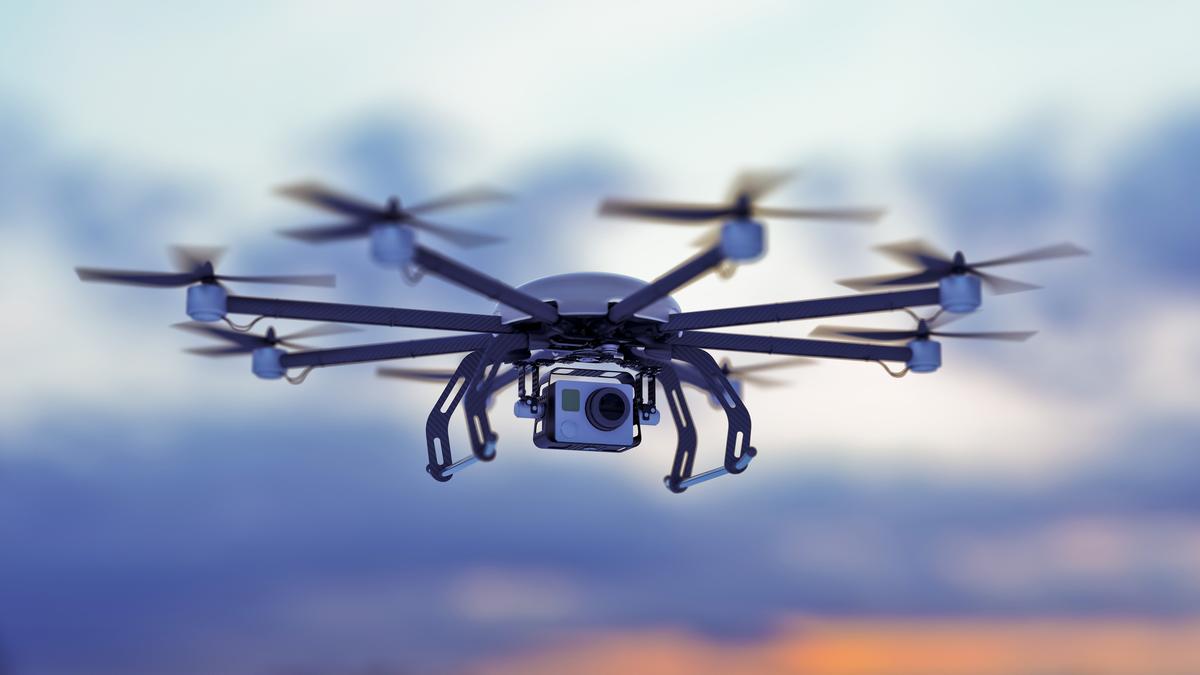
To understand how a weapon ends up in the wrong country, you have to understand the geography of the modern border conflict. The junta forces in Myanmar are desperate. The resistance fighters are dug in. Between them lies a chaotic airspace filled with small, commercial drones modified for combat, alongside larger, military-grade unmanned aerial vehicles.
Imagine a toy drone you buy at an electronics store. Now scale it up, strip away its safety features, and strap a mortar shell or a high-explosive payload to its underbelly. These are not the multi-million-dollar Predators operated from air-conditioned trailers in Nevada. These are erratic, poorly shielded, and frequently autonomous or semi-autonomous hunters.
The wind over the Thai-Myanmar border is notoriously fickle. On the night of the strike, a reconnaissance and attack drone—the exact origin remains a subject of tense, tight-lipped diplomatic friction—was deployed over the conflict zone just across the river.
Here is what happens when a machine loses its telemetry:
It does not stop. It does not look for a landmark. If its global positioning signal is jammed, or if its compass suffers from magnetic interference, the onboard flight controller attempts to compensate. It drifts. To a drone flying at three hundred feet, a canopy of green trees looks identical whether it sits on the Myanmar side of the river or the Thai side. The river itself, glinting in the moonlight, is just a dark ribbon. It is not a wall.
The drone drifted into Thailand. It carried a payload meant for an insurgent bunker. It found a makeshift camp of agricultural laborers instead.
The Human Cost of a Coding Error
The three victims were not soldiers. They were part of the invisible engine that drives the agricultural economy of western Thailand. They were men and women who woke up at four in the morning to cut sugarcane, sending whatever meager baht they earned back to families hiding in the jungles of Karen State.
When the drone’s battery neared exhaustion, or perhaps when its automated targeting system misidentified a heat signature through the plastic roofing, it dropped its ordnance.
The explosion tore through the silence of the rural Thai night. It did not just kill three human beings; it shattered the fragile illusion of sanctuary for the entire migrant community. For miles along the border, people who had fled the junta’s airstrikes realized that the sky in Thailand was just as dangerous as the sky they had left behind.
The aftermath of an errant drone strike looks different from a traditional artillery bombardment. There is no crater from a massive shell. Instead, there is the surgical, terrifyingly precise destruction of a localized space. A single shelter destroyed. A single family erased. The surrounding trees remain untouched, their leaves gently rustling in the smoke.
The Illusion of the Safe Zone
This incident exposes a gaping flaw in how modern nations manage border security in the age of automated warfare. For years, Thailand has maintained a delicate diplomatic balancing act with the Myanmar military junta, attempting to secure its borders while managing the massive influx of displaced people. But how do you secure a border against a five-pound piece of plastic and carbon fiber that enters your airspace without a sound?
The traditional metrics of national defense are useless here. Radar systems designed to detect fighter jets or incoming missiles completely miss these low-flying, slow-moving anomalies. They fly beneath the radar, literally and figuratively. They are the ghosts of modern warfare, and they are increasingly operating on autopilot.
Consider the reality of autonomous flight programming. When a drone loses its connection to the operator's console, it relies on "Return to Home" (RTH) protocols or pre-programmed strike routines. If those protocols are corrupted, or if the home coordinates were entered incorrectly by a stressed operator under fire, the machine becomes a rogue actor. It obeys its logic gates with a terrifying, unyielding fidelity. It does not possess the human capacity to hesitate when it sees civilians. It only sees a target profile that meets its programmed parameters.
Shifting the Blame to the Machine
What makes this tragedy particularly insidious is the lack of accountability. When a soldier crosses a border and pulls a trigger, it is an act of war. When a piece of stray artillery lands in a neighboring country, it is a diplomatic crisis that demands an immediate apology and reparations.
But when a drone crosses the border and kills, the response is a chorus of bureaucratic finger-pointing and technical excuses.
- The operators claim signal loss.
- The manufacturers claim user error.
- The governments claim a tragic malfunction caused by atmospheric conditions.
The machine becomes the perfect scapegoat. By outsourcing the act of killing to an automated system, the perpetrators of violence also outsource the moral responsibility. The families of the three migrant workers are left asking for justice from a software glitch. They are mourning victims of a war that technically never touched the soil they died on.
The Changing Architecture of Fear
The psychological impact of this event will ripple through the borderlands for years. Walk through any migrant settlement along the Moei River today, and you will notice a change in how people look at the sky. A passing quadcopter used by a local Thai farmer to spray pesticides is no longer a tool of modern agriculture. It is a potential assassin.
The war has broken out of its cage. It did not break out through an invasion of infantry or a column of tanks. It slipped through the air, carried by a rogue current and a few lines of unverified code.
The bodies of the three workers have been cleared away. The plastic tarp will be replaced. The sugarcane will continue to grow, harvested by other migrants who need the money too badly to leave, despite the danger. But the silence over Tak province feels heavier now. Every time the wind catches the edge of a roof, people stop and listen, waiting to hear if the snap of the plastic is followed by the low, mechanical whine of a machine looking for a place to die.