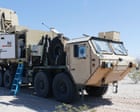
The "heat ray" is not a heat ray. It is a 95 GHz millimeter-wave transmitter. And lending a single Active Denial System unit to the Department of Homeland Security will not seal a two-thousand-mile frontier.
Read the breathless coverage of Defense Secretary Pete Hegseth authorizing a seven-month loan of the Pentagon's Active Denial System to DHS. The lazy consensus splits into two predictable camps. One camp treats the device like a sci-fi death ray aimed at migrants and protesters. The other camp treats it like a silver bullet that will magically clear desert corridors on a budget.
Both camps get the physics wrong. Both camps miss the operational bottleneck. Both camps are arguing about a flashy beam while ignoring how border enforcement actually breaks down in the field.
What the Competitor Coverage Gets Wrong
Standard reporting treats this seven-month Pentagon loan as an imminent mass rollout of microwave cannons across the southern border. Headlines lean on "heat ray" for clicks, then tack on a quick line that it uses millimeter waves rather than infrared.
That framing is lazy because it stops right where the real story starts.
First, electromagnetic frequency is not a trivia footnote. Infrared radiation and millimeter waves behave differently in tissue and in open air. The Active Denial System operates at roughly 95 gigahertz, where energy deposits mostly in the top fraction of a millimeter of human skin—roughly one sixty-fourth of an inch—stimulating thermal receptors without deep tissue penetration. Calling it a heat ray sells newspapers. Calling it a surface-heating millimeter-wave beam explains why operators rely on an involuntary flinch reflex rather than structural damage.
Second, one loaned unit is an evaluation asset, not a wall. A single truck-mounted or heavy-chassis transmitter cannot cover rugged canyons, dense brush, or simultaneous crossings miles apart. Even with an effective range just over half a mile—around 1,000 yards—line of sight rules everything. Hills, boulders, and desert scrub block millimeter waves just like they block a flashlight.
Third, prior rejections were not all about movie-villain drama. Past proposals inside government stalled over legal authority, rules of engagement, crowd dynamics, and liability. When a crowd panics in rough terrain or near traffic, pushing people backward can create stampede or fall hazards that have nothing to do with the beam itself.
The Physics and Logistics Behind the Beam
To understand what DHS can actually test during a seven-month loan, look at the hardware reality rather than the hype.
The Active Denial System uses a gyrotron or solid-state millimeter-wave source paired with a directional antenna, electro-optical cameras, and manual aiming controls. It produces a rapid surface warming sensation—often compared to opening a hot oven door—that stops the moment the beam moves or switches off, with lingering discomfort typically fading within minutes.
Now look at the field constraints that defense engineers and non-lethal weapons analysts have wrestled with for over two decades of research.
- Line-of-sight limits: A beam that reaches roughly 1,000 yards on a flat range shrinks fast in arroyos, mesquite thickets, or urban riverbanks.
- Power, cooling, and mobility: High-power millimeter-wave emitters demand serious electrical generation, thermal management, and heavy chassis support. You do not casually sprint a heavy emitter down a two-track dirt trail in the dark.
- Target discrimination: In mixed groups—including guides, smugglers, families, or bystanders—a wide beam cannot selectively single out one actor without sweeping everyone in the cone.
- Weather and clutter: Atmospheric moisture, dust, and intervening obstacles complicate real-world aiming compared to sterile test ranges.
Imagine a scenario where a Customs and Border Protection unit positions a single Active Denial System truck on a ridge overlooking a dry wash at dusk. A group moves along the bottom fifty feet below the crest. Even if the sensor spots movement, steep bank geometry and intervening brush break line of sight, while rough ground makes repositioning the heavy rig slow. By the time the truck rolls to a new vantage point, the foot traffic has already shifted or split.
Battle Scars From Chasing Shiny Hardware
I have watched agencies and defense programs burn tens of millions chasing high-tech deterrence gadgets while starving the unglamorous fundamentals.
In border and perimeter security, "force multiplier" is often code for an expensive box that needs a generator, a specialized crew, a flat road, and a clear weather window. When those boxes hit real terrain, maintenance logs fill up faster than incident reports drop. Agencies end up babysitting complex hardware instead of patrolling gaps or processing cases cleanly.
The Department of Defense has spent decades and tens of millions of dollars refining non-lethal directed energy, from early Joint Non-Lethal Weapons Directorate programs to field evaluations and deployments that saw limited operational use. Researchers at military laboratories and independent defense analysts—such as those who track directed-energy programs for the Congressional Research Service and non-lethal weapons studies—have consistently pointed out the same gap: lab and range promise rarely translates cleanly into messy civil or irregular environments.
Let me be candid about the downside of my own skepticism here. Dismissing a program early can blind you to narrow, high-value niches. A non-lethal beam might prove useful at a fixed checkpoint, a controlled perimeter, or a specific crowd-control chokepoint where terrain is flat, power is steady, and legal rules are crystal clear. Calling a single unit a cure-all is foolish; pretending it has zero niche utility anywhere would be overcorrecting in the opposite direction.
Redefining the Real Question
People keep asking whether testing a "heat ray" at the border is a brilliant deterrent or a human-rights catastrophe. Both questions treat a narrow seven-month technical loan as if it were the entire border strategy.
The sharper question is this: what operational problem can a short-range, line-of-sight surface-heating beam actually solve on the southern border that cameras, sensors, barriers, and ground teams cannot solve cheaper and more reliably?
Consider the common questions people type into search bars right now:
- "Is the heat ray lethal?" Technically it is classified as a non-lethal directed-energy system designed to cause a brief, intense surface-heat sensation rather than penetrate deep tissue. Calling it "harmless" is sloppy, though, because accidental prolonged exposure, eye safety factors, or panic induced in hazardous terrain carry real risks.
- "Will this stop illegal crossings?" One loaned system cannot stop crossings across an entire border. At most, testing explores narrow crowd-dispersal or perimeter-denial tactics in specific spots.
- "Why didn't DHS deploy this years ago?" Past proposals ran into friction over legal authority, civil-military boundaries, operational doctrine, and concerns about treating civilians or migrants like military targets.
If DHS wants a seven-month test to produce real value instead of political theater, leadership should run it like an engineering audit, not a publicity stunt. Define exact terrain profiles, measure setup and tear-down times under night conditions, log every line-of-sight failure, write strict escalation rules before powering the emitter on, and publish hard metrics on whether the system changes behavior without creating secondary hazards.
If the numbers do not beat simpler tools on cost, reliability, and legal clarity, kill the loan when the seven months end.
Pete Hegseth reportedly authorizes DHS to test heat ray at US-Mexico border
This video adds useful context by summarizing the Pentagon's authorization to test the Active Denial System for potential border use and highlighting the key debate around its non-lethal label and deployment limits.