The desk is small, made of commercial-grade laminate that has started to peel at the corners. Underneath it, the linoleum floor bears the scuff marks of ten thousand shoes belonging to people who sat here before, staring at the same green-tinted exit sign, waiting for a piece of paper to tell them whether their lives would continue or shatter.
Outside, the Washington air is damp and indifferent. Inside, the clock ticks with a heavy, mechanical malice.
When a legal order drops from the highest court in the land, it arrives on paper like this
The Map That Moved Beneath Their Feet
news
The desk in the office on K Street was cluttered with cold coffee cups and the crisp, heavy bond paper of legal briefs. Outside, Washington was turning the slate color of late autumn, the kind of afternoon where the light drains from the sky before the work day even finishes. Inside, attorneys and advocates stared at a single order handed down from the Supreme Court. It was dry text, dense with legal nomenclature, yet it carried an earthquake within its lines.
For months, a quiet administrative limbo had held thousands of lives in suspension. The question before the highest court in the nation was not merely procedural. It was about geography, about borders that shifted at the stroke of a pen, and about the sheer speed with which a human life could be redirected across oceans to a destination they had never chosen and did not know.
When the Court allowed rapid deportations to third countries to resume while litigation ground forward, the legal machinery did not grind; it roared back to life.
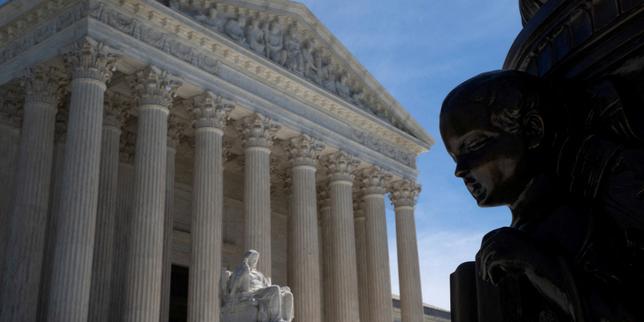
Consider what happens next to a person caught in that machinery. Imagine a hypothetical man named Mateo, sitting in a detention facility where the fluorescent lights buzz with a low, headache-inducing frequency. He has fled violence in Central America, carrying little more than a paper folder with a few identity documents and the memory of a narrow escape. To Mateo, the American legal system is an incomprehensible architecture of marble pillars and complex English phrases. He knows only that he is waiting for a judge to hear his plea for asylum.
Then, the rule changes. The court order drops.
Suddenly, the timeline compresses from months to hours. The abstract debate in the Supreme Court about administrative procedures, statutory authority, and the executive branch's latitude translates directly to a guard tapping on Mateo’s door, telling him to pack his belongings. He is not necessarily going back to the country he fled. Instead, under the revived third-country removal protocols, he might be sent to a nation in Europe, Africa, or another part of the Americas with which he has no cultural ties, no family, and no security.
To understand why this legal battle matters so deeply, you have to look past the Supreme Court docket and examine the mechanics of modern migration policy. The United States immigration system has long struggled with a profound backlog—millions of cases stacked in administrative courts like cordwood, waiting for adjudication. Within this pressure cooker, the government has continually sought tools to manage the flow at the southern border.
Accelerated removal processes are designed for speed. They bypass the traditional, lengthy immigration court hearings, allowing border authorities to swiftly return individuals either to their home countries or, crucially, to third nations that agree to accept them under bilateral or multilateral agreements.
Proponents of these swift returns argue that national sovereignty requires operational flexibility. Without the ability to enforce quick removals, they contend, the system becomes an open invitation for non-meritorious claims, overwhelming detention resources and incentivizing perilous unauthorized journeys. From this perspective, the Supreme Court's decision to let the policy resume is a necessary validation of executive authority to maintain order at the gates.
Yet, human rights advocates view the same mechanism through a lens of profound alarm. They point to the principle of non-refoulement—the foundational tenet of international refugee law that prohibits returning individuals to countries where they face persecution or torture. When a person is shipped off to a third country under a rushed agreement, critics argue, there is rarely adequate time or infrastructure to evaluate whether that third country is genuinely safe for them, or whether it will respect their right to seek asylum.
The legal journey of this specific policy wound its way through the lower courts like a slow-moving storm. Lower federal judges had previously thrown up roadblocks, expressing deep skepticism over whether the executive branch had stretched its statutory powers past the breaking point. They questioned whether sending asylum seekers to entirely unfamiliar nations without robust procedural safeguards violated the Administrative Procedure Act or statutory asylum provisions enacted decades ago.
When the case reached the Supreme Court, the justices faced a familiar dilemma: balancing the immediate operational needs of the executive branch against the preservation of the status quo while complex constitutional and statutory questions are litigated on their merits. By lifting the stays that kept the policy frozen, the Court signaled that the government could proceed with these rapid third-country transfers while the underlying lawsuits continue to wind their way through the appellate pipeline.
It is a temporary green light, but in the realm of immigration enforcement, temporary measures often leave permanent footprints.
Think back to Mateo. For a migrant dropped into a third country, the struggle is immediate and disorienting. Language barriers compound bureaucratic confusion. Legal representation is often virtually non-existent in the initial weeks. The safety net that domestic asylum proceedings theoretically provide is replaced by an entirely new set of foreign jurisdictions and local laws. Even if the legal challenges eventually succeed in a U.S. court months down the line, the remedy can feel hollow to someone already displaced thousands of miles away.
This is the hidden cost of procedural battles in high courts. They are fought with footnotes, citations to nineteenth-century precedents, and dry oral arguments, but their shockwaves register in human currency.
The debate over third-country deportations touches on a deeper, unresolved question about the identity of the modern state. How do wealthy, stable democracies balance their obligations to the desperate with their desire for territorial control? There is no easy answer, no clean mathematical formula that reconciles humanitarian imperatives with border management.
As the legal teams prepare for the next round of briefs and oral arguments, the machinery of removal continues to hum quietly in the background. Planes take off. Files are stamped. The map of the world shifts slightly for individuals whose names will never make the headlines.
The courtrooms will eventually issue a final ruling. The justices will write their opinions, parsing the fine print of immigration statutes and executive powers. But long after the ink has dried on those formal pages, the human consequences of this legal pivot will continue to ripple outward, shaping lives in quiet corners of the globe far removed from the marble halls of Washington.