TikTok just dropped its official "BookTok" bestseller list, and the industry is acting like they’ve discovered fire. They haven't. They’ve just built a faster treadmill for mediocrity.
The breathless reporting around titles like The Housemaid and Fourth Wing claiming the top spots misses the point so spectacularly it borders on negligence. Most pundits are celebrating this as a "democratization" of literature. They argue that because millions of teenagers are filming themselves crying over a paperback, the publishing industry is finally "healthy." Discover more on a related topic: this related article.
It isn't. It’s an echo chamber disguised as a marketplace.
The Algorithmic Flattening of Culture
The core failure of the TikTok bestseller list is that it doesn't track what people are reading. It tracks what people are buying to belong. Additional reporting by Variety delves into comparable perspectives on the subject.
In the traditional publishing world—the one we used to mock for being "gatekept"—editors at least attempted to curate based on craft, voice, or historical significance. Now, the gatekeeper is a line of code designed to maximize "watch time."
The math is simple and devastating. If a book has a "hook" that can be explained in three seconds—usually a tired trope like "enemies to lovers" or "there was only one bed"—the algorithm pushes it. If the book requires a slow burn, nuanced character development, or (heaven forbid) a challenging vocabulary, it dies in the darkness of zero views.
We aren't seeing a literary revolution. We are seeing the "Spotify-cation" of books, where every story is sanded down to fit a specific, predictable vibe. If it doesn't fit the aesthetic, it doesn't exist.
Why the Bestseller List is a Lagging Indicator
The industry treats the TikTok list as a discovery tool. It’s actually a graveyard.
By the time a book like Fourth Wing hits an official TikTok-branded list, the trend has already peaked. The "insiders" moved on months ago. What you're seeing is the mass-market sludge that follows a genuine cultural moment.
I’ve watched publishers dump six-figure marketing budgets into "replicating" TikTok success by hiring influencers to "react" to books. It almost always fails. Why? Because you cannot manufacture authenticity with a spreadsheet.
Real discovery happens in the margins. The TikTok list merely codifies the consensus of the loudest voices. It tells you what everyone else is reading so you can buy it, put it on your shelf, and feel like part of the "community" without ever cracking the spine.
The Myth of the "Reading Renaissance"
Everyone loves to cite the statistic that "BookTok is making kids read again."
Is it? Or is it making them collect?
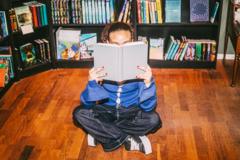
Data from the Association of American Publishers shows a massive spike in sales, yes. But look closer at the engagement. We are seeing a rise in "shelfies" and "haul videos" where the physical object is treated as a fashion accessory.
We are training a generation to value the brand of being a reader over the actual act of reading. When a list is curated by a social media platform, the "best" books become the ones that look best on a bedside table under a ring light.
The Tropification of Literature
The most dangerous byproduct of this list-driven culture is the death of the "Plot."
Go to any bookstore today. The shelves are organized by "Tropes."
- Enemies to Lovers
- He Falls First
- Grumpy x Sunshine
This is not how you categorize art. This is how you categorize a commodity. When readers start demanding books based on specific structural checkboxes, authors stop writing stories and start filling out forms.
The TikTok list reinforces this behavior. It rewards authors who write specifically for the 15-second clip. The result? Books that have one or two "viral" scenes surrounded by 400 pages of filler that would have been cut by any competent editor ten years ago.
The Professional’s Guide to Ignoring the Hype
If you are an author, a publisher, or a serious reader, looking at the TikTok bestseller list for "what's next" is like looking at a rearview mirror to see where you're driving.
Stop trying to "crack" the TikTok code. The code is designed to use you, not help you.
- Stop writing for tropes. The moment a trope becomes a "trend," it is already dead. By the time your "Grumpy/Sunshine" hockey romance hits the shelves, the audience will have moved on to "Sentient Toaster/Victorian Ghost" or whatever the next absurdity is.
- Ignore "Aesthetics." Books are not wallpaper. If your primary concern is the color of the sprayed edges, you are a decorator, not a writer.
- Read outside the algorithm. Find books that have zero hashtags. Find books that make you uncomfortable. Find books that don't have a "spicy" rating on a scale of one to five chili peppers.
The Economic Reality
Let’s talk about the money, because that’s what this list is really about.
TikTok isn't launching this list to help authors. They are launching it to keep you on the app. By integrating "Shop" features directly into the "List," they are turning your reading habit into a closed-loop transaction.
They own the data. They own the audience. They now own the "authority" on what is good.
Publishers are currently handing over the keys to their kingdom because they are desperate for the sales. But they are trading their long-term cultural relevance for a short-term bump in quarterly revenue. When the algorithm changes—and it will—the publishers who built their entire strategy around "BookTok" will find themselves standing on a trapdoor.
The End of Influence
The "Heated Rivalry" between titles on these lists is a manufactured drama. It’s professional wrestling for people who wear cardigans.
There is no rivalry. There is only the churn.
The TikTok bestseller list is a monument to the temporary. It celebrates books that are designed to be consumed and forgotten. It rewards the loud, the shallow, and the repetitive.
If you want to know what the world will be reading in fifty years, don't look at a list generated by a Chinese tech giant's engagement metrics. Look at the books people are still talking about even though no one made a "transition" video for them.
The industry thinks it’s winning. In reality, it’s just paying for the privilege of being replaced.
Put the phone down. Close the app. Go find a book that doesn't have a "As seen on TikTok" sticker on it.
Your brain will thank you.