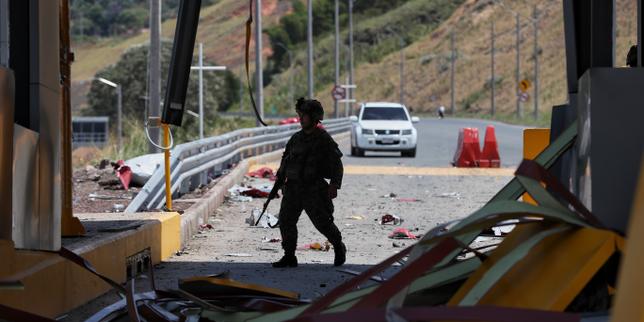
Explosions don't wait for transition teams to unpack their briefcases. Barely twenty-four hours after Abelardo de la Espriella took the oath of office in Cali, a highway toll booth near the city was blown to pieces by dissident factions of the Farc. It wasn't just a random act of vandalism. It was a clear, violent declaration of war aimed squarely at a government that promised to throw out the playbook of the political left.
If you thought the security crisis in Colombia would quietly fade away with a new election, you're missing the entire picture. The country's ongoing conflict has entered a much harsher phase, and the incoming administration's hardline stance is already triggering a ferocious armed response from rebel groups.
The Reality Behind the Cali Toll Booth Attack
The military confirmed that explosives leveled the toll station near Cali on a Saturday, coming hot on the heels of de la Espriella's swearing-in ceremony. Moving the presidential inauguration away from Bogotá to Cali was supposed to project strength. Instead, it put the event right into a volatile region where underground factions still hold significant leverage.
Dissident Farc units didn't waste time testing the new commander-in-chief. De la Espriella, a 48-year-old conservative lawyer with dual citizenship in the United States and close ties to Donald Trump, campaigned on an unyielding platform. He promised a total crackdown on narcoterrorism without breathing room for negotiations.
The rebels are responding in kind. Farther north in the Cesar department, a police post was simultaneously hit by a drone carrying explosives, killing an officer. These aren't isolated incidents. They are coordinated messages from groups refusing to be swept aside by a sudden shift toward the political right.
Why the Total Peace Experiment Failed
To understand why these attacks are happening now, you have to look at what came right before. Former president Gustavo Petro spent years trying to negotiate total peace deals with every armed group, cartel, and guerrilla faction operating within national borders.
That strategy didn't stop the violence. It gave cartels and dissidents time to rearm, regroup, and expand their turf. Colombia remains the top producer of cocaine globally, and softer policies simply allowed trafficking networks to entrench themselves deeper into rural communities.
De la Espriella won the June election by tapping into deep public fatigue with that approach. Citizens were tired of empty promises and rising insecurity. Voters wanted a leader who would stop talking and start fighting back. But shifting gears from negotiated settlements to military offense always creates immediate friction. The cartels and dissident factions know their survival depends on destabilizing the state before military campaigns can ramp up.
What Comes Next for the New Administration
The playbook for the next four years looks entirely different from the previous administration's tenure. De la Espriella has made it clear he intends to lean heavily on international allies. Partnerships with Washington and Israel are returning to the forefront, pointing toward renewed aerial bombardments against guerrilla strongholds.
There are also active plans floating around to construct massive mega-prisons modeled after systems in El Salvador. It is a populist, high-risk strategy. If the government fails to secure the roads and cities quickly, public support will fracture under the weight of ongoing bombings and roadblocks.
Right now, the state is locked in a high-stakes game of chicken with heavily armed factions who have zero intention of laying down their weapons voluntarily. Expect more friction on the highways, heightened security alerts across major urban centers, and a rapid escalation of state-backed military operations in the coming weeks.