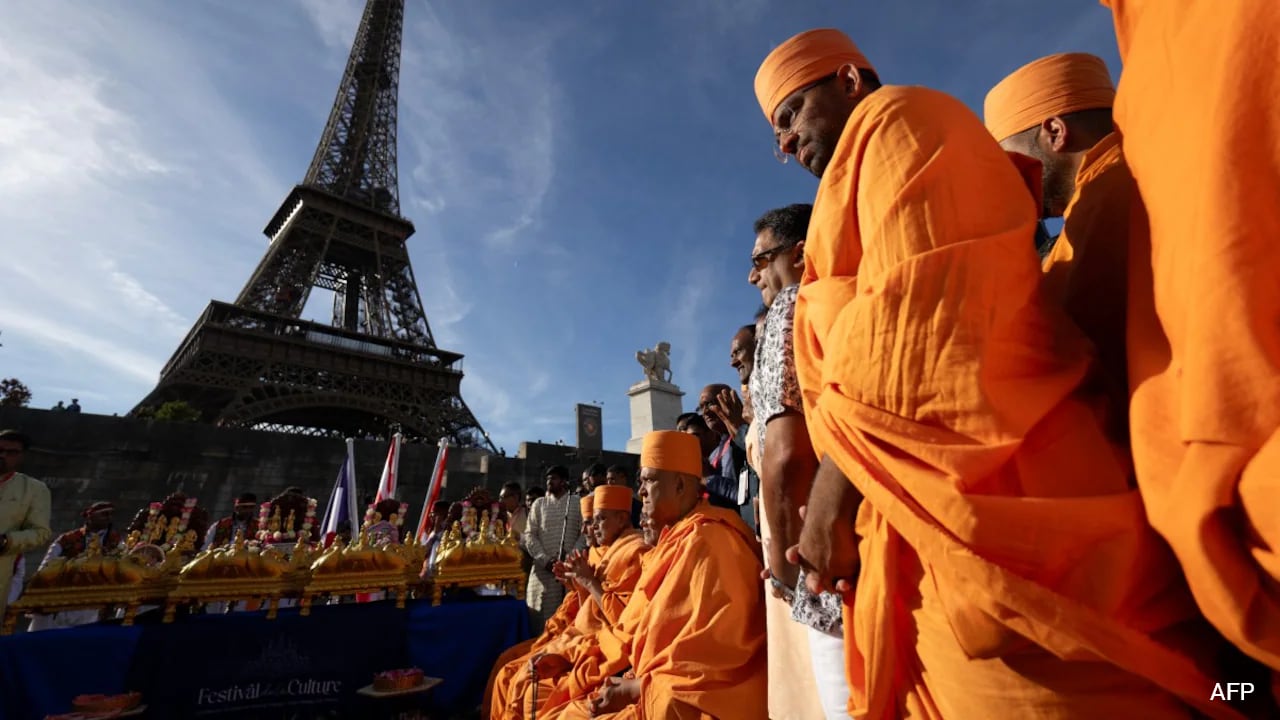
The media wants you to believe this is a simple clash of civilizations. A high-profile resignation at Paris's most iconic landmark, female workers sidelined, an international religious delegation walking through. The headlines write themselves: ancient dogma crashes into modern republican values. It is clean, lazy outrage bait. It gives everyone a neat villain and an easy soapbox.
It is also completely wrong. Meanwhile, you can read related developments here: Why Raiding the Pension Triple Lock for Burnham Social Care Misses the Real Fight.
The resignation of Patrick Branco Ruivo, the director general of the company operating the Eiffel Tower, following the removal of female staff during a visit by a delegation from the Hindu sect BAPS, is being framed as an inevitable casualty of religious intolerance. Pundits are shrieking about foreign entities dictating terms on French soil. Politicians are posturing about the sanctity of equality.
Stop buying the script. This was never a theological crisis. It was a masterclass in spineless corporate cowardice. To understand the bigger picture, we recommend the excellent analysis by USA Today.
The Institutional Rot We Refuse To Name
Let us look at what actually happened behind the scenes before we point fingers across oceans. An independent investigation established something crucial that the initial outrage cycle conveniently glossed over: the delegation never actually issued an explicit demand to purge women from the premises.
Read that again. The visitors explained their personal spiritual practices to management beforehand—practices observed by certain monks within their order. They did not demand a structural overhaul of French labor laws. They did not issue an ultimatum.
Yet the management panicked. Why? Because modern institutional leadership is marinated in a toxic cocktail of obsequiousness and fear. When high-net-worth tourism, VIP delegations, or powerful stakeholders enter the building, bureaucratic management abandons its own internal standards instantly. They do not wait to be forced; they prostrate themselves preemptively.
I have watched corporate executives fold like cheap lawn chairs the second a major client hints at a preference. They project their own insecurities onto the client, assuming unreasonable demands, and then enforce them with zealous stupidity. The French operational team did not act out of respect for an ancient eastern tradition; they acted out of a hyper-modern corporate reflex to grovel for VIP attention.
The Hypocrisy Of The Outrage Machine
The public reaction has been equally disingenuous. French politicians rushed to microphones to declare that no foreign belief system will dictate the place of women in France. It sounds fierce. It plays well on evening news broadcasts.
It is also deeply hollow.
If French institutions actually cared about systemic workplace equality with the fervor they are currently displaying, they would look closely at their own internal promotion pipelines, wage gaps, and labor conditions that persist long after the cameras leave the Iron Lady. Instead, they used a convenient scapegoat. Firing or accepting the resignation of a top executive is a blood sacrifice. It lets the governing body pretend that a systemic cultural failure within middle management can be solved by loopholing one man out of a job.
When a public utility bends over backward, it is because the leadership views the institution as a commercial playground rather than a public trust. The moment money, prestige, or a heavy-hitting international presence enters the lobby, principles are treated as negotiable line items.
Unpacking The Real Failure Point
Let us define terms precisely. What occurred at the tower was an administrative failure of judgment, not a legal mandate imposed by foreign visitors.
- Anticipatory Obedience: Management assumed what the visitors wanted without verifying the operational cost. This is the hallmark of weak leadership.
- Operational Cowardice: Moving female employees away from their posts isn't diplomacy; it's self-sabotage driven by administrative panic.
- Scapegoating: Blaming the external group entirely allows the board and municipal overseers to wash their hands of their own hiring and oversight failures.
When you manage a global landmark, your primary job is to uphold the operational integrity of the space. The moment you start shuffling your own workforce into the shadows to appease anyone—whether a corporate sponsor, a political lobby, or a religious delegation—you have broken the social contract of your workplace.
The workers who walked out understood this far better than the executives did. They didn't strike because they wanted a geopolitical debate; they struck because their basic dignity as labor was traded away by bosses who treat human beings like movable chess pieces.
Stop Fighting Phantom Wars
We love to turn local administrative incompetence into global culture wars because it requires zero critical thinking. It allows everyone to retreat into their pre-existing biases. If you hate religion, you see proof of global regression. If you love outrage, you find another thread to pull.
Meanwhile, the actual problem remains untouched: bureaucratic systems are run by people terrified of saying "no" to power.
Until we stop letting spineless executives hide behind cultural misunderstandings of their own making, institutions will continue to crumble at the first sign of a VIP reservation. Stop blaming the visitors for asking questions, and start firing the cowards who were all too eager to hand over the keys.
This video provides additional context and breakdown regarding the reactions and cultural dynamics surrounding the Eiffel Tower administrative controversy.


