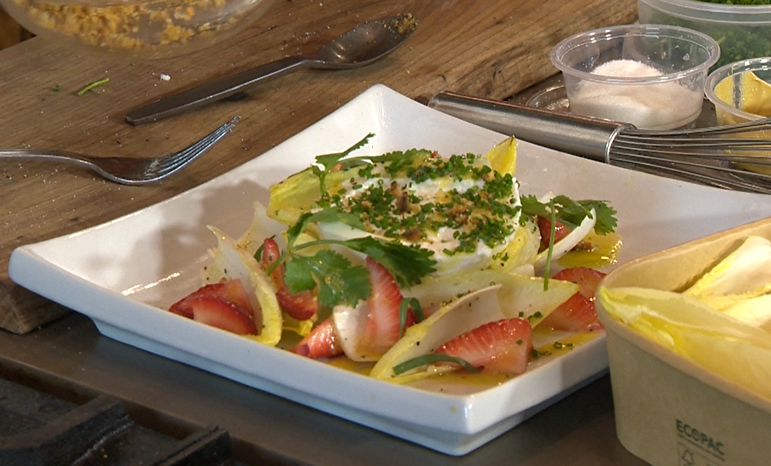
The rain had been falling for three weeks straight, the kind of heavy, gray drizzle that seems to seep directly into your bones and your disposition. My kitchen felt small. Cold. The air carried that stagnant, end-of-winter density that makes you want to crawl back into bed and wait for May. I stood in front of the open refrigerator, staring at a plastic container of leftover takeout, feeling a profound numbness. It wasn't just hunger; it was a lack of vitality. We live so much of our modern lives in this state of climate-controlled suspension, eating tomatoes in January and apples in July, that we forget what a season actually feels like. We have traded the sharp, electrifying joy of anticipation for the dull convenience of constant availability.
Then the local market got its first delivery of local spring strawberries. Don't forget to check out our recent post on this related article.
They were small, slightly irregular, and smelled so intensely of warm earth and sugar that it felt like an insult to the fluorescent lights of the grocery store. Next to them sat a crate of pale, tightly furled Belgian endives, looking almost skeletal, and a few containers of fresh burrata soaking in liquid. It was an accidental trilogy. On paper, it sounds like an erratic combination. Why throw the pristine sweetness of the year’s first berries against the aggressive, medicine-cabinet bitterness of winter’s parting greens, then smother it all in rich dairy?
Because life is rarely just one note. If you want more about the context here, ELLE provides an excellent breakdown.
The Anatomy of Contrast
We are conditioned to seek comfort in food, which usually translates to monotony. Think of the modern palate as a flat line of salt, fat, and sugar. We want our sweets sweet, our savory dishes salty, and anything remotely challenging scrubbed from the menu. But true culinary satisfaction—the kind that makes you sit up straight and look at your plate with a sudden, sharp clarity—relies entirely on friction.
Consider what happens when you bite into a leaf of raw endive. It is crisp, watery, and then, almost immediately, a wave of clean bitterness hits the back of your tongue. In many ancient cultures, bitter herbs were consumed in the spring to wake up the digestive system after months of heavy, preserved winter foods. It is a biological reset button. But eaten alone, endive can feel punitive. It needs an antagonist.
Enter the spring strawberry. These are not the massive, hollow, white-centered monoliths bred for shipping durability that dominate the winter aisles. These are fragile. They bleed red juice the moment you touch them. Their sweetness is high-toned and acidic, a bright spark that cuts clean through the darkness of the bitter green.
But the human palate can only bounce between bitter and sweet for so long before it grows tired of the whiplash. The equation is incomplete. It requires a mediator, something to soften the edges of the collision.
The White Flag of the Plate
Imagine a quiet Sunday afternoon. You have invited two friends over, the kind of friends who know your flaws and don't care that your apartment hasn't been properly dusted since the holidays. The table is bare wood. The wine is cheap but cold. You want to feed them something that feels like an occasion, but you refuse to spend four hours sweating over a hot stove while the rare afternoon sun finally breaks through the clouds.
This is where the burrata changes everything.
Burrata is an exercise in suspense. On the outside, it looks like a simple ball of fresh mozzarella, smooth and firm. But when you tear it open with your fingers—knives are too clinical for this—the interior spills out in a luxurious, slow-motion wave of stracciatella, a mixture of shredded curds and heavy cream. It is decadence masquerading as simplicity.
When you assemble this dish, you are not cooking in the traditional sense. You are orchestrating an encounter. You lay the pale, scoop-shaped leaves of the endive down first, creating a textured bed. You tear the burrata and place it in the center, letting the cream pool outward. Then you scatter the strawberries, some halved, some crushed slightly between your thumb and forefinger to release their juices into the cream. A drizzle of your best olive oil, a splash of sharp white balsamic or lemon juice, and a handful of cracked black pepper.
That is it. No heat. No timers. No complicated techniques.
A Lesson in Friction
When my friends sat down that rainy Sunday, there was a visible hesitation. One of them, let's call him Sarah, looked at the plate with a skeptical eyebrow raised. She likes her desserts sweet and her salads predictable. A strawberry, to her, belonged in a shortcake or a bowl of cereal, not rubbing shoulders with a vegetable that looked like a tiny, pale cabbage and tasted like a tonic.
"Trust me," I said. It was a plea as much as an invitation.
She took a leaf of endive, used it to scoop up a chunk of the creamy burrata, and made sure a glistening piece of strawberry was perched on top. She ate it in one bite.
Silence.
The first sensation is the crunch of the endive, followed by the cool, rich envelope of the cream. The fat coats the tongue, neutralizing the bitterness before it can become overwhelming. Then, as you chew, the strawberry bursts, releasing its sweet, acidic juice, which cuts through the richness of the cream and wakes up the palate all over again. The bitterness of the endive returns at the very end, a clean, refreshing echo that washes the palate clean, leaving you wanting another bite.
Sarah didn’t say anything for a full ten seconds. She just reached for another leaf.
We confuse harmony with sameness. We think that for things to go together, they must share the same DNA. But the most memorable experiences in life, much like the most memorable meals, come from the collision of opposites. The bitterness makes the sweetness precious; the cream makes the bitterness bearable. Without the endive, the strawberries and burrata would be cloying, a heavy dessert masquerading as a starter. Without the strawberries, the dish would be a stark, austere exercise in endurance.
The Luxury of the Present
There is a distinct anxiety to eating well in the modern era. We are bombarded with rules, superfoods, macro-tracking, and dietary dogmas that turn the dinner table into a minefield of guilt and optimization. We have lost the ability to simply taste what is in front of us.
This combination of ingredients demands that you pay attention. Because it is unheated, it changes by the minute. The juices of the strawberries slowly marinate with the olive oil and the cream, creating a pink, marbled sauce at the bottom of the platter that you will eventually find yourself scraping up with a torn piece of crusty sourdough bread. If you leave it sitting for an hour, the endive will lose its structural integrity and the cream will grow warm. It forces you to be present. You must eat it now, in this moment, with these people.
It is a reminder that spring is not a permanent state of being. It is a brief, glorious transition between the frozen stagnation of winter and the heavy heat of summer. The strawberries will soon change, becoming larger, darker, and jammed with sugar, losing that initial, electric acidity. The endives will disappear from the markets entirely, replaced by summer squash and heirloom tomatoes.
As we cleaned the empty platter, the sun finally hit the kitchen floor, throwing long, warm rectangles of light across the linoleum. The gray mood of the past three weeks had lifted, not because the weather had completely cleared, but because we had chosen to acknowledge the shift. We had tasted the cold ground and the sweet air all at once, gathered on a single ceramic plate.
Sometimes, the best way to understand the world around us is to stop trying to complicate it. We don't need complicated reductions, sous-vide machines, or twenty-ingredient recipes to feel alive. We just need to allow the bitter and the sweet to exist in the same space, to let them fight it out on the tongue, and to have the patience to savor the beautiful, messy balance that follows.