The Mechanical Failure Mode of the Follicle
Ingrown hairs, clinically categorized as pseudofolliculitis barbae when chronic and inflammatory, represent a fundamental mechanical failure in human hair emergence. The standard behavioral approach to this condition relies on rudimentary prohibitions: do not pop, do not pick, do not pluck. While these directives prevent acute trauma such as hyperpigmentation, scarring, and secondary bacterial infection, they fail to address the underlying physical mechanics governing follicular pathobiology.
To systematically treat and prevent trapped hairs, one must understand the two distinct pathways of entrapment: extrafollicular penetration and transfollicular penetration. Extrafollicular penetration occurs when a shaved or waxed hair curls back and pierces the interfollicular epidermis, triggering a foreign body reaction. Transfollicular penetration happens when the hair fiber grows directly through the follicular wall beneath the skin surface, typically induced by abnormal curvature or mechanical obstruction of the infundibulum. Discover more on a connected subject: this related article.
When an individual attempts manual extraction via fingernails or tools, they apply uncontrolled normal and shear forces to a compromised tissue microenvironment. This action disrupts the dermal architecture, drives keratin debris deeper into the surrounding tissue, and converts a low-grade inflammatory response into a suppurative process. Effective management requires substituting these erratic physical interventions with a systematic protocol: chemical modulation of the stratum corneum, mechanical trajectory redirection, and thermal or chemical hair-removal optimization.
The Three Operational Pillars of Follicular Clearance
Managing chronic entrapment requires optimizing three discrete biological variables: keratinization rate, hair shaft curvature, and surface friction. If any single variable remains unaddressed, recurrence is mathematically guaranteed. Further analysis by Healthline highlights similar perspectives on the subject.
1. Stratum Corneum Desquamation Dynamics
The primary barrier to natural hair emergence is hyperkeratosis at the follicular ostium. When corneocytes accumulate faster than they shed, they form a physical seal over the pore. The hair shaft, possessing continuous longitudinal growth velocity, encounters this dense cellular matrix and is forced to deflect downward or laterally.
To restore patency, the microenvironment requires keratolytic agents that systematically weaken the intercellular adhesion of the stratum corneum. Alpha-hydroxy acids, specifically glycolic acid, operate via water-soluble mechanisms to break down ionic bonds among corneocytes in the superficial layers. Beta-hydroxy acids, primarily salicylic acid, provide lipid-soluble penetration capable of traversing sebum-clogged ostia to clear debris directly within the infundibulum. Integrating these agents at clinically validated concentrations shifts the tissue from an occlusive barrier to a permeable matrix, allowing the emerging shaft to follow the path of least resistance.
2. Shaft Trajectory and Mechanical Modulation
Hair morphology dictates susceptibility to entrapment. Elliptical cross-sections, common in curly and tightly coiled hair types, inherently possess a higher radius of curvature. As the hair emerges past the sebaceous gland, this geometric asymmetry causes the distal tip to arc back toward the epidermis.
Intervention at this stage requires altering the mechanical properties of the hair fiber itself. Thioglycolate-based chemical depilatories, while alternative options to shaving, operate by breaking the disulfide bonds (cystine cross-links) within the keratin cortex. This chemical restructuring softens the hair shaft, changing its blunt-tipped geometry into a tapered, structurally compliant fiber less capable of piercing adjacent skin tissue upon regrowth. Conversely, traditional multi-blade razors utilize a lift-and-cut mechanism that stretches the hair shaft via the primary blade, allowing subsequent blades to cut the fiber below the level of the epidermis. Upon retraction, the sharp, acutely angled tip sub-surface grows directly into the lateral follicular wall. Eliminating multi-blade friction in favor of single-blade safety razors set to a neutral blade exposure prevents sub-surface retraction and subsequent transfollicular penetration.
3. Inflammatory Cascade Mitigation
When mechanical penetration occurs, the body identifies the keratin fiber as an endogenous foreign body. This triggers a localized upregulation of pro-inflammatory cytokines, including interleukin-1 and tumor necrosis factor-alpha, resulting in papules, pustules, and localized erythema.
Left unchecked, this immune response deposits fibrotic tissue around the follicular unit, permanently altering the exit angle of the pore and ensuring future entrapments in the exact same coordinate. Suppressing this cascade requires topical anti-inflammatory agents, such as low-potency topical corticosteroids for acute flares or botanical agents with established cyclooxygenase inhibitory profiles, paired with strict avoidance of mechanical disruption.
The Cost Function of Manual Extraction
The prohibition against popping, picking, and plucking is frequently treated as an arbitrary rule of thumb. In reality, it is a risk-mitigation boundary designed to prevent exponential increases in tissue damage.
Manual extraction operates with an extremely low margin of error. When a person locates an inflamed papule and applies lateral pressure with fingers or metal extractors, the localized pressure exceeds the tensile strength of the inflamed follicular epithelium. The wall ruptures internally, spilling keratin, sebum, and bacterial biofilms into the surrounding dermis. This event transitions a localized surface irregularity into a deep dermal abscess.
Furthermore, plucking a hair shaft via tweezers alters the biological life cycle of the unit. The hair is forcibly avulsed from the anagen or telogen bulb, frequently shearing the inner root sheath. The regenerating hair that subsequently forms months later must navigate compromised, scar-altered follicular channels. This dramatically increases the probability of chronic recurrence, establishing a feedback loop where extraction directly causes future entrapments.
Implementation Protocol for Long-Term Prevention
To achieve sustained resolution of follicular entrapment, individuals must transition from reactive symptom management to preventative environmental control. This operational framework mandates a strict sequencing of daily hygiene, chemical maintenance, and hair removal physics.
The foundational step involves regulating cleansing mechanics. Harsh physical scrubs utilize irregular particulate matter that creates micro-abrasions across the epidermis, upregulating inflammatory markers and compacting cellular debris into open pores. These must be replaced entirely by chemical exfoliants used on a consistent, titrated schedule—starting at alternate-day application to assess cutaneous tolerance before scaling to daily use.
For individuals relying on shaving, preparation must prioritize hydration and reduction of cutting resistance. Pre-shave application of warm water and emulsifying agents swells the hair shaft, increasing its water content and reducing the force required to sever it by up to fifty percent. Shaving must occur strictly in the direction of hair growth, known as with the grain. While shaving against the grain yields a closer tactile finish, it increases the incidence of sub-surface retraction and acute mechanical irritation.
When topical and mechanical adjustments fail to alter the recurrence rate of chronic pseudofolliculitis barbae, the underlying variable—the presence and trajectory of the hair follicle itself—must be targeted. Long-wavelength energy sources, such as Nd:YAG lasers operating at 1064 nanometers, target melanin within the hair bulb while minimizing thermal diffusion to surrounding epidermal tissue. By systematically reducing the density and cross-sectional diameter of the hair fiber over a series of treatment intervals, the physical volume of the offending fiber is diminished to a point where extrafollicular and transfollicular penetration events become structurally impossible.
Strategic Resource Allocation
Evaluate current grooming and skin management variables against the following operational hierarchy:
- Audit existing hair removal hardware immediately: discard multi-blade razors and transition exclusively to single-edge or single-blade systems with minimized blade exposure.
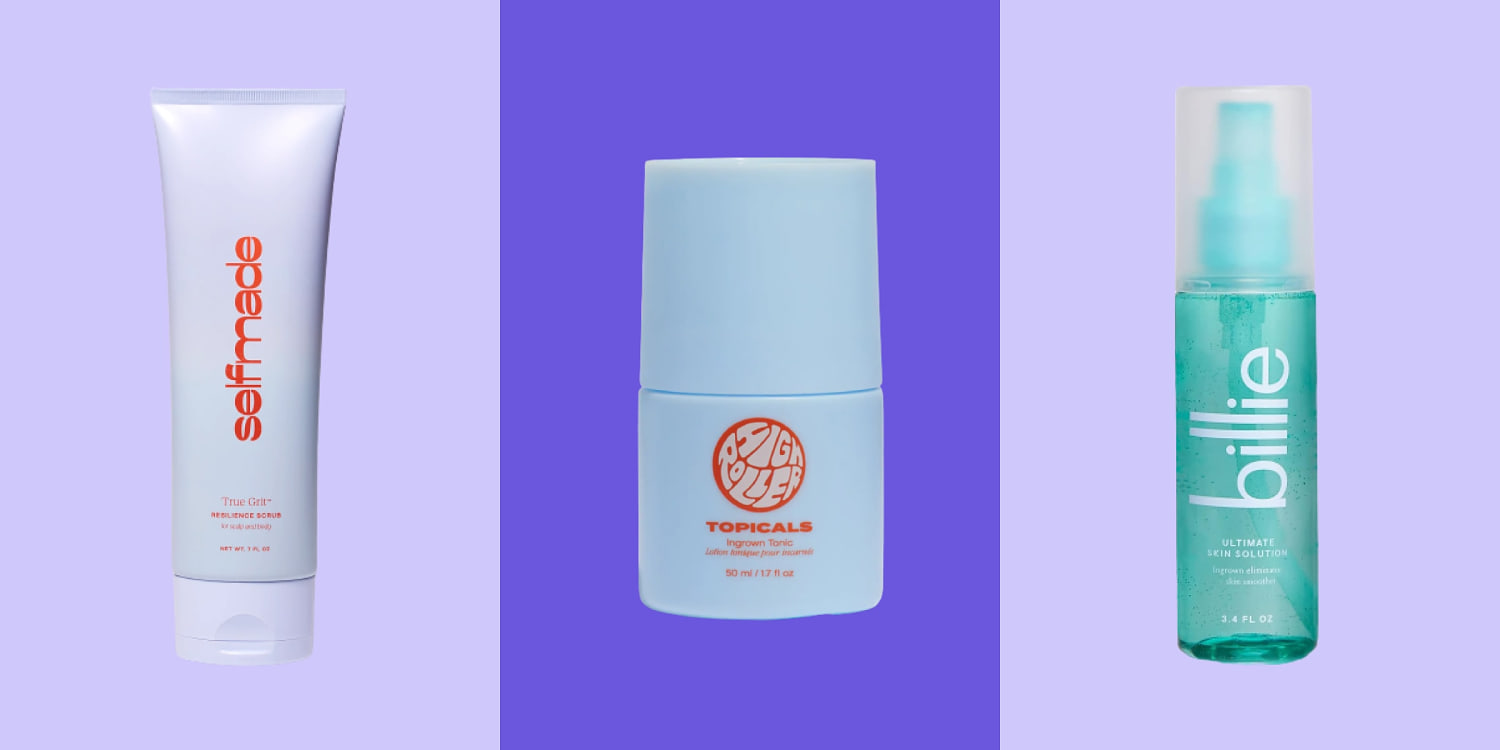
- Replace physical friction scrubs with calibrated chemical keratolytics, establishing a baseline rotation of salicylic acid for follicular clearance and glycolic acid for surface desquamation.
- Eliminate manual extraction tools entirely; substitute acute inflammatory management with localized anti-inflammatory topicals and targeted thermal compresses to encourage natural drainage.
- Assess follicle density and chronic scarring severity to determine the economic and biological viability of transitioning to long-term energy-based hair reduction modalities.