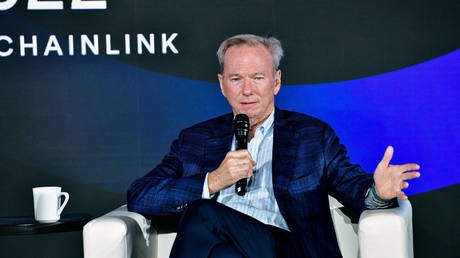
Bill Gates recently broke ranks with the incoming presidential administration's posture on artificial intelligence, labeling high-risk autonomous systems as potentially the most dangerous technology ever invented. While Washington prioritizes deregulation to outpace international rivals, the software pioneer argues that unchecked acceleration without rigorous safety protocols courts systemic disaster. The friction between political expediency and technical reality has never been sharper.
For months, the policy consensus in Washington has centered on speed. The prevailing argument is simple. If American firms slow down to build guardrails, foreign competitors will fill the vacuum, seizing geopolitical and economic dominance. Gates rejects this false dichotomy. Having spent decades watching software eat the world, he recognizes that code scales faster than accountability. When deployment outpaces comprehension, society absorbs the collateral damage.
The Anatomy of the Washington Deregulation Push
The political appetite for rolling back federal oversight on machine learning comes from a familiar playbook. Silicon Valley lobbyists and conservative policy groups argue that export controls, mandatory safety assessments, and ethical compliance boards stifle innovation. They want a frictionless frontier.
Yet treating intelligence infrastructure like social media apps ignores the physics of computation. Traditional software operates on deterministic rules. Programmers write instructions, and machines execute them. Large language models and autonomous agents function differently. They learn correlations, infer patterns, and generate outputs that surprise even their creators. When you deregulate an adaptive system, you are not freeing an entrepreneur. You are unmooring a black box.
Why Bill Gates is Sounding the Alarm
Gates is not a modern techno-pessimist. He spent his career preaching the gospel of digital efficiency. His warning carries weight precisely because he understands the commercial imperatives driving the industry. Silicon Valley operates on a scorched-earth growth model. Companies must ship products immediately, monetize rapidly, and fix flaws later.
That philosophy works when the worst-case scenario is a crashing browser. It fails catastrophically when applied to systems capable of optimizing logistics, writing malicious code, managing critical infrastructure, or generating hyper-realistic propaganda at scale. Gates points to the compounding risks of automated decision-making. We are handing critical choke points of human civilization to algorithms that cannot explain their own reasoning.
The Geopolitical Trap
The administration's central defense rests on the threat from abroad. If America pauses, authoritarian states will dictate the rules of the twenty-first century.
This argument is effective because it plays on genuine fears. However, rushing past safety parameters does not guarantee victory; it guarantees vulnerability. A compromised infrastructure or an uncontainable model collapse is just as devastating as a foreign adversary. Building fast on top of shaky technical foundations creates a fragile hegemony. True security requires resilient architecture, not a reckless race to the bottom.
Where the Policy Collides with Reality
The current political strategy assumes market forces will naturally correct corporate overreach. Proponents argue that if an algorithm fails, consumers will switch products. That logic collapses when applied to foundational machine learning layers embedded invisibly across financial markets, healthcare diagnostics, and national security grids. By the time a failure manifests, the feedback loop is too fast for human intervention.
Regulation is often cast as red tape designed to kill momentum. In technical engineering, safety margins are not obstacles to progress. They are the prerequisites that make high-speed travel possible. We do not remove brakes from high-speed trains to prove how fast they can go. We reinforce the tracks.
The debate between the White House and the tech establishment is not a disagreement over business tax rates or antitrust enforcement. It is a fundamental philosophical fracture over how humanity manages instruments of immense power. Ignoring the warnings of industry veterans in favor of short-term economic theater risks trading long-term stability for an ephemeral competitive edge. The systems we build today will outlive the politicians championing their deregulation, leaving future generations to manage the fallout of unmitigated speed.