The conventional narrative writes itself every single time Benjamin Netanyahu boards a flight to New York. The headlines scream about political isolation, domestic rage, roaring street protests, and international condemnation. The lazy consensus in foreign policy circles treats these optics as terminal. The assumption is simple: a leader hounded by demonstrators at home and snubbed by diplomats abroad is a wounded animal on the verge of political collapse.
It is a comforting fantasy for his critics. It is also completely wrong.
For decades, political analysts have misread Netanyahu's survival mechanism because they view power through a Western, institutional lens where consensus equals strength. In Israeli politics, and specifically in the ecosystem Netanyahu engineered, polarization is not a vulnerability. It is fuel. Every protest placard waved in Tel Aviv and every stern lecture delivered from a foreign podium does not weaken his domestic coalition; it tightens the vise grip he holds over his base.
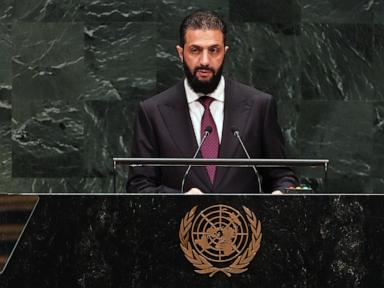
Let us look past the theater of the United Nations General Assembly and dismantle the myths driving modern geopolitical commentary.
The Isolation Fallacy
International isolation sounds devastating on paper. When foreign dignitaries skip speeches or issue biting communiques, diplomatic correspondents treat it as an existential crisis for the prime minister.
This misunderstands who Netanyahu is talking to.
He has never cared about winning over the editorial board of a major Western newspaper or charming the diplomatic corps in Turtle Bay. Those constituencies were never going to vote for him, fund his campaigns, or keep his coalition afloat. When Western capitals wring their hands over his defiance, they miss the domestic dividend. Every stern rebuke from a foreign capital functions as a badge of honor for a prime minister who has built a multi-decade career on a singular premise: the world will always abandon Israel, and only he has the stomach to stand alone.
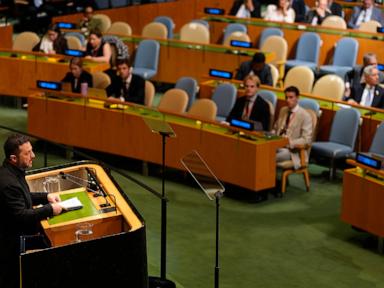
I have spent years watching political operators mistake international friction for domestic weakness. It is a fatal analytical error. When Netanyahu stands before a half-empty hall or faces a chorus of global condemnation, his core constituency does not see a pariah. They see a Churchillian figure absorbing the blows of a hostile international community on behalf of the nation.
Isolation is not a bug in his strategy. It is the core feature. The more the global establishment signals its exhaustion with his policies, the more indispensable he becomes to voters who despise that very establishment.
Protests as an Organizing Weapon
The street demonstrations outside his residence are framed as the opening act of his downfall. Hundreds of thousands march. Banners wave. Megaphones blare. The energy is electric, palpable, and entirely misdirected.
Street protests feel like power to the people holding them, but energy without structural leverage is just expensive theater. Netanyahu’s opponents make the classic mistake of assuming that volume equals momentum. They believe that if they make enough noise, the government will simply fold under the pressure of bad PR.
History shows the opposite. Right-wing coalitions in parliamentary systems do not fracture because liberals are angry; they fracture when their ideological flank is threatened from within. The massive waves of protest against the judicial overhaul and his wartime management actually achieved the exact opposite of what the organizers intended. They militarized the right. They forced wavering factions within his coalition to circle the wagons, terrified that abandoning the prime minister would look like capitulation to the streets.
Imagine a corporate turnaround artist facing a hostile employee walkout. If the CEO's primary goal is harmony, the walkout is a crisis. But if the CEO's goal is to consolidate absolute control over a loyalist board while purging dissenters, a massive, identifiable enemy gives him the perfect rallying cry. The protests provide Netanyahu with a permanent mobilization machine. His voters do not look at the crowds in Kaplan Street and think of democracy in action; they see an elite attempting to subvert the ballot box through sheer decibel level.
The Domestic Reality No One Wants to Print
Let us address the elephant in the room that foreign correspondents refuse to confront. Netanyahu is not surviving despite the chaos; he is surviving because of it.
The Israeli political landscape has undergone a profound structural shift. The old center-left alignment that dominated the country’s founding decades is gone, replaced by a demographic and ideological reality where traditional secular Zionism has bled power to religious and nationalist factions. Netanyahu did not create this demographic shift, but he is its master cartographer.
When analysts ask why his poll numbers do not crater after every crisis, they are looking at the wrong metrics. They measure aggregate national sentiment in a country where consensus has ceased to exist. In a deeply fractured tribal democracy, popularity is a localized currency. As long as Netanyahu holds the loyalty of the right-wing bloc—the hardliners, the ultra-Orthodox parties, and the security-hawk nationalists—his floor is remarkably high. And every time the international community attacks him collectively, his floor hardens into concrete.
The opposition continues to fall into a predictable trap. They spend their energy litigating his character, his legal troubles, and his diplomatic abrasiveness. They treat him like a conventional politician who can be shamed into resignation by bad headlines. But Netanyahu is operating on a different plane entirely. He treats politics as existential warfare, where conventional rules of reputational damage do not apply.
The Uncomfortable Truth About Defiance
There is a dark downside to this contrarian reality, and ignoring it would be intellectual dishonesty.
This strategy works brilliantly for individual political survival, but it comes at a staggering cost to the institutions of the state. By turning every policy disagreement into an existential struggle between the people and the elites, the social fabric of the country frays beyond repair. Trust in the judiciary, the military command, the civil service, and the press is systematically hollowed out.
Netanyahu’s genius has always been his ability to conflate his personal political survival with the survival of the state itself. When you convince millions of citizens that removing you means inviting national destruction, you insulate yourself from accountability. You create a binary choice: either back the strongman or risk catastrophe.
It is a ruthless, high-stakes game that leaves scorched earth in its wake. But as long as his opponents rely on polite diplomatic pressure, moral lecturing, and noisy weekend marches, the master tactician will keep winning the game.
Stop waiting for the speech at the UN to end his career. He wrote the script before he got on the plane.