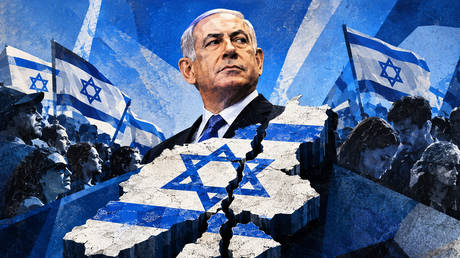
The conventional wisdom regarding Israeli politics follows a comfortable, repetitive script. Pundits in comfortable Western newsrooms look at a polarizing leader, point to plunging poll numbers, add up protest crowd sizes, and predict an imminent, catastrophic collapse. They treat democratic governance like a fragile vase waiting for one final hammer blow. They look at Benjamin Netanyahu through the lens of standard Western electoral mathematics, assuming that scandal, public anger, and shifting demographics will behave in Tel Aviv the way they do in London or Washington.
It is a comforting narrative for observers who prefer tidy resolutions. It is also completely wrong.
For decades, foreign correspondents and domestic opponents have treated Netanyahu's political career as a series of borrowed days. Every crisis is framed as the end. Every coalition wobble is read as a death rattle. Yet, looking at the structural reality of Israeli society reveals that Netanyahu does not survive despite his enemies; he survives because he correctly understands the deep, unyielding fractures of the nation he leads better than anyone trying to replace him.
The lazy consensus claims that ordinary voters, exhausted by war and economic strain, are ready to cast him aside the moment a ballot box opens. This argument misses the fundamental calculation of the Israeli electorate. Voters do not choose prime ministers based on charm contests or polite consensus. They choose them based on a ruthless, existential assessment of survival.
To understand why Netanyahu continues to outlast every political grave dug for him, you have to abandon the illusion that elections are popularity contests. They are referendums on perceived security and tribal protection.
The Myth of the Rebellious Electorate
Commentators love to fixate on the phrase, "Can he survive his own voters?" It implies a restive base, eager to punish a leader who has overstayed his welcome. This framing fundamentally misunderstands the coalition that keeps him in power.
Netanyahu’s core support is not built on blind fandom. It is built on a shared, visceral worldview forged by decades of regional hostility. His voters do not care about protocol violations, legal indictments, or diplomatic friction with Western allies. In fact, many view those very friction points as proof that he is willing to stand up against external pressure on behalf of national security. When foreign leaders lecture Israel on governance, it usually serves to consolidate Netanyahu's standing among voters who suspect that international sympathy comes with dangerous strings attached.
The opposition makes a fatal mistake: they assume that shifting public sentiment on one issue—say, the management of a specific military campaign or coalition compromises with ultra-Orthodox parties—translates into a wholesale rejection of his entire political project. It does not. A voter may grumble about the cost of living or coalition bloat, but when the mental calculation shifts to regional threats, the default fallback is nearly always the seasoned hand who has managed the file for decades.
The illusion of an imminent voter revolt is sustained by polling methods that capture momentary frustration rather than deep-seated electoral loyalty. Polls measure how people feel on a Tuesday afternoon when inflation ticks up or a coalition partner makes an outrageous statement. Voting booths measure how people feel when they weigh the alternative leadership against an unforgiving neighborhood.
The Structural Architecture of Longevity
Longevity in high-stakes politics is rarely an accident. It requires mastering systemic architecture. Netanyahu did not spend more than a decade total as prime minister by accident or purely through political opportunism. He did it by engineering a political ecosystem where every alternative collapses under the weight of its own ideological contradictions.
Consider the makeup of the anti-Netanyahu blocs over the years. They are routinely cobbled together out of political convenience, uniting left-wing secularists, right-wing nationalists, and Arab-majority parties under the single banner of anyone-but-Bibi. This is not a coalition; it is a temporary ceasefire wrapped in campaign branding. The moment they take power, the contradictions tear them apart. A government united only by opposition to a single man cannot govern effectively because it agrees on almost nothing regarding the future of the state, security policy, or economic direction.
Netanyahu understands this structural weakness and exploits it with clinical precision. He lets his opponents exhaust themselves trying to maintain an unnatural alliance while he remains the undisputed anchor of the right.
Furthermore, the institutional critique directed at him—that he has weakened state norms, stretched judicial boundaries, and polarized public discourse—misses the perspective of his base. To a voter who believes that unelected legal establishments have spent decades trying to subvert the democratic will of the right, attacks on the judiciary are not a threat to democracy. They are a necessary correction. When critics label his moves authoritarian, his supporters hear an entrenched elite panicking because their monopoly on institutional power is slipping.
The Danger of Comforting Delusions
There is a profound intellectual laziness in wishing for a political opponent's demise rather than analyzing why they succeed. By convincing themselves that Netanyahu is merely a temporary aberration—a bad spell of weather that will eventually clear—his opponents avoid the harder, more uncomfortable work of building a genuine, compelling alternative vision for the country.
If you believe a leader is hanging on purely by trickery and media manipulation, you never have to address the core grievances of the people who vote for him. You can simply wait for him to fall. But waiting is a strategy for losers.
Netanyahu’s political durability is a symptom of deep structural realities in the Middle East and domestic Israeli demographics. The growth of conservative, religious, and nationalist segments of the population means the center of gravity in Israeli politics has shifted rightward for a generation. A leader who speaks the language of security realism and nationalist preservation will always find a receptive audience in a country surrounded by entities sworn to its destruction.
Stop asking if he can survive his voters. Start asking why the opposition still refuses to understand what those voters actually want.
The next time an analysis predicts his imminent political death, remember how many obituaries have already been prematurely written. The machine he built is far more resilient than the wishes of those who want to tear it down. He stays because the alternatives have failed to prove they can keep the lights on in a hostile world.