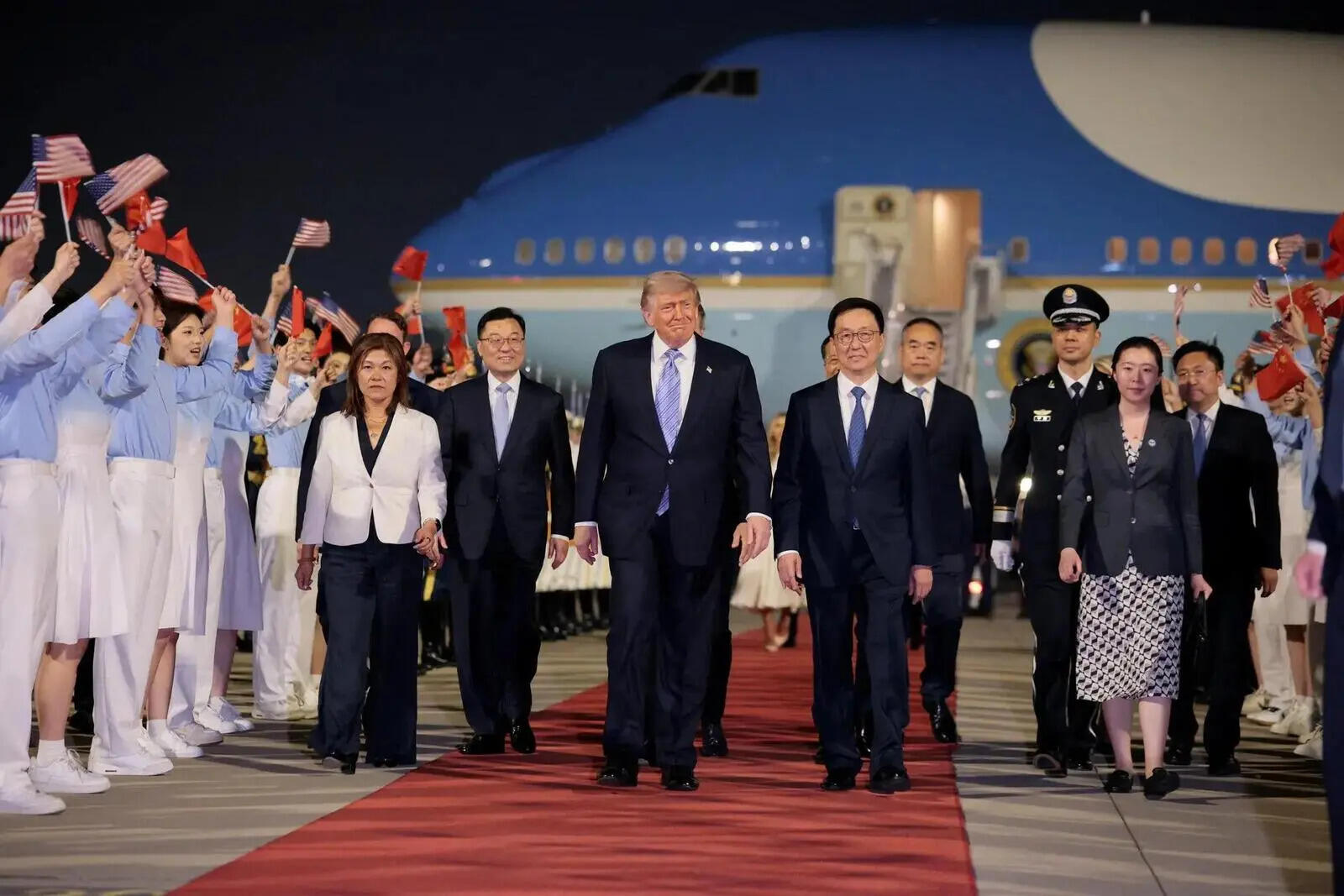
The media elite loves a "pilgrimage" narrative. They see a Western leader land in Beijing and immediately start dusting off their Cold War playbooks. They frame it as a clash of titans—the Tariff Warrior versus the Dragon. It makes for great television and even better clickbait. But it is fundamentally, mathematically, and strategically wrong.
While commentators obsess over the optics of "the deal," they ignore the plumbing of global finance. Tariffs aren't weapons of war; they are high-interest loans taken out against the domestic consumer to fund industrial inefficiency. When we frame these summits as high-stakes poker games, we miss the fact that both players are using the same deck of cards, and the house—the bloated bureaucracy of both nations—always wins.
The Myth of the Negotiating Table
Every time a trade delegation boards a plane, the "lazy consensus" screams about leverage. They think a 25% tax on imported steel is a sword held to the neck of the Chinese Politburo. In reality, it’s a blunt instrument that hits the domestic manufacturer first.
I have spent decades watching C-suite executives scramble when these "negotiations" hit the headlines. Here is what actually happens: The uncertainty alone causes a freeze in capital expenditure. Companies don't move factories back to the Midwest because of a tweet or a three-day summit; they move them when the long-term cost of energy, labor, and logistics makes sense. A tariff is a temporary spike, not a structural shift.
By treating trade as a series of diplomatic "wins" or "losses," we ignore the Ricardian trap. Comparative advantage doesn't vanish because two men in suits shake hands in the Great Hall of the People. If China can produce mid-range electronics at a scale the West hasn't seen since the 1970s, a tariff is simply a surcharge on the American middle class. It’s a sales tax rebranded as "patriotism."
http://googleusercontent.com/image_content/223
Why You Are Asking the Wrong Questions
The press asks: "Will he get a deal on soy?"
The press asks: "Will they stop intellectual property theft?"
These are the wrong questions because they assume the Chinese economy is a monolith that responds to external pressure in a linear fashion. It isn't. China’s "State Capitalism" is a complex web of local government debt, state-owned enterprises (SOEs), and a desperate need to maintain 5% growth to prevent social unrest.
A trade "pilgrim" isn't there to demand change; they are there to manage the decline of a previous era. The real question is: Why are we trying to win a 20th-century trade war while the 21st-century digital economy ignores borders entirely?
If you want to protect intellectual property, you don't do it with a tariff on aluminum. You do it with encrypted, decentralized supply chains and a radical overhaul of patent law that moves faster than a Shenzhen copycat factory. The "warrior" approach is like trying to stop a flood with a handheld umbrella. It looks brave, but you’re still getting soaked.
The Industrial Policy Lie
Both sides are now addicted to the "Strategic Industry" drug. The U.S. wants to "bring back" chips; China wants "Made in China 2025."
Here is the inconvenient truth: Government-directed industrial policy has a miserable track record. For every success story, there are ten Solyndras or ghost cities in the Henan province. When trade "dealmakers" brag about securing commitments for massive state-led investments, they are really bragging about misallocating capital.
Market signals are the only reliable way to determine where a factory should sit. When a leader goes to Beijing to "negotiate" where a Boeing plant should be built, they are overriding the market for a photo op.
"Capital goes where it is welcome and stays where it is well treated." — Walter Wriston
Right now, capital is confused. And confused capital is stagnant capital.
The Sovereignty Scams
We hear a lot about "economic sovereignty." It’s a catchphrase used to justify protectionism. But in a globalized world, absolute sovereignty is a fantasy. Your smartphone contains components from 43 countries and software written by people who don't care about your flag.
The "Tariff Warrior" narrative suggests we can decouple. We can’t. Not without lowering the standard of living to 1950s levels. The "Trade Pilgrim" narrative suggests we can harmonize. We can’t. The political systems are too divergent.
The contrarian reality? The friction is the point.
Politicians need the "enemy" of the trade partner to distract from domestic fiscal failures. If the U.S. has a trade deficit, it’s not because China is "cheating"; it’s because Americans save less than they spend and the dollar is the global reserve currency. It is a mathematical certainty. You could erase China from the map tomorrow, and the U.S. would simply run a deficit with Vietnam, Mexico, or India.
The Brutal Truth About IP Theft
Let's talk about the "theft" of intellectual property—the centerpiece of every Beijing summit. The common view is that China "steals" our future.
The insider view? Many Western companies effectively "sold" their IP for short-term market access. They knew the risks. They handed over the blueprints for the chance to sell to 1.4 billion people. Now that the Chinese companies have learned the trade and are competing globally, the Western firms are crying foul and asking the government to bail them out with trade barriers.
This isn't a geopolitical crisis; it's a bad business deal. And no "warrior" in the White House or "pilgrim" in the Forbidden City can fix a CEO's short-term greed from ten years ago.
The Danger of the "Great Deal"
If a deal is reached in Beijing, the markets will rally for 48 hours. Then, the reality will set in.
- Enforcement is impossible: You cannot police the internal procurement of a sovereign superpower.
- The goalposts move: As soon as one tariff is lifted, a new "non-tariff barrier" (like a sudden "safety inspection" on American meat) will appear.
- Currency manipulation is a ghost: People still scream about China devaluing the Yuan. In reality, China has spent trillions of its own reserves over the years to support its currency and prevent a total capital flight.
The "deal" is a sedative. It makes the public think the problem is being solved, while the underlying structural issues—debt, demographics, and de-globalization—continue to rot the foundation.
Stop Looking at the Border
If you want to see the future of trade, stop looking at the ports of Long Beach or Shanghai. Look at the flow of data and the migration of talent.
The real trade war is being fought in the cloud. It’s being fought in the recruitment offices of AI labs. It’s being fought by the 19-year-old coder in Chengdu and the 22-year-old engineer in Palo Alto. Neither of them cares about a 10% duty on washing machines.
The "Trade Pilgrim" is a relic of an era where wealth was measured in tons of steel. Today, wealth is measured in the speed of iteration. While we argue over whether a leader is being "tough" or "conciliatory" on trade, the rest of the world is building a post-trade-war reality that doesn't rely on these theatrical summits.
The Actionable Pivot
If you are a business leader or an investor, stop waiting for the "Big Deal."
- Diversify or Die: If your supply chain is still 80% dependent on a single geography—any geography—you aren't a victim of trade wars; you’re a victim of poor management.
- Ignore the Rhetoric: When a leader calls themselves a "Tariff Warrior," check which domestic industry is lobbying for protection. Follow the money, not the tweets.
- Price in the Friction: Assume the "trade war" is permanent. High-friction trade is the new baseline. Stop hoping for a return to the 1990s neoliberal dream. It’s dead.
The Beijing summit isn't a turning point. It's a vanity project for two aging systems trying to maintain control over a world that is rapidly moving past them. The "warrior" and the "pilgrim" are both playing roles in a theater production that has already stayed on stage too long.
Stop watching the stage. Look at the exit.