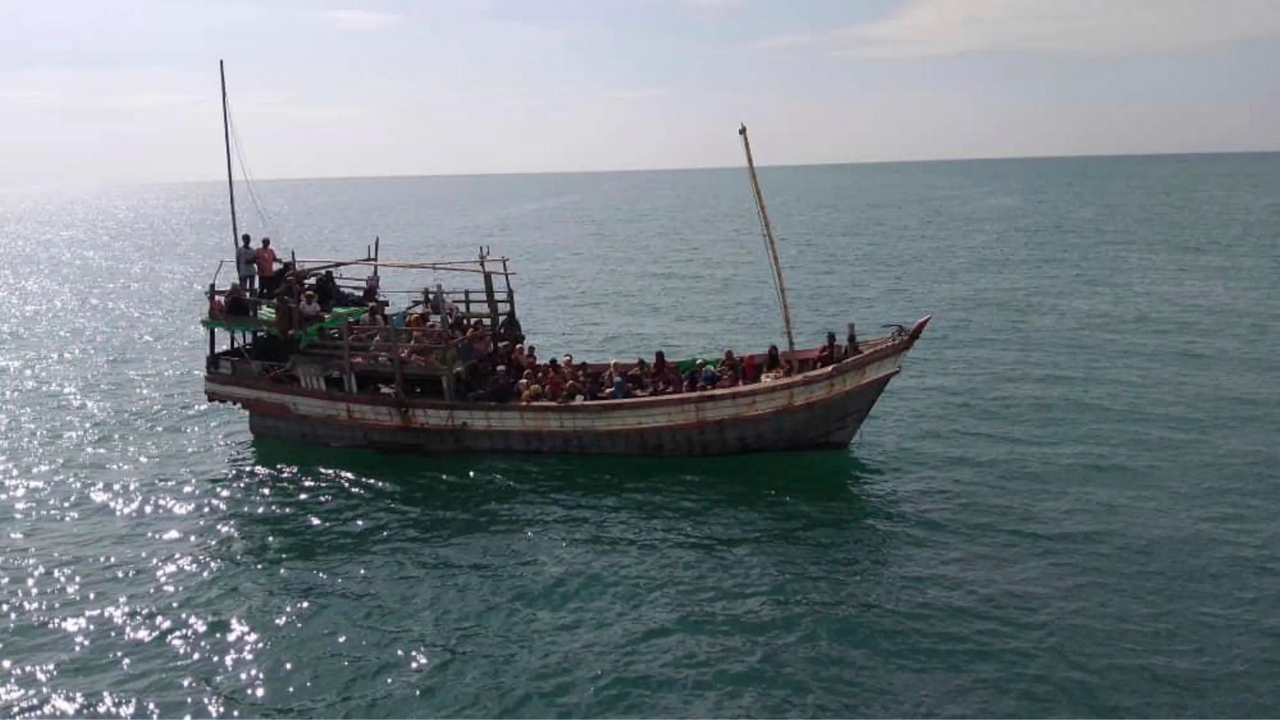
Over five hundred Rohingya refugees are feared dead after two overcrowded trawlers capsized in the treacherous waters of the Bay of Bengal. These vessels, fleeing the squalor of camps in Bangladesh, succumbed to rough seas while attempting to reach Southeast Asia. This tragedy represents one of the single largest maritime disasters in the region in recent history. It is not an isolated accident. Rather, it is the predictable outcome of a systemic regional failure, driven by human trafficking networks, deteriorating conditions in Cox’s Bazar, and the deliberate indifference of neighboring governments.
To understand how hundreds of people can vanish at sea with barely a ripple of international outrage, one must look beyond the immediate horror of the shipwrecks. The tragedy is the logical end point of a multi-million-dollar illicit economy that exploits human desperation under the very noses of regional security forces.
The Illusion of Rescue and the Reality of Death
Every year, the end of the monsoon season signals the start of the sailing window. The waters of the Andaman Sea and the Bay of Bengal calm just enough to tempt those desperate enough to risk everything. Smugglers offer passage on modified fishing trawlers, promising safety and employment in Malaysia or Indonesia.
The reality is a horror show. These boats are wooden hulls packed past the point of instability. Passengers are crammed into cargo holds, given barely enough water to survive, and subjected to physical abuse by crew members. When engines fail—as they frequently do—the vessels become drifting coffins.
When a boat capsizes, there is no coordinated regional emergency response. Instead, a grim game of maritime passing-the-parcel begins. Navies and coast guards in the region regularly spot these distressed vessels and choose to tow them back out to international waters rather than allow them to land. This practice of "push-backs" directly contributes to the death toll.
The Engine of Despair in Cox's Bazar
Why do thousands continue to board these vessels when they know the risks? The answer lies in the sprawling refugee settlements of Cox’s Bazar, Bangladesh, where nearly a million Rohingya have lived since fleeing military violence in Myanmar.
Conditions in these camps have crossed a threshold from temporary sanctuary to permanent prison. Security has collapsed. Armed gangs compete for control of the camps, using extortion, kidnapping, and murder to enforce their will. For a young Rohingya man, staying in the camp means facing forced recruitment by militant groups. For a young woman, it means the constant threat of abduction or sexual violence.
+--------------------------------------------------------------+
|             THE REFUGEE FLIGHT PATH & HAZARDS                |
+--------------------------------------------------------------+
|  [ Rakhine State, Myanmar ]                                  |
|         |  (Military violence, ethnic cleansing)             |
|         v                                                    |
|  [ Cox's Bazar Camps, Bangladesh ]                           |
|         |  (Ration cuts, gang violence, arson, hopelessness) |
|         v                                                    |
|  [ Smuggling Trawlers / Bay of Bengal ]                      |
|         |  (Engine failures, starvation, capsizing)          |
|         +------------------------+                           |
|         |                        |                           |
|         v                        v                           |
|  [ Andaman Sea Push-backs ]     [ Undetected Shipwrecks ]    |
|  (Naval forces deny entry)      (Mass drownings at sea)      |
+--------------------------------------------------------------+
Compounding this insecurity is a severe funding crisis. International donors have steadily reduced their financial commitments to the humanitarian response. The World Food Programme was forced to cut food rations for refugees, reducing the daily allowance to a level that guarantees malnutrition. When parents cannot feed their children and have no legal right to work, the empty promises of human traffickers begin to sound like their only hope.
The Profiteers of the Migrant Trails
The smuggling of Rohingya is not a disorganized, small-scale operation. It is a highly organized, transnational business. The network spans across Myanmar, Bangladesh, Thailand, Malaysia, and Indonesia.
Brokers operate openly within the refugee camps, identifying families with relatives abroad who can pay for their passage. The cost of a single seat on a death ship can range from two thousand to five thousand dollars. This money is often collected through informal money transfer systems, making it difficult for financial authorities to track.
Corrupt local officials along the route take their cut. In the past, investigations in Thailand and Malaysia revealed mass graves at jungle transit camps where smugglers held refugees for ransom, torturing them to extort more money from their families. Despite occasional crackdowns, the underlying infrastructure of these smuggling cartels remains intact. They adapt to new routes, shifting their departure points from Bangladesh to the coast of Myanmar's Rakhine State as local security dynamics change.
The Empty Promises of Regional Agreements
On paper, the nations of Southeast Asia have frameworks to address this crisis. The Bali Process on People Smuggling, Trafficking in Persons and Related Transnational Crime was created specifically to handle mass displacement and maritime migration.
In practice, it is useless. The principle of non-interference dominates the Association of Southeast Asian Nations (ASEAN). Member states refuse to pressure Myanmar to resolve the root cause of the crisis—the denial of citizenship and basic rights to the Rohingya. Similarly, member states refuse to coordinate search-and-rescue operations, fearing that saving lives will make them a magnet for more refugees.
Indonesia, once praised for its local communities welcoming Rohingya arrivals in Aceh, has seen a shift. Local protests, fueled by online disinformation campaigns, have targeted arriving boats. Politicians, eyeing domestic elections, have mirrored this hostile rhetoric, leaving refugees with no safe harbor in the entire region.
The Path Toward Continuing Disasters
The international community treats each shipwreck as an unpredictable natural disaster. It is not. It is a manufactured crisis.
Without a fundamental shift in how regional governments and international bodies approach the situation, the Bay of Bengal will continue to claim lives. The solution requires three immediate, concrete actions:
- Enforce Maritime Law: Regional navies must fulfill their obligations under international maritime law to rescue any vessel in distress, regardless of the nationality or legal status of the passengers.
- Restore Aid Funding: International donors must restore full funding to the humanitarian response in Bangladesh to ensure refugees have access to basic food, security, and education, reducing the leverage of smugglers.
- Hold Traffickers Accountable: Regional law enforcement must target the financial networks of smuggling kingpins rather than merely arresting the low-level boat captains and crew members who are easily replaced.
Until these steps are taken, the cost of regional inaction will continue to be paid in human lives, one overcrowded boat at a time.