One hundred and fifty years ago, a coalition of Catholic academics, aristocrats, and clergy gathered in Paris with a singular, urgent mission. They intended to build an intellectual fortress. The Institut Catholique de Paris, known simply as la Catho to generations of students, was born out of institutional defiance. The Third Republic was rising, fiercely secular and determined to strip the Church of its educational monopoly. Today, as the institution marks its sesquicentennial, the fundamental conflict has shifted from the cobblestones of nineteenth-century Paris to the sleek, corporate boardrooms of modern higher education. Yet the core tension remains untouched. How does an institution rooted in divine revelation survive and command respect in a fiercely rationalist state?
The official narrative often leans into celebratory pageantry. Anniversaries bring out bishops, politicians, and diplomatic envoys, all eager to bask in the reflected glory of centuries-old tradition. But behind the polished stone facades of the Rue d'Assas lies a grinding operational reality. Private higher education in France is an expensive, high-stakes endurance test. Unlike state universities funded directly by taxpayers, institutions like la Catho must constantly justify their tuition models, manage state-accredited degree partnerships, and compete for top-tier research talent against heavily subsidized public institutions.
To understand why this milestone matters beyond ecclesiastical circles, one must examine the genesis of the French higher education dual system. When the law of 1875 finally permitted the creation of private higher education faculties, it was not granted out of institutional charity. It was extracted through relentless political pressure. The Catholic Church recognized early that controlling primary and secondary schools was no longer enough. If faith was to survive the industrial age, it needed intellectuals who could debate philosophy, law, and science on equal footing with the secular elite emerging from the École Normale Supérieure.
The pontificate that spanned that foundational era understood the stakes implicitly. Under Leo XIII, the Vatican encouraged a intellectual renewal, urging Catholic scholars to engage with modern philosophy rather than retreat behind fortress walls. That historical push shaped the DNA of Parisian Catholic higher education. It created a unique intellectual dualism. Professors at la Catho were expected to be rigorous scientists and historians first, and believers second, bridging a chasm that secular critics insisted was unbridgeable.
That balance has grown increasingly precarious. Modern academia demands hyper-specialization, metric-driven research output, and compliance with European-wide educational standards. Meanwhile, ecclesiastical oversight requires adherence to canon law and theological orthodoxy. Walking that tightrope requires diplomatic skill of the highest order. A misstep in faculty hiring or curriculum design can instantly trigger a public relations crisis, drawing scrutiny from both secular watchdogs who view religious schools with suspicion and conservative factions within the church who demand ideological purity.
Consider the financial architecture supporting these institutions. While public universities in France operate under severe budgetary constraints, they remain virtually free for students. La Catho charges substantial tuition fees by French standards, creating an immediate class dynamic. It caters to a specific demographic, often drawing from traditional Catholic families, international students seeking a Parisian pedigree, and those who prefer a smaller, more intimate academic environment than the overcrowded amphitheaters of the Sorbonne. This economic reality forces the institution into a paradox. It must market itself as an elite, competitive academy while maintaining its identity as a center of universal Christian charity and service.
The faculty lounges reveal an even more complex internal culture. Here, clerics in cassocks share coffee with secular researchers who hold no religious convictions whatsoever. This coexistence is not accidental. It is a deliberate institutional strategy designed to maintain academic credibility. If the faculty became an echo chamber, the degrees would lose their market value. Yet, keeping secular scholars inside a Catholic university requires a delicate administrative peace. Academic freedom must be fiercely protected, even when research findings rub up against traditional dogma.
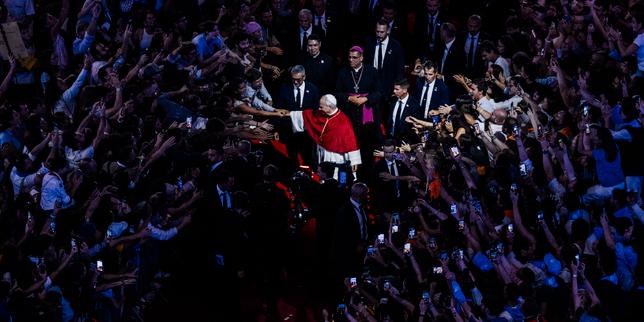
The geopolitical dimension of these institutions is equally significant. For the Vatican, universities scattered across global capitals are vital outposts of soft power. They serve as intellectual laboratories where future diplomats, politicians, and church leaders are trained. When high-ranking church officials visit Paris for landmark anniversaries, the symbolism carries real weight in diplomatic chanceries. It signals that the Holy See still views Europe, despite its rapid secularization, as a primary theater for ideological influence.
Critics argue that such institutions are relics of a bygone era, clinging to privilege in a society that has decisively embraced laïcité. They point to declining church attendance and argue that theological faculties have little place in modern public discourse. That critique misses the shifting nature of intellectual combat. Today, the debate is not merely about whether God exists, but about the ethical boundaries of artificial intelligence, the definition of human dignity in medical technology, and the moral responsibilities of a globalized economy. On these fronts, institutions with an explicitly moral framework often find themselves asking questions that purely utilitarian universities prefer to ignore.
Yet, survival requires adaptation. Over the past two decades, la Catho has expanded far beyond traditional theology and philosophy. It has built robust programs in business management, social work, digital communication, and international relations. These professional tracks subsidize the less lucrative humanities departments, keeping the intellectual engine running. This commercial pragmatism often dismays purists who yearn for an ivory tower untouched by market forces, but without it, the institution would simply cease to exist.
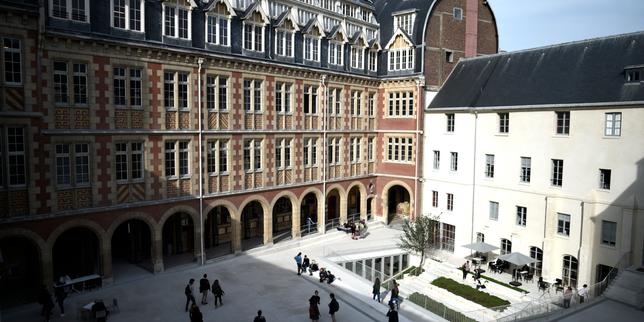
The physical expansion of the campus mirrors this internal evolution. Modern glass-fronted study spaces now sit alongside historic nineteenth-century lecture halls. Students move between digital libraries and centuries-old archives. This architectural juxtaposition tells the true story of the institution. It is neither entirely frozen in the past nor completely surrendered to modern corporate trends. It occupies a contested middle ground, constantly renegotiating its boundaries.
As the anniversary celebrations fade and the daily grind of lectures and exams resumes, the underlying pressures remain unresolved. The French state continues to tighten regulations on private education, demanding greater transparency and accountability. Secular pressure groups monitor curricula for any sign of doctrinal creep into secular subjects. Meanwhile, the global church looks to European institutions to prove that ancient wisdom can still speak to modern anxieties.
The next fifty years will test whether this delicate synthesis can endure. If the institution becomes too corporate, it loses its soul. If it becomes too insular, it loses its relevance. Walking that razor's edge is the true burden of longevity. Nobody said preserving an intellectual fortress in the heart of a secular republic would be simple, and the bill for the next century is already coming due.