The smell of deep-fried butter, livestock, and diesel exhaust is the unmistakable scent of summer’s final gasp. For decades, state fairs have served as the ultimate cultural neutral zone. Farmers display their prize-winning pumpkins. Teenagers scream on rickety roller coasters. Families gather under the neon glow of the midway, leaving the polarized politics of the outside world at the ticket booth.
But this year, the illusion shattered before the first funnel cake was even fried.
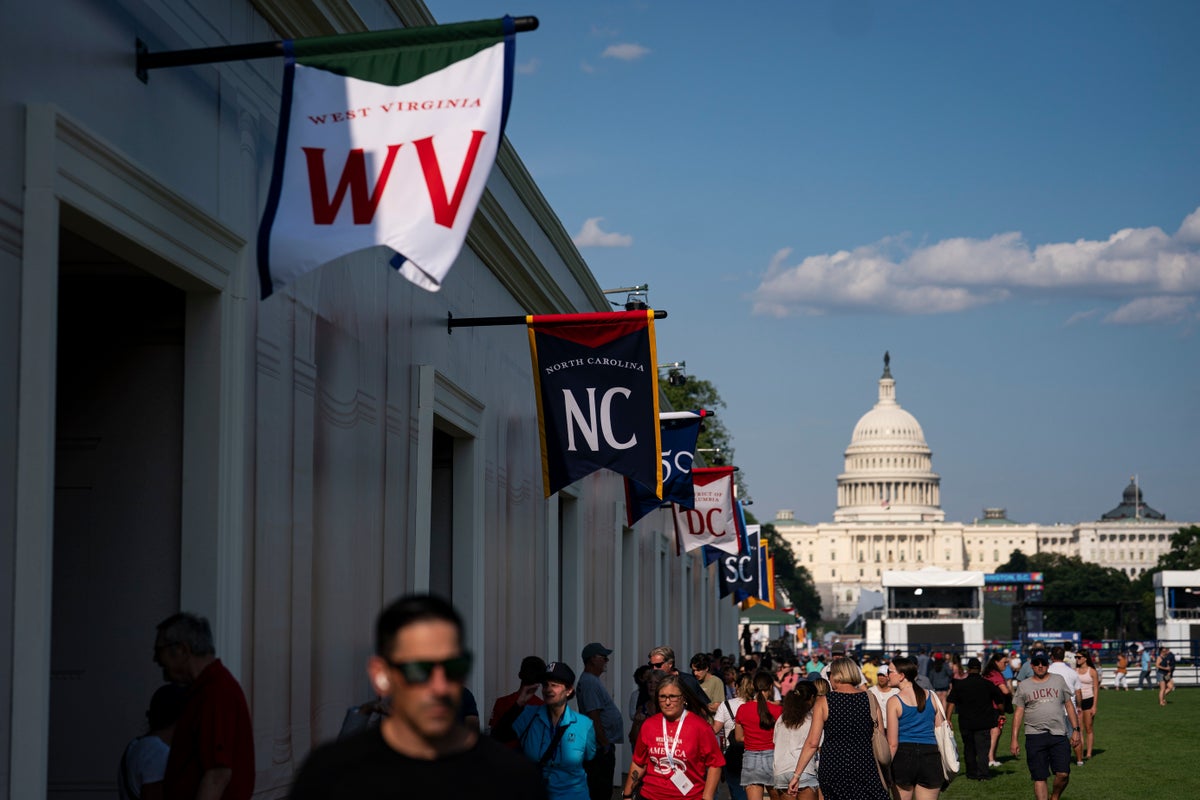
At Donald Trump’s Great American State Fair, a routine setup day transformed into a cultural flashpoint. It started in a quiet corner of the exhibition hall, inside a booth registered to a North Carolina heritage group. Hanging prominently against the curtain was the Confederate battle flag. By noon, a formal complaint had been lodged. By 2:00 PM, state fair officials, flanked by security, issued an ultimatum: take the banner down, or pack up the booth.
The confrontation was quiet, but the ripples were deafening.
To understand why a piece of dyed nylon can paralyze a festival ground, you have to look past the political talking points and see the people standing on either side of the folding table.
Consider a hypothetical fairgoer named Marcus. He is a local father who saved up for three months to bring his kids to the fair. He walks through the gates expecting nostalgia, sugar, and shared community. Suddenly, he is confronted with a symbol that, to him and millions of others, represents a history of human bondage and systematic oppression. The atmosphere instantly shifts from welcoming to hostile. The funnel cake loses its sweetness.
Now consider the man behind the booth, whom we will call Robert. He is a retired mechanic from rural North Carolina. He didn’t bring the flag to start a riot. In his mind, that symbol is inextricably linked to the memory of his great-great-grandfather, a soldier who fought and died in a war that ended over a century ago. To Robert, removing the flag feels like erasing his family’s lineage, a forced capitulation to a modern culture that he feels actively despises him.
Two Americans. One physical space. Completely incompatible realities.
This is the invisible stakes of the Great American State Fair controversy. It is not merely a legal dispute over vendor contracts or first amendment boundaries on private property. It is an ideological tug-of-war over who owns the narrative of American heritage, and who gets to feel safe in public spaces.
The fair’s organizers found themselves caught in an impossible vice. On one hand, the event bears the name of a political figure deeply associated with populist, traditionalist imagery. Vendors like Robert assumed the venue would be a safe haven for their brand of historical expression. On the other hand, a state fair is a commercial enterprise. It relies on massive, diverse crowds to survive. Corporate sponsors pull out when controversy brews. Local families stay home when the midway starts looking like a political rally.
Economic reality almost always wins these fights. The fair's official statement leaned heavily on the standard bureaucracy of "maintaining a family-friendly environment free of divisive political symbols." But the enforcement felt like a betrayal to a specific segment of the fair's core demographic.
The North Carolina booth complied with the order, replacing the battle flag with a standard state flag, but the atmosphere remained tense. Volunteers sat in lawn chairs behind their pamphlets, tight-lipped and visibly slighted. Passersby whispered and pointed. The physical flag was gone, but its silhouette remained etched into the energy of the pavilion.
We often treat these incidents as isolated flare-ups, simple cases of rule enforcement or political grandstanding. That is a mistake. This confrontation is a microcosm of a much larger, agonizing national conversation about memory. What do we do with a history that inspires pride in one citizen and terror in another? Can a symbol ever be detached from its worst historical contexts, or is it permanently stained by the actions committed under its name?
There are no easy answers, and the fairgrounds certainly did not provide one.
As night fell, the neon lights of the Ferris wheel flickered to life, casting long, shifting shadows across the asphalt. The music from the speakers drowned out the arguments, and the crowds swelled, moving past the controversial booth without a second glance. The immediate crisis had been managed. The rules had been enforced.
Yet, beneath the laughter of the children and the mechanical hum of the rides, a quiet fracture remained, unhealed and waiting for the next gate to open.