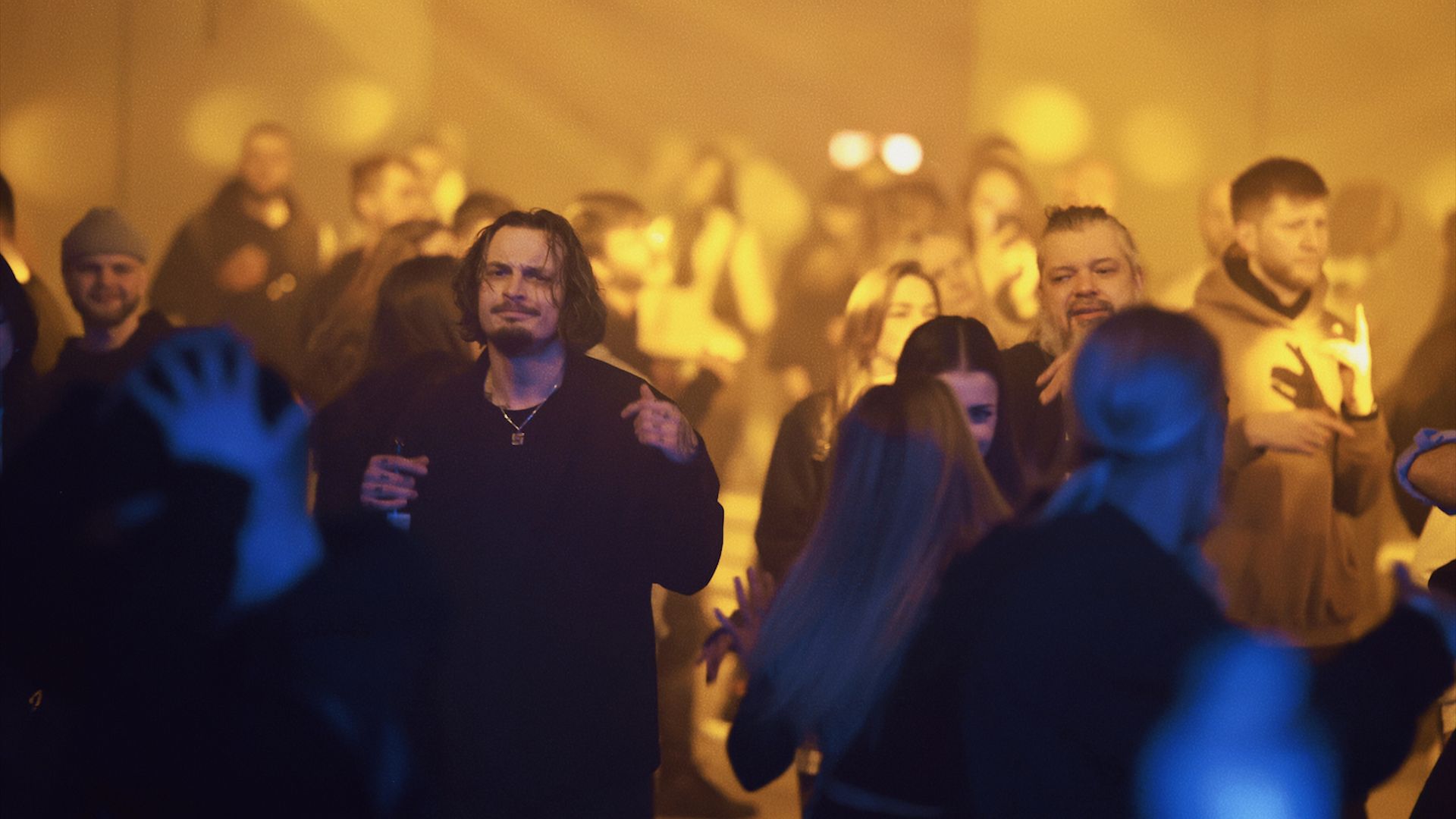
The air smells of burnt iron and wet asphalt, yet the basement door is propped open with a brick. Down the concrete steps, past a flickering fluorescent tube that hums a low, aggressive B-flat, the bass begins. It hits you in the sternum before your eyes adjust to the amber glow.
Outside, twenty-two miles from the Russian border, Kharkiv holds its breath. Inside, bodies are moving in unison to a four-on-the-floor kick drum.
War is typically depicted as a monument of silence broken only by the concussive roar of artillery, a vacuum where human joy goes to die. History books prefer the ash, the shattered windowpanes, the endless stretches of grey mud. But history books miss the defiant pulse of people who refuse to let their city become a ghost town before their hearts have stopped beating. This is not ignorance of danger. Everyone here has a phone app that pings warnings ten seconds before an incoming missile hits the northern districts. This is something else entirely.
Consider the anatomy of a night out when the curfew falls at midnight.
At 6:00 PM, the streets empty. Storefronts are barricaded with sheets of OSB board, spray-painted with Ukrainian poetry or crude, defiant memes. By 8:00 PM, the streetlamps cast long, lonely shadows across empty boulevards that used to swarm with university students. The city feels abandoned. It feels like a place that has already surrendered to the inevitable archive of ruined European capitals.
Then you turn down a side street off Freedom Square.
A handwritten sign taped to a metal door points downward. No neon lights blink above the entrance; drawing attention from the sky is a quick way to shorten your lifespan. But step through that door, check your coat, and you step backward into a paradox. Baristas who spent their morning clearing rubble from a bakery are now pouring craft IPAs. DJs who spent the first months of the invasion in damp subway stations are blending deep house with patriotic folk chants, bending the frequencies until the concrete walls vibrate.
To understand why people rave while the horizon flickers with orange flashes, you have to abandon the clinical detachment of military maps. Statistics tell you that Kharkiv is pounded daily by guided bombs. They tell you that power grids flicker and shatter, leaving neighborhoods freezing in the dark. What the statistics leave out is the sheer, exhausting weight of permanent vigilance. Fear is sustainable for a week, perhaps a month. Over years, chronic terror curdles into a numbing, suffocating apathy.
Dancing is the antidote to apathy.
"If we stop going out, if we stop drinking bad coffee and arguing about music, the darkness wins," says Dmytro, a twenty-six-year-old sound engineer whose left eyebrow is scarred from a blast wave last autumn. He wipes down the stainless-steel bar with a rag that smells of bleach. He speaks in a quiet, matter-of-fact tone, the voice of a man who has calculated his odds and decided to spend his remaining time pouring drinks. "The Russians want us to be ghosts. I prefer to be loud."
The transformation of Kharkiv's nightlife is not a return to normalcy. Normalcy is a luxury item that was bombed to pieces in February 2022. Instead, what has emerged is a hyper-concentrated, nocturnal resistance movement fueled by caffeine, techno, and an urgent, desperate need for human touch.
Before the invasion, Kharkiv was a legendary student hub, a sprawling metropolis of one and a half million people where massive industrial Soviet architecture collided with leafy parks and bohemian cafes. It was famous for its indie music scene and its endless supply of cheap, late-night shawarma. When the armor columns rolled toward the beltway, that world evaporated in forty-eight hours.
Many left. Millions packed into westbound trains, clutching cats in pillowcases and sleeping on the floors of stations in Lviv and Warsaw. But a stubborn core stayed behind. They lived in basements. They boiled water on camping stoves in courtyards. And when the front lines stabilized and pushed the invaders back from the city limits, they looked around at the broken glass and asked the most human question imaginable: What now?
The answer didn't arrive via government decree or economic stimulus packages. It started in basements with acoustic guitars. Then came the pop-up poetry readings in bomb shelters. By late 2023, as air defense systems grew more robust, entrepreneurs took a calculated risk. They unlocked the heavy steel doors of shuttered cocktail bars, reinforced the windows with sandbags and heavy rubber mats, and turned the music back on.
Entering one of these venues requires a subtle dance of trust and security. You don't just walk in off the street. You text a contact on Telegram. You provide a name. You show your ID to a territorial defense volunteer standing by the entrance with a tactical vest over a black hoodie. Once verified, you descend into a space that functions simultaneously as a social club, a psychological safety valve, and a makeshift bomb shelter.
The crowd inside is a cross-section of a city living on the edge. Soldiers on forty-eight-hour leave sit in leather booths, their camouflage uniforms smelling of diesel and pine needles, clinking glasses with graphic designers and university researchers who haven't slept a full eight hours in months. The atmosphere is thick with cheap tobacco, expensive perfume, and an intense, unfiltered camaraderie. There is no small talk here. Conversations bypass the weather and neighborhood gossip, plunging straight into philosophy, loss, and the surreal logistics of survival.
"You learn very quickly who you want to be near when things get loud," whispers Olena, a sociologist who lost her apartment to a cruise missile strike in Saltivka. She is holding a gin and tonic, watching the strobe light cut through the cigarette haze. "In peacetime, we spent so much energy filtering ourselves, worrying about careers, status, mortgages. All of that burned away in the first week. Now, there is only the present tense. Right now, I am here. Right now, the bass is hitting. That is enough."
The economic engine driving these underground spaces is as fragile as the glass windows that line the boulevard above. Operating a bar in a frontline city is an exercise in high-stakes financial gymnastics. Curfew restrictions mean revenue streams are strictly capped. Power outages require expensive diesel generators that chug away in back alleys, guzzling fuel at exorbitant rates. Supply chains are a nightmare; getting fresh citrus or specific craft beer brands into Kharkiv means navigating military checkpoints, bombed-out bridges, and inflated transport costs.
Yet, somehow, the books balance. Or rather, they balance just enough to keep the lights on.
Owners treat their venues not as profit-maximizing businesses, but as civic lifelines. A portion of every cocktail sale goes toward purchasing tourniquets or drone parts for local brigades. Tip jars are frequently labeled with QR codes linking directly to fundraisers for medical units operating near Kupyansk. The party and the front line are not separate worlds; they are two sides of the same coin. The money spent on a round of shots tonight might literally buy a soldier a thermal optic tomorrow.
Critics outside the country sometimes look at these scenes with bewilderment or moral outrage. Videos of young Ukrainians dancing in basements while air raid sirens wail in the background occasionally circulate on social media, drawing snarky comments from comfortable observers thousands of miles away. How can they party while their country is bleeding?
The question is born of a profound misunderstanding of human endurance. It assumes that survival is an ascetic discipline, that grief must be permanent to be authentic. But biology and psychology refuse such sterile constraints. The human nervous system cannot maintain a state of absolute, unmitigated terror indefinitely without breaking. Laughter, dancing, and intimacy are not betrayals of the struggle; they are the fuel that sustains it. They are proof that the enemy has failed to dehumanize the population.
Consider what happens when the music stops.
At 11:30 PM, the house lights flicker. The DJ drops the tempo, transitioning into a slow, melancholic track. The crowd groans good-naturedly, draining their glasses. Coats are retrieved from the makeshift cloakroom. People spill out onto the pavement just as the midnight curfew settles over the city like a lead blanket.
Outside, the air is freezing again. The silence is absolute, save for the distant, low-frequency thud of artillery duels far out to the east, shaking the damp earth like a distant heartbeat. People part ways with quick, tight embraces, murmuring coordinates for tomorrow: See you at the cafe at noon. Stay safe. Text me when you're home.
They walk briskly down unlit streets, hugging the sides of buildings, keeping their eyes on the cracked pavement. They are heading back to apartments with taped windows, back to lonely beds where sleep will be punctured by the screech of incoming interceptors and the dull roar of distant impacts.
They return to the war because they must. But they carry the bassline with them in their chests, a stubborn, vibrating reminder that as long as they can still move their feet to the rhythm of their own choosing, the city has not fallen.