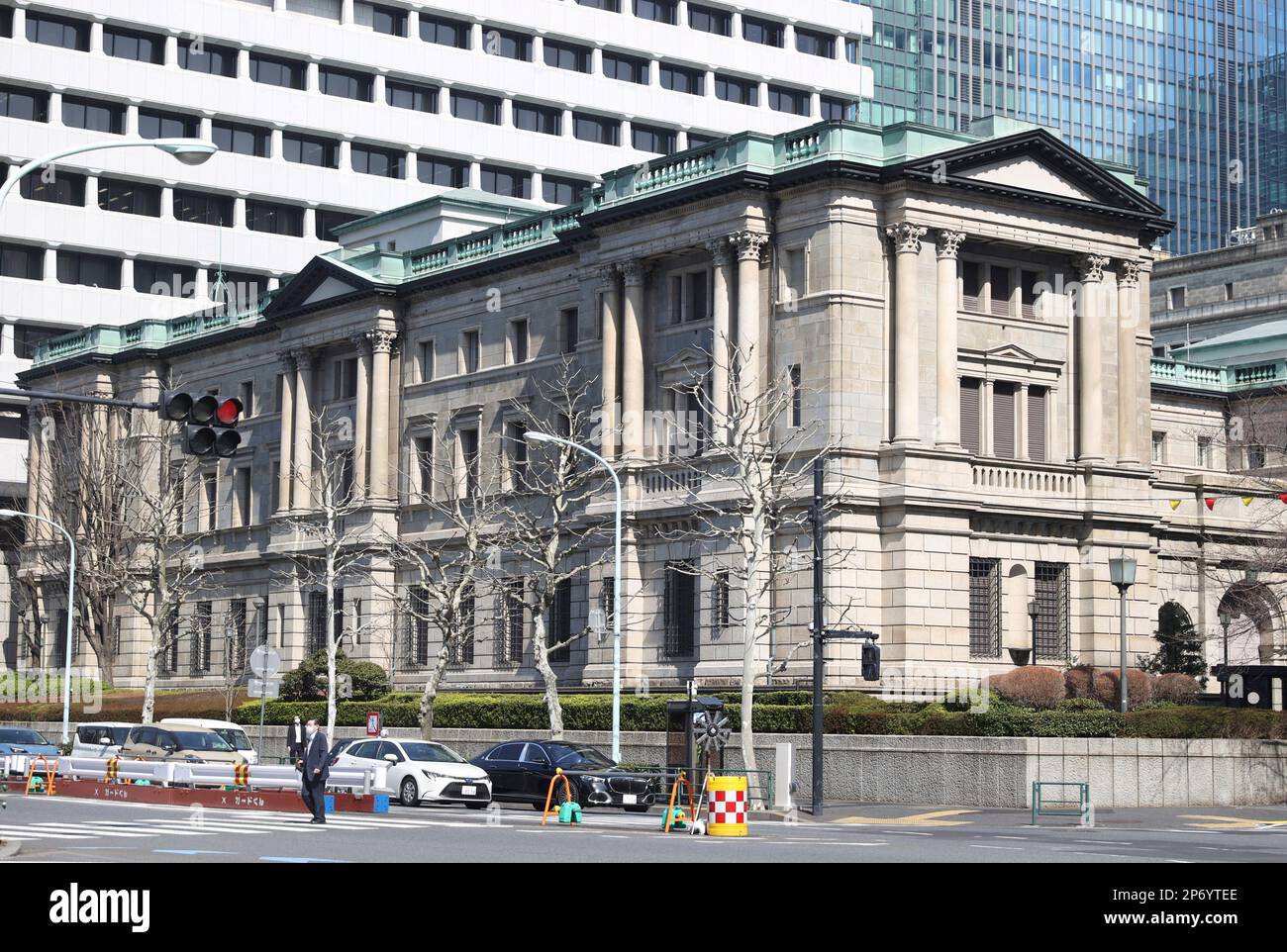
The Bank of Japan has opted for a cautious holding pattern, maintaining its benchmark interest rate at a range of 0% to 0.1% despite a darkening geopolitical horizon. Governor Kazuo Ueda and his board are effectively trapped between two opposing forces: a sluggish domestic recovery that requires cheap money and an external energy shock fueled by the escalating conflict involving Iran. While the central bank technically raised its inflation forecasts for the coming fiscal years, this is not a sign of economic health. It is a grim acknowledgment that imported inflation—the kind that drains wallets without raising wages—is becoming a permanent fixture of the Japanese economy.
The Illusion of Stability
Keeping rates steady might look like a vote of confidence in the current trajectory, but it is actually a defensive crouch. The Japanese yen has been battered for months, sliding to levels not seen in decades. Usually, a weak currency helps exporters. Today, it primarily serves to inflate the cost of every barrel of oil and every ton of liquefied natural gas Japan brings to its shores.
By refusing to hike rates now, the Bank of Japan is betting that the current inflationary pressure is "cost-push" rather than "demand-pull." They want to see Japanese consumers spending more because they feel wealthy, not because they are terrified of price hikes tomorrow. However, the shadow of the Middle East hangs heavy over this logic. Iran’s involvement in regional instability directly threatens the Strait of Hormuz, the transit point for the vast majority of Japan’s energy imports.
The Mathematics of Misery
When the Bank of Japan raises its inflation forecast, it isn't celebrating. It is bracing for impact. The target has long been a stable $2%$, but the components of that percentage matter more than the number itself. If inflation hits $3%$ because people are buying more cars and electronics, that is a victory. If it hits $3%$ because the price of electricity and bread has skyrocketed due to a regional war, that is a tax on the poor.
The central bank now expects core consumer inflation to hover around $2.8%$ for the current fiscal year. This adjustment is a direct response to the "Iran premium" being baked into global oil markets. Every time a drone is launched or a tanker is seized, the BoJ’s previous projections become obsolete.
The Currency Trap
The widening gap between Japanese interest rates and those of the United States has turned the yen into a favorite target for short-sellers. While the U.S. Federal Reserve has kept rates high to combat its own internal inflation, Japan’s hesitation to follow suit has created a massive yield gap. Money flows where it is treated best. Right now, it is fleeing Japan.
A weaker yen makes the BoJ’s job impossible. If they raise rates to protect the currency, they risk crushing small businesses that have lived on cheap credit for thirty years. If they keep rates low, the cost of living continues to climb as the yen’s purchasing power evaporates. It is a choice between a slow bleed and a sudden heart attack.
Why the Iran Factor Changes Everything
Japan imports nearly $95%$ of its fossil fuels. Unlike the United States, which has become a net exporter of energy, Japan is at the mercy of global supply chains. The conflict involving Iran isn't just a headline in the evening news for Tokyo; it is a direct threat to the nation’s industrial heartbeat.
- Supply Chain Resilience: Japanese manufacturers rely on "just-in-time" delivery. Sudden spikes in shipping insurance and fuel surcharges break this model.
- The Psychological Floor: Consumers who see gas prices rising are less likely to accept the modest wage increases that unions have recently fought for.
- Fiscal Pressure: The Japanese government often subsidizes energy to keep the public happy. As oil prices rise due to Middle East tensions, the cost of these subsidies balloons, adding to a national debt that is already the highest in the developed world.
The Wage Growth Gamble
Governor Ueda has repeatedly stated that the "virtuous cycle" between wages and prices is the key to any future rate hikes. This year’s shunto wage negotiations saw the biggest raises in thirty years, with major firms like Toyota and Panasonic offering significant hikes. On paper, this should give the BoJ the green light to normalize policy.
The reality on the ground is different. Small and medium-sized enterprises (SMEs) employ about $70%$ of the Japanese workforce. These companies do not have the profit margins of a global automaker. They cannot afford $5%$ raises when their electricity bills have doubled. If the BoJ moves too fast, these companies will fold, leading to unemployment that would kill any hope of a sustained recovery.
The Invisible Hand of the Treasury
We cannot talk about the Bank of Japan without talking about the Ministry of Finance. While the BoJ is technically independent, the two work in a tight, often uncomfortable embrace. The Ministry has already spent billions of dollars in "stealth interventions" to prop up the yen.
These interventions are usually futile. Trying to fight the global currency market with a checkbook is like trying to stop a tidal wave with a bucket. The only thing that truly moves the needle is a change in interest rate differentials. By keeping the policy rate steady, the BoJ is essentially telling the Ministry of Finance: "You’re on your own."
The Ghost of 1973
Veteran analysts often point back to the first oil shock of the 1970s. Japan was devastated because it had no energy security. While the country has since diversified into nuclear and renewables, the core vulnerability remains. The current tension with Iran feels eerily familiar to those who remember the long lines at gas stations and the sudden disappearance of basic goods from store shelves.
The difference today is the debt. In the 70s, Japan’s balance sheet was clean. Today, even a $1%$ increase in interest rates would cost the government trillions of yen in additional debt service. This is the "fiscal dominance" problem. The BoJ might want to raise rates to fight the inflation coming from the Middle East, but they know they might bankrupt the government in the process.
Strategic Inertia
Inertia is often mistaken for indecision. In the case of the BoJ, it is a calculated choice. They are waiting to see if the U.S. Fed will cut rates later this year. If the Fed cuts, the yen will naturally strengthen, doing the BoJ's work for them without a single Japanese interest rate hike.
But what if the Fed doesn't cut? What if the war in the Middle East expands, pushing oil to $$120$ a barrel? Then the BoJ will be forced to act from a position of weakness rather than strength. A "forced hike" is the worst-case scenario. It signals to the market that the central bank has lost control and is merely reacting to external shocks.
Analyzing the Forecast Tweak
The BoJ’s decision to raise the inflation forecast while keeping rates steady is a message to the markets. It is an attempt to "talk up" the possibility of a future hike without actually committing to one. This is forward guidance at its most desperate.
"We must be mindful of the risk that a significant move in foreign exchange rates or commodity prices could alter our outlook for the price stability target," the bank noted in its outlook report.
This is central-bank-speak for "we are terrified of what happens in the Persian Gulf."
The Retail Impact
For the average person in Osaka or Tokyo, these high-level maneuvers translate to a very simple reality: life is getting more expensive.
- Imported Food: Items like wheat, cooking oil, and meat are seeing double-digit price increases.
- Utilities: Despite government caps, energy bills are eating a larger share of household income.
- Savings: The "interest" on a standard savings account remains essentially zero, meaning inflation is eating the value of the Japanese public's massive cash piles.
The Real Danger of the Iran Factor
Iran holds the keys to the world's most sensitive energy chokepoint. If a full-scale conflict erupts, it won't just be a "forecast adjustment" for the BoJ. It will be an emergency pivot. The bank has spent years trying to create inflation; now they face the prospect of a specific, toxic type of inflation that they cannot control with interest rates.
When energy prices drive inflation, raising interest rates is a blunt and often ineffective tool. You cannot make oil cheaper by making a business loan more expensive. All you do is punish the domestic economy twice: once with high energy costs and once with high borrowing costs.
Looking for the Exit
The Bank of Japan is looking for an exit from decades of "easy money" policy, but the door is currently blocked by geopolitical fire. They need a perfect window: strong domestic demand, stable global energy prices, and a cooling U.S. economy.
The chances of all three aligning are slim. Instead, the BoJ is likely to continue its policy of "small steps." They will wait until the very last second to move, hoping that the situation in the Middle East stabilizes. It is a high-stakes gamble that assumes the global economy can absorb the current tension without a major rupture.
If that rupture happens, the BoJ’s current caution will be remembered as a missed opportunity to build a buffer. For now, they remain a spectator to a conflict that has more power over the Japanese economy than the central bank itself.
The Bank of Japan is no longer the master of its own house. It is a hostage to global oil markets and the geopolitical whims of powers thousands of miles away. Investors should stop looking at Tokyo and start looking at the movements in the Strait of Hormuz. That is where Japan’s real interest rate is being decided.
Check your energy exposure and hedge against a yen that has no structural support left.