The mailbox at the end of a dirt road in the Matanuska-Susitna Valley holds frozen flyers, bills, and the occasional postcard from a relative escaping the lower forty-eight for a season of midnight sun. Winter arrives here not with a whisper, but with a heavy, blue shadow that swallows the afternoon by three o'clock. Out here, the federal government feels like a distant weather system. It is something that happens in Washington, D.C., across oceans of pine and granite, mediated by satellite feeds and muffled radio waves.
Yet, politics has a strange way of collapsing geography. For a closer look into similar topics, we suggest: this related article.
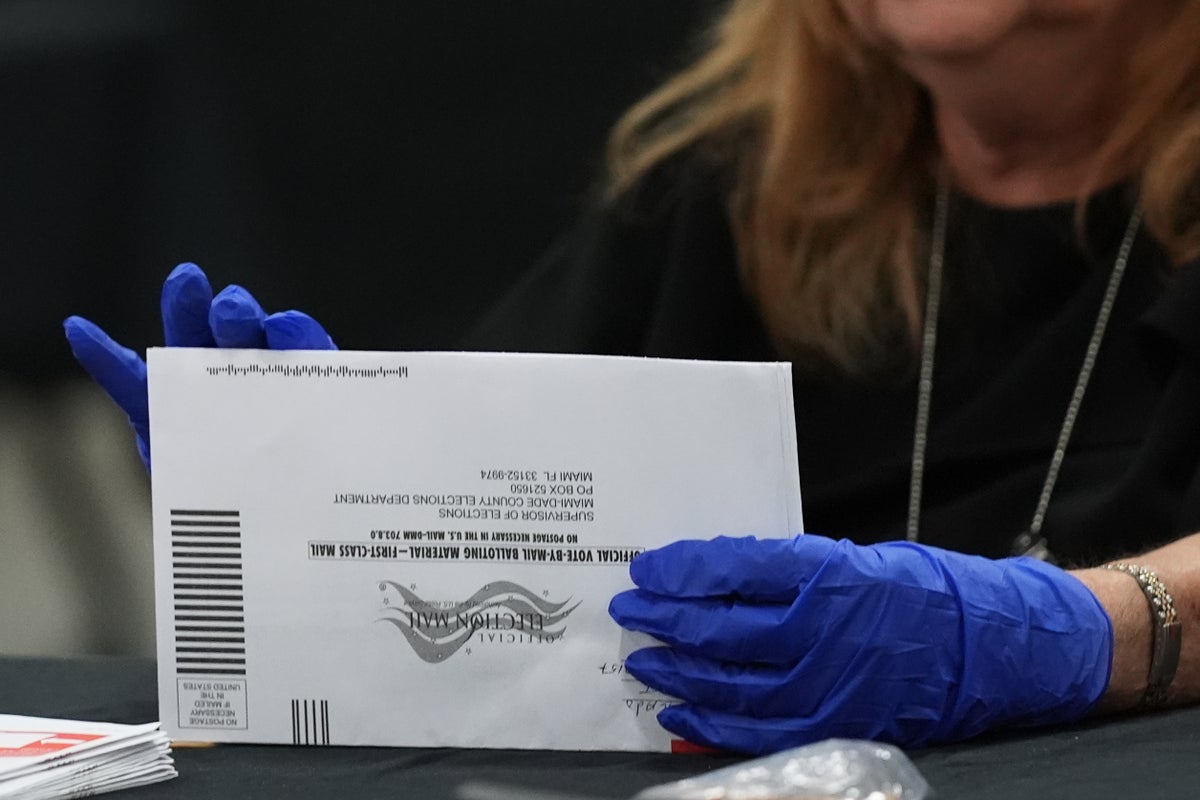
Consider what happens next. A primary ballot arrives in that same rural mailbox. A voter sitting at a kitchen table, wrapped in a heavy flannel shirt while wood smoke curls from the chimney, scans the list of candidates vying for Alaska's sole seat in the United States House of Representatives. Names blur together. Local mayors, former state legislators, familiar faces from local television news. And then, a name attached to a profile that defies the geometry of the Last Frontier entirely.
The candidate is behind bars. Not metaphorically. Literally. For broader background on this issue, detailed reporting can also be found on The Guardian.
He sits in a federal prison cell thousands of miles away from the tundra, the glaciers, and the damp coastal rainforests he hopes to represent. He has no physical address in the state, no local campaign headquarters staffed by teenagers drinking lukewarm coffee, and no recent history of walking the docks of Ketchikan or the icy streets of Fairbanks. His ties to Alaska are, to put it mildly, difficult to trace with the naked eye.
And yet, he advances.
How does a man whose daily routine involves concrete walls and correctional officers become a viable line item on a ballot designed to choose the voice of America's largest, wildest state?
The answer lies in the cold machinery of constitutional law, colliding with a moment of profound political dislocation. The United States Constitution lays out the qualifications for the House of Representatives with surprising brevity. An aspirant must be at least twenty-five years old, a citizen of the United States for seven years, and an inhabitant—at the time of the election—of the state they represent.
Notice what is missing. There is no requirement of a pristine criminal record. There is no clause demanding a minimum number of years spent fishing local waters or shivering through a February whiteout. The framers built a system meant to keep out royalty, not necessarily outcasts. They envisioned a representative government open to anyone whom the people, in their infinite and sometimes confounding wisdom, might choose to elevate.
When a federal prisoner manages to clear the initial hurdles of a primary election, it forces us to confront a jarring truth about our democracy. The system is entirely porous. It operates on rules written centuries ago, applied to a modern electorate that feels increasingly alienated from the traditional corridors of power.
To understand why this happens, we have to look past the absurdity of the headline and examine the anatomy of protest.
Imagine, for a moment, a voter named Sarah. I have known people like Sarah—bone-weary from the rising cost of heating oil, frustrated by federal land management decisions that feel made by bureaucrats who have never stepped foot on a muskeg, and profoundly distrustful of political parties that promise everything and deliver silence. For voters like Sarah, the standard political menu tastes like cardboard. Every candidate looks the same, sounds the same, and orbits the same donor-class solar system.
When a protest candidate emerges from the absolute margins—even from a federal penitentiary—it sends a signal flare. It is a middle finger rendered in ink on an official state document. A vote for the prisoner is not necessarily an endorsement of whatever led him to federal custody. It is often something far simpler and far more corrosive to the status quo: a declaration that the system as currently constructed is broken beyond ordinary repair, so why not break it a little more?
Democracy relies on trust. When that trust frays, strange things begin to grow in the spaces between us.
We look at the election returns from Anchorage to Nome and scratch our heads. Pundits on cable news networks furrow their brows, speaking in measured, clinical tones about name recognition, ranked-choice voting anomalies, and low primary turnout. They treat the phenomenon as a glitch in the software, a temporary anomaly to be patched in the next legislative cycle.
They are missing the plot.
The advancement of a candidate with no local ties and no physical freedom is not a glitch. It is a mirror. It reflects an electorate that feels so disconnected from its governing class that a prisoner thousands of miles away can somehow feel more authentic than a career politician standing on a stage in downtown Anchorage. That is the real danger. Not that an ineligible or unconventional candidate might slip through a procedural crack, but that millions of people feel so unrepresented that the margins look like a better home than the center.
We have engineered a political culture where distance—both literal and figurative—matters less than disruption.
When you strip away the legal briefs, the election board press releases, and the social media outrage, you are left with a quiet, unsettling reality. A man sitting in a federal cell is closer to holding federal office than the average citizen is to being heard by their current representatives.
The snow continues to fall outside the cabin window in the Mat-Su Valley. The wood stove crackles, settling into a steady, rhythmic warmth. The ballot sits on the table, ink gleaming under the pale light of an Alaskan afternoon.
The choice is yours. And the distance is entirely up to you.