The Blueprint: Deconstructing Escalation From Belarusian Territory
When Ukrainian President Volodymyr Zelenskyy warned that Russian forces are preparing to intensify strikes against western Ukraine using Belarusian territory—pointing to drone signal relay stations and the potential deployment of ballistic missile systems—the headline captured the immediate danger without unpacking the underlying operational mechanics. Standard wire coverage treats such warnings as a binary shift: either Belarus enters the war directly or it does not. That framing misses how modern theater warfare actually escalates. Escalation via a neighboring co-belligerent rarely begins with a dramatic declaration; it advances through incremental infrastructure integration, shortened flight timelines, and asymmetrical bargaining over regime survival.
To understand what a strike corridor through Belarus means for western Ukraine, for Minsk, and for regional security, we have to separate confirmed operational patterns from strategic hypotheses. Known facts include Moscow's ongoing deep-strike campaign against Ukrainian infrastructure, the documented use of Belarusian territory and airspace at various stages of the conflict, and public warnings from Kyiv regarding drone repeaters and ballistic system deployments in Belarus. By contrast, the exact scale, timing, and force composition of any future ballistic deployment from Belarusian soil remain educated hypotheses subject to intelligence verification, force availability, and political friction between the Kremlin and Minsk. If you found value in this article, you should look at: this related article.
The analytical framework below breaks this problem into four structural parts: The Three Pillars of Strike Geometry, The Cost Function of Co-Belligerence, Air Defense Saturation and Reaction Time, and Tactical Countermeasures and Their Limits. Together, they explain why a northern strike axis alters defense economics in western Ukraine even before a single new missile battery fires.
Mapping the Competitor's Logic vs. Operational Reality
A typical news report summarizing Zelenskyy's remarks centers on three surface-level claims: Russia wants to hit western Ukraine harder, Moscow is placing drone repeaters in Belarus, and deploying ballistic missiles there would be "very dangerous" and drag Belarus deeper into the war. Each claim points to a real issue, yet each leaves critical causal links unexamined. For another perspective on this development, see the recent update from USA Today.
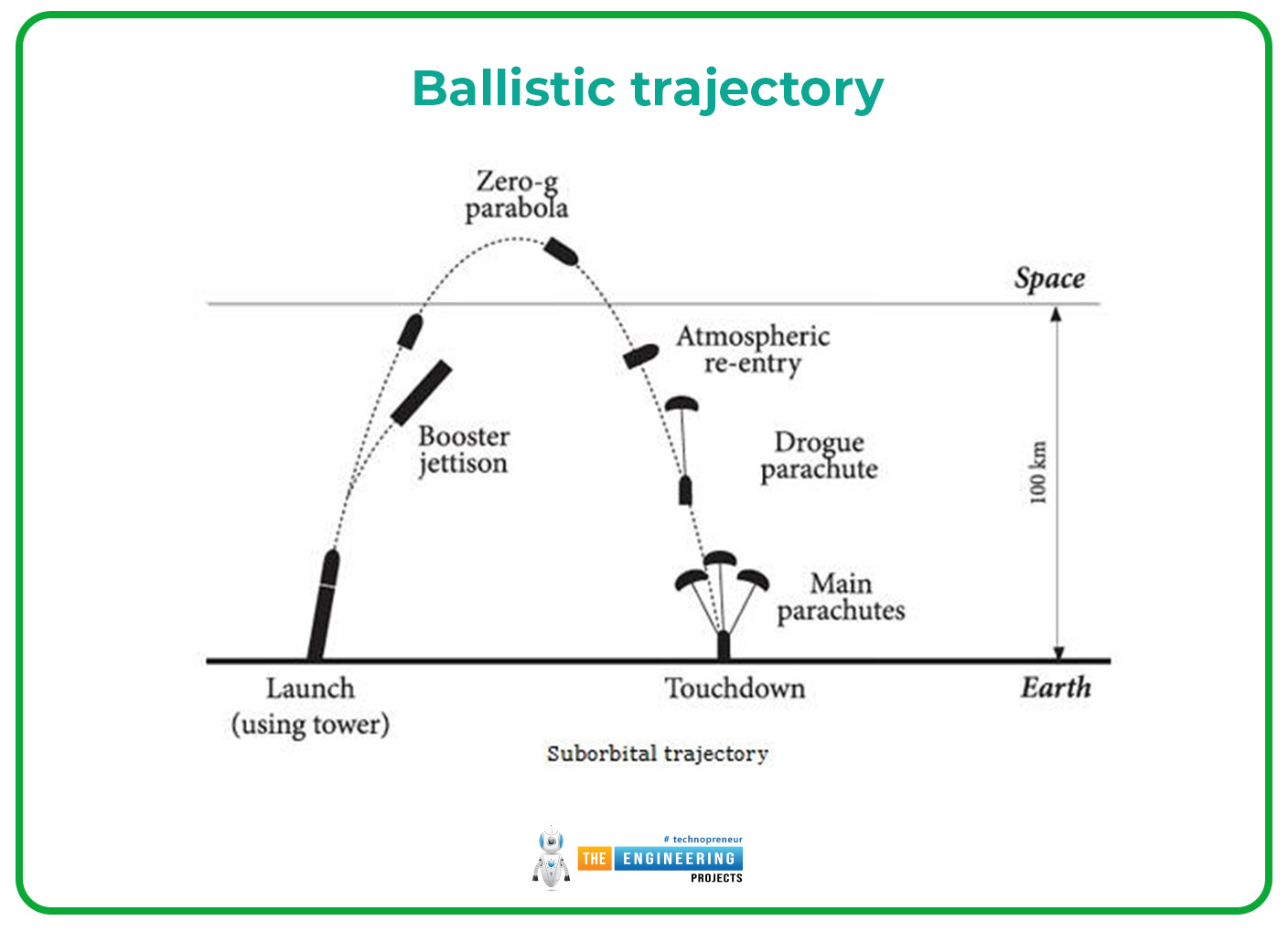
First, treating drone relay stations and ballistic missile launchers as interchangeable steps on a single ladder obscures how different weapon classes exploit geography. Uncrewed aerial vehicles (UAVs) rely on command-and-control links, terrain-following routes, and electronic warfare resilience, where forward repeaters extend operational reach or link stability. Ballistic missiles operate on entirely different physics: high-velocity, lofted or quasi-ballistic trajectories where proximity to the target compresses warning and intercept windows. Grouping them together without separating their sensor, guidance, and interception profiles blurs the operational threat.
Second, describing Belarusian involvement simply as "getting dragged into the war" treats Minsk as a passive object rather than an active, constrained actor. Alexander Lukashenko's regime has long navigated a narrow corridor between Russian coercive pressure, economic and security dependence on Moscow, and domestic or diplomatic fallout. Understanding why Minsk might permit drone relays while hesitating—or complying selectively—on ballistic launchers requires examining incentive structures rather than relying on moral or emotional shorthand.
Third, standard reporting often frames air defense shortages as a simple matter of wanting "more interceptors." In practice, air and missile defense is a resource-allocation and queuing problem governed by coverage geometry, sensor cuing, interceptor cost-exchange ratios, and industrial production rates. Adding a new launch azimuth from the north changes where sensors must look and how scarce interceptors are distributed across the country.
The Three Pillars of Strike Geometry
Any assessment of strikes launched or routed through Belarus rests on three physical and operational pillars: range-to-target compression, corridor and sensor geometry, and target-set vulnerability.
Range-to-Target Compression
Western Ukraine—encompassing logistics hubs, rail junctions, energy nodes, and border-adjacent infrastructure—sits farther from traditional launch zones in southern or eastern Russia and occupied territories than central or eastern regions. Launching or routing systems through Belarus shortens straight-line distances into western oblasts.
In air and missile warfare, shorter distance produces two immediate effects:
- Reduced flight time: Faster arrival narrows the window between launch detection, track classification, civil alerts, and interceptor engagement.
- Payload and routing flexibility: Shorter distances reduce fuel or energy penalties for maneuvers or allow systems to enter western airspace from directions that differ from established southern or eastern patterns.
Even when exact launcher locations or system types are not publicly confirmed, the geometry itself is straightforward: moving the launch point closer to the western border shifts the tactical advantage toward the attacker unless offset by earlier detection and layered point defense.
Corridor and Sensor Geometry
A strike axis through Belarus interacts directly with radar horizons and electronic warfare environments. Low-flying drones and cruise missiles exploit Earth curvature and terrain masking to stay below radar coverage until close to their targets. Relay nodes positioned along a northern corridor can help maintain telemetry or control links over extended distances, complicating efforts to sever communications or spoof navigation.
Ballistic trajectories follow a much higher arc, making them visible to long-range radars earlier in flight, yet their terminal speed demands rapid fire-control integration. When attackers vary launch directions, air defense commanders face a wider angular sector to monitor with finite radar assets. A radar focused on southeastern approaches cannot simultaneously provide identical low-altitude and high-elevation coverage to the north without reallocation or gap trade-offs.
Target-Set Vulnerability
Western Ukraine carries strategic weight that goes far beyond geography. It serves as a critical transit zone for military aid, commercial goods, displaced populations, and energy transfers, while also hosting major urban centers and utilities. Strikes against energy infrastructure, transport links, or dual-use facilities in the west impose compounding costs: they disrupt supply chains feeding the broader war effort while straining municipal resilience far from the front line.
From Moscow's perspective, expanding pressure into western Ukraine serves a coercive purpose. It signals that no rear area is insulated from cost and forces Kyiv to dilute air defenses that might otherwise protect frontline forces or eastern and central cities.
The Cost Function of Co-Belligerence
Why would the Kremlin push for deeper Belarusian operational participation, and what constrains Minsk? We can model this as a cost function weighing regime security, retaliation risk, and bargaining leverage for both capitals.
For Moscow, using Belarusian territory offers three clear advantages:
- Operational reach without domestic mobilization: Leveraging neighboring territory expands strike geometry without requiring Russia to generate entirely new forces or open a massive ground front that might fail or drain reserves.
- Escalatory ambiguity and burden-sharing: Routing drones or deploying missile assets in Belarus complicates Ukraine's retaliatory calculus while binding Minsk more tightly to Russian strategic choices.
- Diplomatic and psychological leverage: The mere prospect of ballistic launchers in Belarus heightens anxiety across western Ukraine and near NATO's eastern flank, reinforcing pressure on Kyiv and its partners.
For Minsk, however, the cost function is asymmetric and hazardous. Permitting low-signature support—such as airspace transit, logistics, or signal relay infrastructure—allows Lukashenko to accommodate Moscow incrementally while attempting to keep direct combat exposure below a threshold that triggers massive Ukrainian counterstrikes on Belarusian soil. Deploying visible, high-value strike assets like ballistic missile launchers crosses a sharper line. Once launchers are stationed on its territory, Belarus becomes an unmistakable launchpad in military planning, raising the stakes of miscalculation, counter-battery or deep-strike targeting, and deeper entanglement in a war Minsk has largely sought to avoid fighting directly with its own ground forces.
At the same time, Lukashenko's room for independent refusal is structurally bounded. Heavy economic integration with Russia, security guarantees underpinning regime survival, and existing military coordination limit how firmly Minsk can say no to sustained Kremlin pressure. The tension between avoiding direct blowback and complying with Moscow's demands explains why incremental measures like drone relays often precede—or substitute for—more overt deployments.
Air Defense Saturation and Reaction Time
Zelenskyy's remarks also highlight a central operational response: expanding domestic production of air defense turrets, distributing systems according to threat levels, and advancing anti-ballistic defense initiatives. In defense economics, this is a classic battle against saturation and asymmetric cost.
Air defense networks fail not only when interceptors miss, but when attackers present more targets—or faster targets—than the system can service within the available time window. Consider the operational chain required to defeat an incoming threat:
- Detection and cueing: Sensors must spot the launch or low-altitude ingress and pass a clean track to command and control.
- Classification and prioritization: Operators or automated systems must distinguish decoys, drones, cruise missiles, and ballistic threats, assigning high-value interceptors only to targets capable of penetrating inner defenses or hitting critical assets.
- Engagement and reload: Launchers fire, guidance tracks the intercept, and crews reload or reposition before the next wave arrives.
Against slower, high-volume threats like drones, distributed gun-and-sensor turrets and mobile short-range systems can provide cost-effective point defense along likely corridors. They conserve scarce high-end surface-to-air missiles for threats they cannot reach. Against ballistic missiles, however, kinetic engagement requires specialized radar and interceptor architectures with strict magazine depth and high unit costs. Every ballistic interceptor fired represents a scarce strategic asset that takes industrial time to replace, whereas an attacker can mix ballistic salvos with drones and decoys to force expensive or suboptimal intercepts.
Adding a northern threat vector compounds this math. Even if total interceptor stockpiles remain unchanged, stretching coverage to guard western approaches against both drone corridors and potential ballistic launch zones forces commanders into hard trade-offs between area coverage (protecting broad regions) and point concentration (ring-fencing specific cities, power plants, or logistics hubs).
Tactical Countermeasures and Their Limits
When facing a potential expansion of strikes from Belarusian territory, defenders and their partners typically rely on four categories of countermeasures. Each has clear operational value—and distinct boundaries.
Threat-Weighted Air Defense Allocation
Concentrating air defenses, electronic warfare assets, and defensive turrets along high-probability ingress routes and around critical infrastructure directly reduces strike effectiveness. Prioritizing high-value nodes—such as major substations, rail hubs, and population centers—maximizes marginal protection per unit deployed.
- Limitation: Shifting assets north or west leaves gaps elsewhere. No defender has enough air defense systems to create an impenetrable dome over an entire country simultaneously, meaning attackers can probe less-dense sectors.
Counter-Infrastructure and Electronic Disruption
Targeting or degrading enabling nodes—such as relay infrastructure, command links, or logistics lines supporting strike operations—aims to reduce accuracy, range, or launch tempo before munitions reach their targets. Electronic warfare can also disrupt navigation or data links on uncrewed systems.
- Limitation: Cross-border strikes into Belarusian territory carry severe escalatory risks and legal, political, and military complications. Moreover, mobile emitters and distributed relay setups can often be dispersed, hardened, or replaced faster than static targets.
Dispersal, Hardening, and Redundancy
Physical resilience often outperforms active interception over a prolonged campaign. Burying or sandbagging critical components, maintaining spare transformers and mobile substations, dispersing critical supplies, and routing logistics along redundant corridors limit how much damage a single strike can inflict.
- Limitation: Hardening and redundancy require upfront capital, engineering labor, and time. Large industrial facilities, major bridges, and high-voltage grids cannot be fully hardened against heavy warheads or sustained, repeated salvos.
Partner Intelligence and Missile Defense Integration
Timely early warning from allied sensors, intelligence sharing on launcher movements or corridor activity, and joint development or procurement of anti-ballistic capabilities help buy precious seconds and expand intercept options.
- Limitation: External systems and joint projects face production bottlenecks, export and political constraints, and integration timelines. Intelligence warnings improve readiness, but they do not by themselves manufacture additional interceptors or alter basic ballistic kinematics.
Illustrative Scenario: How a Northern Corridor Stress-Tests Western Defenses
Imagine a winter evening scenario in western Ukraine. Russian planners pair long-range drones routed along a northern corridor—supported by relay links to maintain control and probe air defenses—with high-speed missiles aimed at regional energy and transport nodes.
First, drones arrive ahead of or alongside faster strike systems, forcing local air defense units and mobile turrets to expend ammunition, illuminate radars, and reveal firing positions. Second, if ballistic or quasi-ballistic threats are launched from closer northern positions, compressed flight times leave minimal margin between launch detection and impact. Even with rapid alerts, civil and industrial operators have less time to shed load, move personnel to shelter, or shut down vulnerable equipment.
Notice what happens next even if air defenses intercept a high percentage of incoming rounds: a small fraction of leakers hitting a key transformer station or logistics junction can still cause localized blackouts or transit delays. The operational takeaway is not that air defense is futile—far from it—but that defensive success must be measured by mission continuity and infrastructure recovery speed, not just shoot-down percentages.
Strategic Play: Treat Belarus as an Active Geometry Variable Regardless of Formal Entry
Do not wait for a formal Belarusian declaration or an unmistakable, large-scale missile salvo from Minsk to reorganize western defense posture. Treat Belarusian territory as an active geometry variable right now: plan force placement, sensor coverage, and infrastructure redundancy around the assumption that northern drone corridors can intensify rapidly and that ballistic launch options from Belarus remain a live contingency.
Execute this shift through three concrete operational moves:
- Re-baseline northern and western sensor-to-shooter links: Audit low-altitude radar gaps, electronic warfare coverage, and cueing pathways along northern approaches so incoming drones and high-speed threats are detected and classified without handoff delays.
- Pair point-defense turrets with rapid-restoration kits: Deploy distributed defensive turrets where corridor pressure is highest, while pre-staging replacement grid components, mobile power units, and bypass repair teams in western hubs so any leakers produce hours or days of disruption rather than weeks.
- Calibrate deterrent signaling to clear thresholds: Pair intelligence transparency and defensive readiness with unambiguous diplomatic and military signaling toward both Moscow and Minsk, making clear that turning Belarus into a forward ballistic launchpad carries direct strategic costs rather than risk-free leverage.