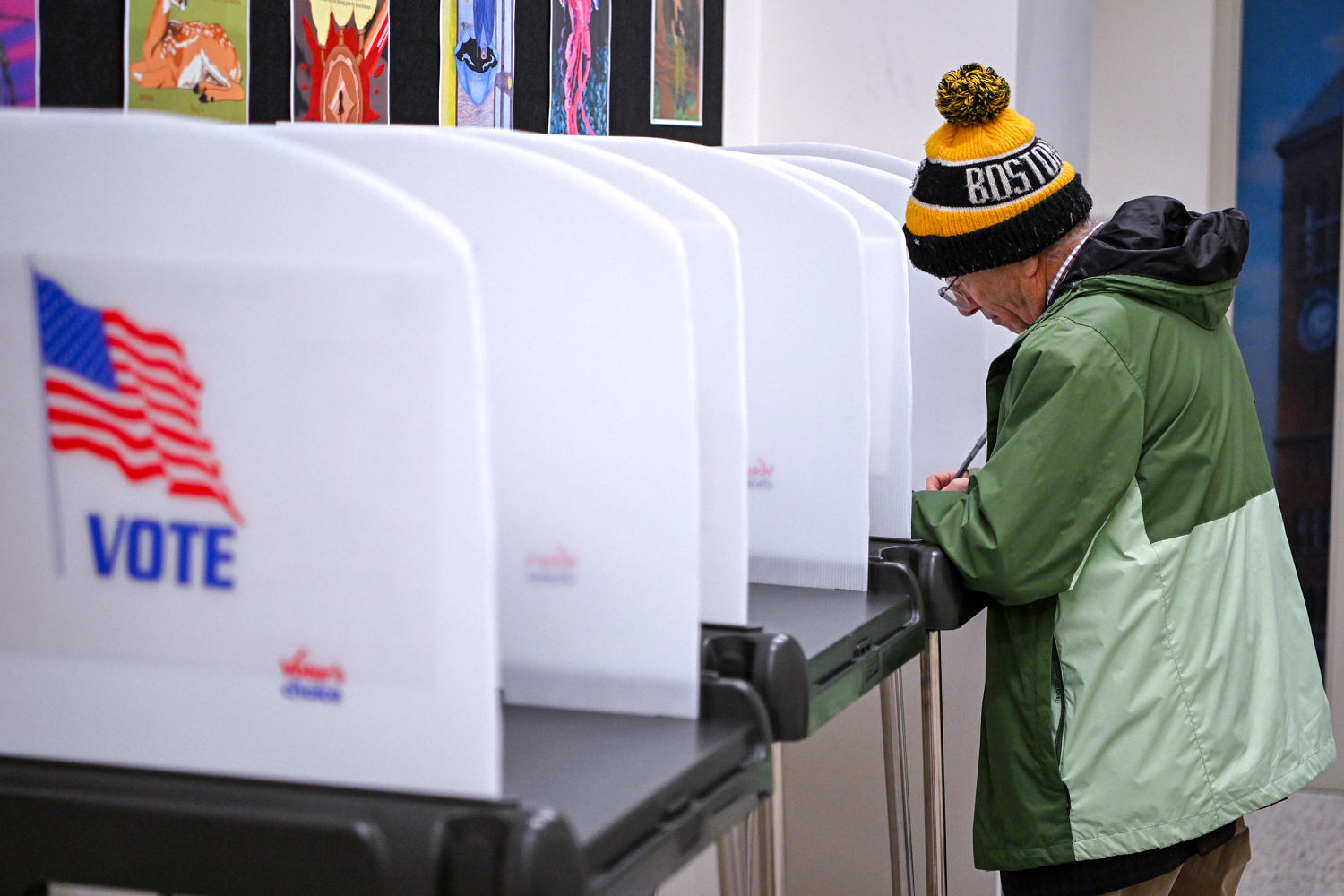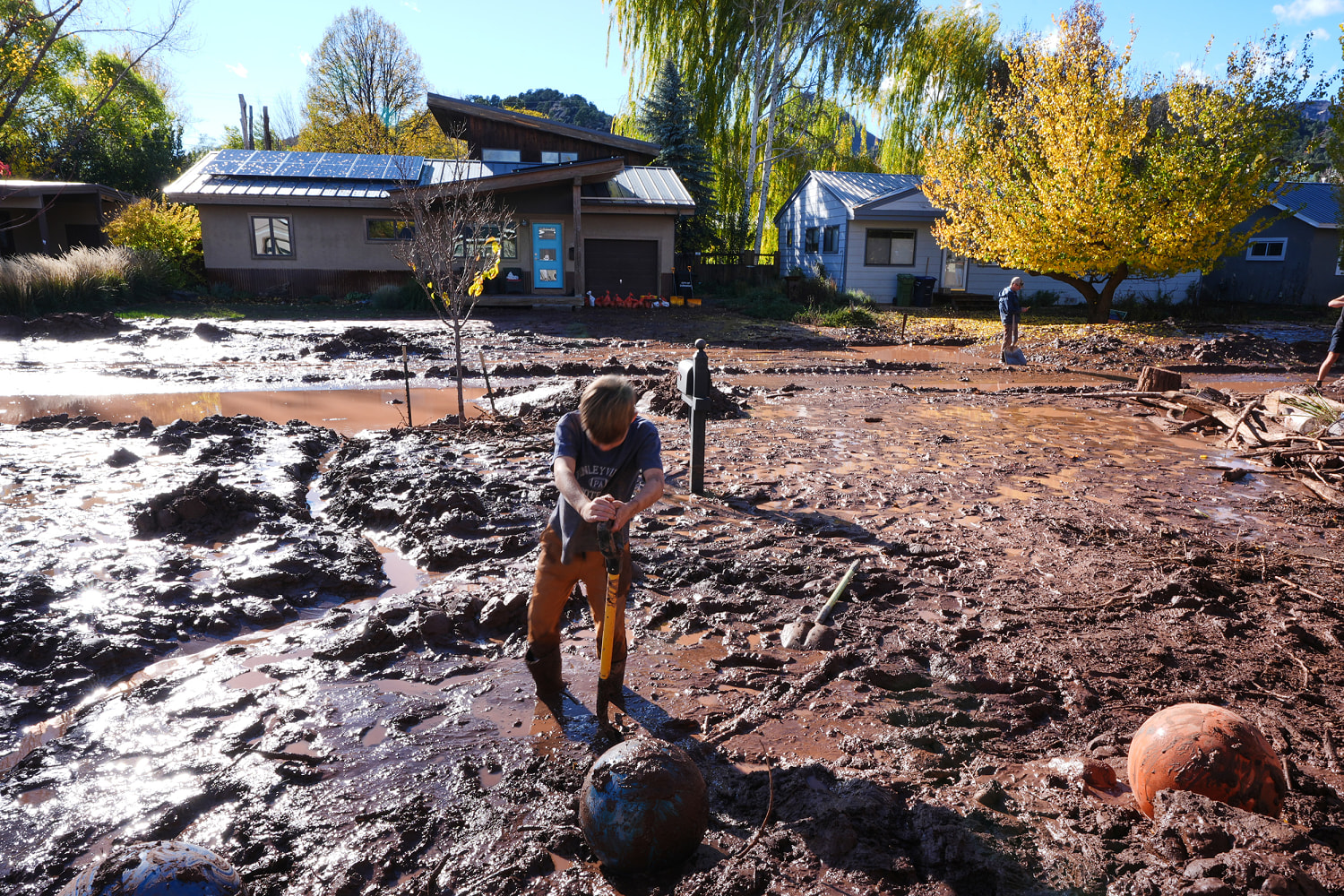
Every November, cable news anchors stand in yellow ponchos pointing at radar maps like they are breaking the Watergate scandal. Floods hit the Midwest. Downpours stall over the Gulf Coast. Pundits immediately start hyperventilating about turnout suppression, partisan advantage, and the fragility of American democracy.
They are looking at the wrong disaster.
When a heavy rainstorm throws a county's election administration into chaos, the weather is not the villain. The villain is an archaic, single-day logistical bottleneck that treats casting a ballot like an extreme obstacle course. Blaming floods for low turnout or delayed results is like building a hospital out of cardboard and blaming the wind when it collapses.
I have spent the last fifteen years analyzing municipal infrastructure, civic logistics, and emergency management plans across swing states. I have watched county clerks blow millions of dollars on last-minute generator rentals and emergency sandbag deployments while leaving their core ballot-access bottlenecks completely untouched. The standard media narrative—that severe weather "besets" Election Day and passively dictates political outcomes—is lazy journalism. It lets election officials off the hook for failing to build resilient voting systems, and it misunderstands how modern voters actually behave.
The Myth of the Weather-Driven Election
The political press loves the rain-equals-low-turnout trope because it requires zero investigative effort. You point a camera at a flooded intersection, quote a frustrated commuter, and imply that the storm just swung a congressional district.
Political scientists have studied this exact phenomenon for decades, and the data tells a far more nuanced story than cable news admits.
Researchers like Brad Gomez, Thomas Hansford, and George Krause famously analyzed decades of county-level weather and turnout data, finding that rain reduces turnout by roughly 0.8 percent per inch, while snow drops it by about 0.5 percent. On paper, in a razor-thin race, a fraction of a percent sounds dramatic. In practice, that math relies on a rapidly dying assumption—that the vast majority of citizens actually wait until the first Tuesday in November to vote.
Over the past decade, the mechanics of American voting have fundamentally shifted. According to data from the U.S. Election Assistance Commission and the MIT Election Data and Science Lab, roughly half to two-thirds of all ballots in recent federal cycles were cast before Election Day via mail or early in-person voting.
When sixty percent of the electorate has already banked their votes before a single cloud forms over the state line, an Election Day thunderstorm is not a mass-disenfranchisement event. It is an operational stress test on the remaining forty percent.
If a severe storm cripples an election today, it is not because the sky fell. It is because local administrators failed to account for predictable seasonal weather in a month notorious for atmospheric volatility. November is peak transition season in North America. Cold fronts collide with warm Gulf moisture. Nor'easters form. Flash flooding happens. Treating November rain as an unforeseeable act of God is administrative malpractice.
Defining Resilience in Election Infrastructure
To understand why weather causes chaos, we have to define what actual election resilience looks like. Most journalists confuse emergency response with structural resilience.
Emergency response is reactive. It involves scrambling to relocate a flooded polling place at 5:00 AM, printing emergency paper ballots when humidity jams an optical scanner, or begging a judge to keep polls open two hours late because highway flooding trapped commuters. Emergency response looks heroic on television, and it is almost always a sign of prior failure.
Structural resilience is proactive. It is the deliberate engineering of a voting system so that localized physical disruptions cannot degrade access or delay tabulation.
Consider the physical vulnerabilities of a standard neighborhood polling place. Municipalities routinely house voting precincts in elementary school gymnasiums, church basements, and aging community centers. These buildings are chosen because they are free and familiar, not because they are engineered for continuity of operations.
They sit in low-lying floodplains. They rely on single-feed municipal power grids without automatic transfer switches. Their parking lots lack adequate storm drainage. When three inches of rain fall in four hours, the building floods, the power flickers, the cellular modems used to verify electronic poll books lose signal, and the entire precinct grinds to a halt.
That is not a weather problem. That is a site-selection and civil-engineering failure.
Why "Who Benefits From the Rain?" Is the Wrong Question
Whenever severe weather hits on Election Day, search engines light up with variations of the exact same partisan query: Does rain help Republicans or Democrats?
If you are asking this question, you are falling for a statistical parlor trick.
The conventional wisdom—repeated endlessly by pundits—is that bad weather hurts Democrats because urban voters rely more heavily on public transit and walk to the polls, whereas suburban and rural Republicans drive their own vehicles.
That assumption falls apart under modern scrutiny for three specific reasons:
- The Early-Vote Inversion: In recent election cycles, Democratic voters have overwhelmingly utilized mail-in and early in-person voting at higher rates than Republicans. By the time Election Day arrives, the electorate left standing in line during a downpour skews significantly more conservative than the electorate as a whole. A storm on Tuesday now disproportionately threatens the exact demographic that prefers voting on Tuesday.
- Infrastructure Asymmetry: Rural counties often suffer far worse physical isolation during flash floods than dense cities. A washed-out two-lane county road or a flooded low-water bridge in the Ozarks or Appalachia completely severs access to the sole precinct for miles. Urban transit delays are frustrating, but rural road closures are absolute.
- High-Propensity vs. Low-Propensity Voters: Weather does not filter voters by party registration; it filters them by motivation. Partisan die-hards will wade through ankle-deep water to cast a ballot. Casual, low-propensity voters—who exist in every demographic and both parties—will stay home if the commute looks miserable.
Asking which party wins in the rain misses the real stakes. When physical conditions dictate who gets to exercise a constitutional right, the legitimacy of the process takes a direct hit, regardless of who wins the seat.
The Hidden Failure Points Nobody Covers
When severe weather strikes during an election, the cameras focus on wet voters holding umbrellas. Meanwhile, the real operational disasters happen out of sight, inside county warehouses and tabulation centers.
High Humidity and Paper Ballots
Optical scan voting machines are essentially high-speed, precision paper-feeders. They are notoriously sensitive to environmental moisture. When a polling place loses HVAC power during a warm, torrential rainstorm, relative humidity inside the room spikes. Paper ballots absorb that moisture, swell slightly at the edges, and jam the scanner rollers. Poll workers are then forced to divert ballots into emergency auxiliary bins, which must be hand-fed or adjudicated later at a central facility. That single mechanical bottleneck is responsible for countless late-night counting delays that conspiracy theorists immediately weaponize as evidence of fraud.
Cellular Dead Zones and Electronic Poll Books
Modern precincts rely on tablet-based electronic poll books to check in voters and prevent double-voting in real time. Those tablets communicate with central county servers over commercial cellular networks. Heavy rainstorms and dense cloud cover degrade wireless signal strength, while local power outages knock out nearby cell towers or cause massive network congestion as thousands of stranded drivers hit their phones simultaneously. When the poll books go offline, workers have to fall back on backup paper rosters—if they remembered to print them—turning a thirty-second check-in into a five-minute ordeal.
Chain-of-Custody Bottlenecks
At the end of the night, precinct judges have to transport physical memory cards and sealed ballot boxes from outlying precincts back to the central board of elections. Flash flooding turns routine twenty-minute drives into hazardous detours. Every unscheduled delay in transit triggers panic among campaign watchers and cable news desks, creating an information vacuum filled instantly by misinformation.
How to Actually Weather-Proof an Election
If election administrators want to stop holding their breath every time a low-pressure system crosses the Rockies in November, they need to stop treating weather as a public relations issue and start treating it as a logistics problem.
Here is what works—and I will be honest about the trade-offs, because nothing in civic infrastructure is free.
1. Mandate Floodplain and Grid Audits for Polling Sites
Counties must run every single polling location through FEMA flood hazard maps and utility grid reliability databases before certifying them for use. If a church basement flooded twice in the last ten years, it cannot be a polling place. Period. Sites must be elevated, accessible via primary arteries with storm drainage, and equipped with commercial-grade backup power.
- The Downside: Eliminating vulnerable neighborhood sites forces counties to consolidate precincts into larger, sturdier regional vote centers. Voters hate losing their hyper-local, three-block walk to the neighborhood school, and consolidation requires robust public transit partnerships to avoid creating new access barriers.
2. Decouple Tabulation From Precinct-Level Humidity
Instead of relying on fragile precinct-level scanners in damp gymnasiums, states should standardize high-speed central count facilities housed in climate-controlled, generator-backed municipal buildings, paired with secure drop boxes and extended early voting windows.
- The Downside: Central counting slows down the immediate reporting of results on election night. Americans are addicted to instant gratification from cable news decision desks, and waiting forty-eight hours for final tallies breeds public suspicion—even when the process is vastly more accurate and weather-proof.
3. Build Weather Triggers Into Absentee Deadlines
Most states enforce rigid deadlines for requesting an absentee ballot—often a week or more before Election Day. If a catastrophic storm forecast locks in four days before the election, voters are trapped: it is too late to request a mail ballot, and too dangerous to drive on Tuesday. States should establish statutory emergency triggers that automatically authorize curbside drive-through voting or emergency ballot pickup whenever the National Weather Service issues a Flash Flood Warning or Severe Thunderstorm Watch for a county.
- The Downside: Last-minute procedural shifts create immense administrative strain on local clerks and invite immediate litigation from partisan legal teams looking for any deviation from standard rules to challenge close results.
Stop Blaming the Sky
Imagine a scenario where a major airline canceled forty percent of its flights every November because of routine autumn rain, and the CEO went on television claiming nobody could have predicted clouds in the Midwest. The board would fire him before sunset.
Yet we accept that exact excuse from election administrators and political commentators every single year.
Weather is a constant. Atmospheric physics does not care about campaign schedules, voter enthusiasm, or civic deadlines. When floods and severe storms derail an election, the storm did not break the system. The storm merely exposed a system that was already broken, propped up by duct tape, wishful thinking, and sunny-day assumptions.
Fix the infrastructure, harden the sites, expand the voting window, and stop pretending that rain is a political strategy.