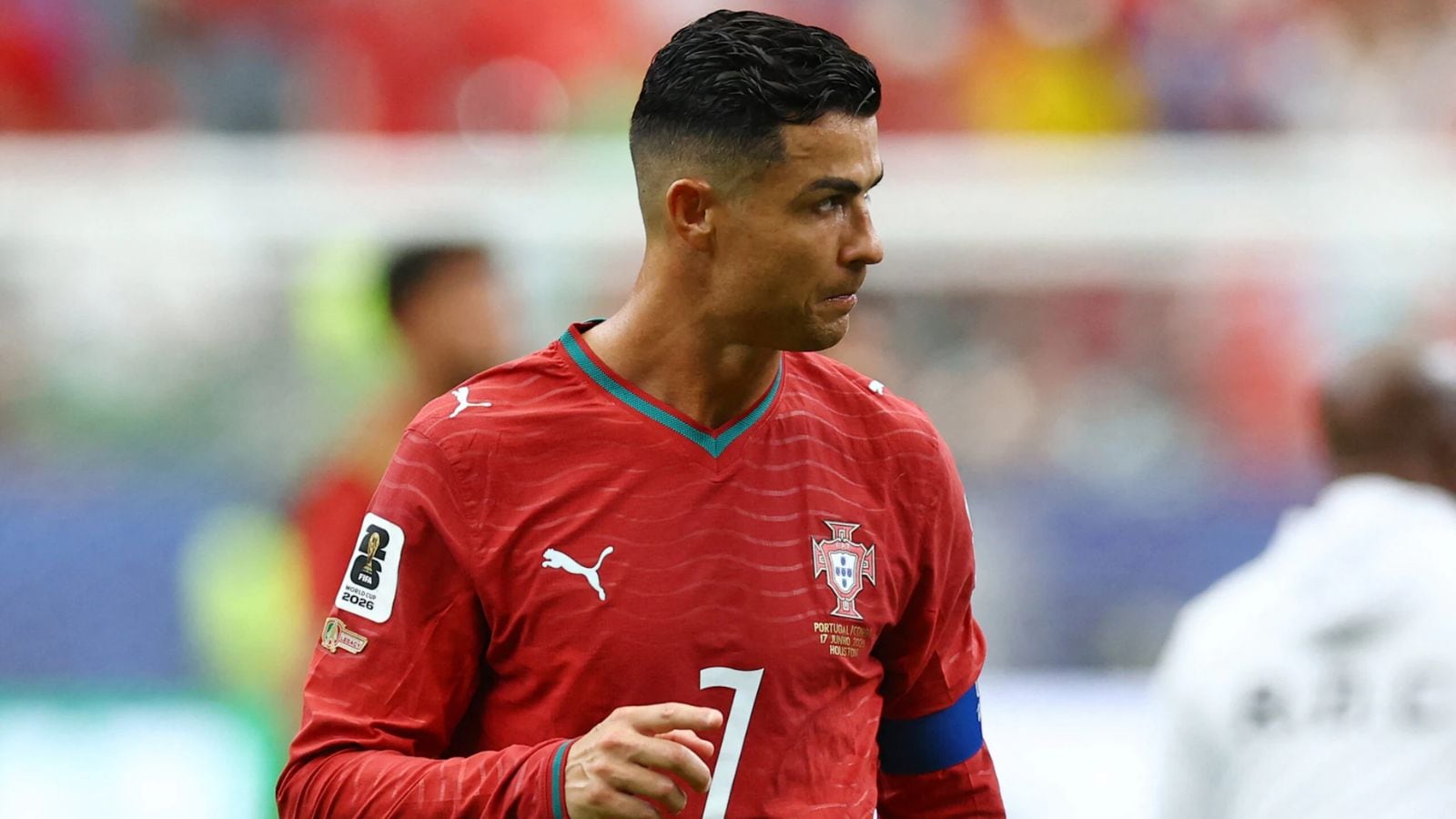
FIFA has rewritten its own laws under the weight of geopolitical pressure, erasing a mandatory suspension for American forward Folarin Balogun after direct intervention from the White House. The decision to lift Balogun’s red-card ban ahead of the United States’ crucial Round of 16 match against Belgium destroys decades of tournament protocol and opens a dangerous chapter for the governance of international football. By executing a sudden judicial pivot following private phone conversations between United States President Donald Trump and FIFA President Gianni Infantino, the sport’s governing body has signaled that the rules of the world’s biggest sporting event are negotiable if the right statesman makes the call.
The crisis began during the second half of the United States’ victory over Bosnia-Herzegovina at Levi’s Stadium. Balogun, the leading American goalscorer in the tournament, caught Bosnian defender Tarik Muharemovic on the ankle while challenging for a loose ball. Brazilian referee Raphael Claus initially let play continue but, following a video assistant referee review, brandished a straight red card. Under the long-standing statutes governing the tournament, an automatic one-match ban is absolute and cannot be appealed. That changed when the political machinery of Washington moved into action. Read more on a connected subject: this related article.
Behind the scenes, a coordinated effort from the highest levels of the American government targeted the executive leadership of FIFA. Hours after the final whistle, the Oval Office bypassed standard sporting channels. Sources familiar with the matter confirm that three distinct telephone conversations took place between the American president and Infantino over a forty-eight hour window. Simultaneously, Commerce Secretary Howard Lutnick and Andrew Giuliani, the executive director of the White House World Cup task force, opened direct communication channels with FIFA officials to pressure the organization’s disciplinary committee.
The Manipulation of Article 27
To justify a reversal that has not been seen in a World Cup since 1962, FIFA’s legal department turned to a rarely invoked clause in its regulatory framework. The governing body announced that Balogun’s one-match suspension would be deferred for a probationary period of one year under Article 27 of the FIFA Disciplinary Code. If the striker avoids another severe infraction over the next twelve months, the suspension disappears entirely. More journalism by CBS Sports explores related views on this issue.
"In line with Article 27 of the FIFA Disciplinary Code, the implementation of the match suspension is suspended for a probationary period of one year," the official statement read. "If Folarin Balogun commits another infringement of a similar nature and gravity during the probationary period, the suspension shall be revoked and the sanction enforced."
This legal maneuver relies on a deliberate misapplication of rules designed for qualifying matches and domestic leagues, stretching them to fit the compressed schedule of a tournament knockout stage. By declaring that a red card received in the Round of 32 can be served on probation over the coming calendar year, FIFA has effectively made field ejections meaningless for powerful host nations. The decision renders the automatic suspension rule obsolete, creating an environment where disciplinary actions are subject to political negotiation rather than objective refereeing.
The administrative scramble inside FIFA was so rushed that it disrupted standard operational protocols. During the official pre-match briefings for the Round of 16 matches, European football officials noticed an unprecedented alteration in the organizational materials.
A source within the Belgian delegation confirmed that a standard slide detailing the automatic suspension of players who received red cards was completely missing from FIFA’s mandatory presentation on Sunday morning. The governing body altered its educational curriculum for teams overnight to erase the very rule they were breaking.
A Growing European Revolt
The Union of European Football Associations reacted with immediate fury, viewing the decision as a direct assault on the competitive balance of the tournament. The European governing body released a scathing assessment of the reversal, claiming that the international federation had compromised the core ethics of the sport.
The Belgian football association expressed total bewilderment at the sudden change in regulations, which fundamentally alters their tactical preparation for Monday’s elimination match.
The European response highlights a deeper structural rift within the sport. For years, European federations have watched with growing discomfort as FIFA leadership aligned itself closer with American commercial and political interests. The host nation of a World Cup has always enjoyed certain structural advantages, but the overt erasure of a red card via presidential decree represents a boundary line that European football executives believe should never have been crossed.
Legal experts within UEFA are currently evaluating whether the decision can be challenged at the Court of Arbitration for Sport. The logistical reality of a tournament knockout bracket means any formal appeal will arrive too late to stop Balogun from taking the field in Seattle, but the long-term institutional damage will persist far beyond this tournament cycle.
The Special Relationship at the Top of Football
To understand how three phone calls could dismantle a foundational tournament rule, one must look at the deep alignment between the leadership of FIFA and the current American administration. Gianni Infantino has spent years cultivating close relationships with global political leaders, frequently positioning himself as a peer to heads of state rather than an administrator of a non-profit sporting association.
Infantino’s frequent visits to Washington and Mar-a-Lago have drawn intense scrutiny from independent ethics committees. The FIFA president recently announced that the American head of state would personally present the World Cup trophy at the final in East Rutherford, New Jersey, an honor traditionally reserved for soccer dignitaries or neutral heads of state. The blurring of lines between geopolitical diplomacy and tournament administration has reached a point where the sport’s regulatory bodies can no longer claim independence.
FIFA's own statutes explicitly forbid political interference in the administration of football. In the past, domestic federations in Africa, Asia, and South America have faced immediate, total bans from international competition when government officials attempted to influence internal football matters or league decisions. Yet, when the host of the commercial engine that is the expanded World Cup demands an emergency review, the rules governing political meddling are quietly ignored.
The hypocrisy is glaring to smaller nations who have previously suffered from strict, unyielding adherence to the disciplinary code. When a smaller nation loses its star player to a controversial refereeing decision, their appeals are dismissed automatically within minutes by automated email templates citing the finality of the referee's on-field judgment.
Tactical Consequences on the Pitch
From a purely sporting perspective, the reinstatement of Balogun completely shifts the dynamic of the United States' path through the knockout rounds. The 25-year-old Monaco striker provides a specific tactical dimension that head coach Mauricio Pochettino relies on to stretch opposing defensive lines.
- Target Play: Balogun’s ability to back into central defenders allows the American midfield to advance up the pitch during transition phases.
- Preservation of Depth: Without Balogun, the U.S. squad lacks a natural central option capable of running the channels for a full ninety minutes.
- Goalscoring Efficiency: With three goals already in this tournament, his presence forces opposing managers to drop their defensive lines deeper, opening space for creative players like Christian Pulisic.
Pochettino welcomed the decision during his pre-match press conference at the University of Washington's Husky Soccer Stadium, arguing that the initial red card was an excessive punishment for an accidental collision.
The American squad learned of their teammate's availability via social media notifications while riding the team bus to training on Sunday morning. The atmosphere instantly shifted from defensive damage control to offensive preparation. While the American camp celebrates what they view as a correction of an unfair refereeing error, the reality remains that they are benefiting from an institutional exception that no other team in modern history has received.
The Threat to Referee Authority
The long-term victim of this political intervention is the authority of the on-field match officials. By overturning a suspension generated by a VAR review, FIFA has undermined the credibility of its own refereeing corps. Match officials must now carry out their duties knowing that their disciplinary decisions can be overridden if the economic or political fallout is deemed too costly for the tournament organizers.
When a referee displays a red card in a high-stakes match, that decision must carry the weight of absolute law within the lines of the pitch. If players and coaches believe that a red card is simply the opening offer in a multi-day political negotiation, the physical safety of players and the order of matches will deteriorate. Referees will hesitate to make difficult calls against high-profile nations, fully aware that their governing body will not support them if a head of state objects.
This precedent alters the entire ecosystem of international tournaments. The next time a prominent European, South American, or Asian nation faces a critical suspension, their domestic political leaders will feel entirely justified in making emergency demands to Zurich. FIFA has established a standard where justice on the pitch depends entirely on the leverage of the passport held by the accused. The beautiful game has always struggled with corruption and backroom deals, but this open, publicized collapse of regulatory integrity under political duress marks a moment from which the tournament cannot easily return.