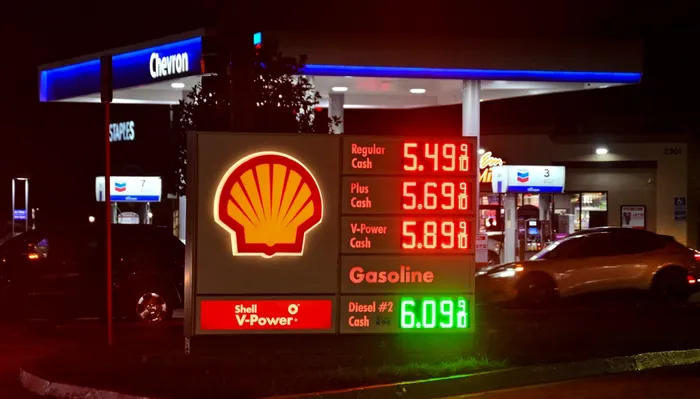
Low-cost carriers (LCCs) operate on a razor-thin margin profile where fuel price volatility acts as a direct catalyst for insolvency. When budget airlines petition the federal government for emergency liquidity, they are not merely asking for a bridge loan; they are exposing a fundamental structural flaw in the point-to-point business model. This model lacks the diversified revenue streams and international premium-cabin insulation that protect legacy carriers during localized economic shocks. The current push for billions in federal aid under the Trump administration is a response to a specific convergence of rising crude oil prices and a saturation of the domestic seating capacity, forcing a breakdown in traditional cost-plus pricing strategies.
The Fuel-to-Revenue Sensitivity Matrix
Aviation economics are governed by the Fuel Burn Ratio, where fuel typically accounts for 20% to 35% of total operating expenses. For budget airlines, this percentage is skewed higher because their "ultra-low-cost" structure has already stripped away non-essential expenses like catering, lounges, and complex loyalty programs. With labor costs largely fixed by multi-year contracts, fuel is the primary variable that cannot be controlled through internal optimization.
Budget carriers face a dual-threat mechanism when fuel costs rise:
- Operational Leverage Inelasticity: Legacy carriers can often offset fuel spikes by raising prices on business-class tickets, where price sensitivity is low. Budget carriers serve a price-sensitive demographic. A $20 increase in a $49 fare represents a 40% price hike, which often crosses the psychological threshold for the leisure traveler, leading to a precipitous drop in load factors.
- Hedging Disadvantage: Smaller carriers frequently lack the massive cash reserves required to maintain aggressive fuel hedging positions. If an airline fails to hedge and prices rise, they pay the spot price. If they hedge poorly and prices fall, they are locked into overpaying, further eroding their competitive edge against larger, better-capitalized incumbents.
The Three Pillars of Federal Intervention Logic
The industry's appeal for billions in subsidies rests on three distinct arguments that move beyond simple corporate survival into the realm of national economic infrastructure.
The Essential Air Service (EAS) Mandate
Budget carriers have become the primary providers of connectivity to secondary and tertiary markets. If these airlines collapse, dozens of mid-sized American cities lose their primary link to the national economy. The argument here is that the federal government is not saving a private company, but rather preserving a public utility. This creates a "too essential to fail" status for regional hubs that rely exclusively on LCC traffic to sustain local tourism and commerce.
Job Multiplier Effects
The aviation sector maintains a high employment multiplier. For every direct job at an airline, multiple indirect jobs are sustained in airport operations, hospitality, and logistics. Proponents of the bailout argue that the cost of an upfront multi-billion dollar injection is lower than the long-term cost of unemployment benefits and lost tax revenue resulting from a systemic industry contraction.
Competitive Integrity
The collapse of several budget carriers would result in an oligopoly of the "Big Three" legacy airlines. This consolidation would lead to an immediate and permanent increase in the baseline cost of domestic travel. By subsidizing the budget sector, the administration theoretically prevents a monopoly-driven inflation of travel costs for the American public.
The Moral Hazard of Capital Mismanagement
Critics of the bailout point to a recurring cycle of "privatized gains and socialized losses." During periods of low fuel prices and high demand, many LCCs utilized free cash flow for stock buybacks and aggressive fleet expansion rather than building the "black swan" reserves necessary to survive the inevitable return of high oil prices.
This creates a Structural Moral Hazard. If the federal government establishes a precedent that fuel spikes trigger automatic subsidies, airlines lose the incentive to practice conservative fiscal management. The risk is that federal aid becomes a permanent component of the budget airline business model, effectively a taxpayer-funded hedge against commodity market volatility.
Quantifying the Liquidity Gap
To understand why these airlines are asking for billions specifically, we must examine the Burn Rate vs. Cash Runway calculation.
$$Liquidity\ Month\ Count = \frac{Current\ Cash + Available\ Credit}{Monthly\ Operating\ Expenses - Monthly\ Revenue}$$
In a high-fuel-cost environment, the denominator increases while the numerator shrinks due to credit tightening. When this ratio falls below six months, carriers enter a "death spiral" where vendors demand upfront payments and consumers stop booking future travel for fear of bankruptcy. The requested federal billions are designed to artificially inflate the numerator, providing a psychological and fiscal buffer to keep the credit markets open.
The Infrastructure of the Request
The specific mechanisms of the requested aid typically fall into three categories:
- Direct Grants: Immediate cash injections meant to cover payroll and prevent immediate layoffs. These are the most controversial as they offer no direct return to the taxpayer.
- Low-Interest Loans: Debt instruments that must be repaid over 10 to 20 years. These are often structured with "warrants," giving the government an equity stake in the airline if the stock price rises.
- Tax Moratoriums: The suspension of federal excise taxes on jet fuel and ticket sales. This is a "stealth" subsidy that allows airlines to keep a larger share of the gross fare without technically receiving a check from the Treasury.
Externalities of the Trump Administration’s Energy Policy
The current administration's stance on domestic energy production introduces a variable that legacy articles often miss. While the administration favors lower energy costs via deregulation, the global nature of oil pricing means that domestic drilling cannot fully insulate airlines from international supply shocks. There is a strategic tension between the administration’s desire to "protect American businesses" and its desire to avoid "government picking winners and losers."
The outcome of this request will likely be determined by the Geographic Political Map. Budget airlines disproportionately serve the "heartland" states that form the administration's political base. The decision to provide or deny aid is therefore as much a calculation of electoral stability as it is of macroeconomic health.
The Strategic Path Forward
Airlines must move beyond the "begging" phase and propose a Reconstruction Framework. Federal aid should not be granted without a mandate for structural reform. This includes:
- Mandatory Hedging Reserves: Requiring a percentage of revenue to be placed in a restricted fund specifically for fuel price stabilization.
- Fleet Modernization Requirements: Linking aid to the purchase of more fuel-efficient aircraft, which lowers the long-term fuel burn ratio and reduces the need for future bailouts.
- Variable Pricing Caps: In exchange for taxpayer support, airlines would agree to price caps on essential routes during the duration of the loan.
The federal government should ignore the request for flat grants and instead offer a tiered, convertible debt package. This forces airlines to remain accountable to their balance sheets while ensuring that if the companies recover and thrive, the taxpayer realizes a profit on the risk taken. Anything less is a temporary patch on a sinking vessel.