Most people who face down a mountain avalanche walk away from high-altitude risks forever. Matthew Myerscough took a different path.
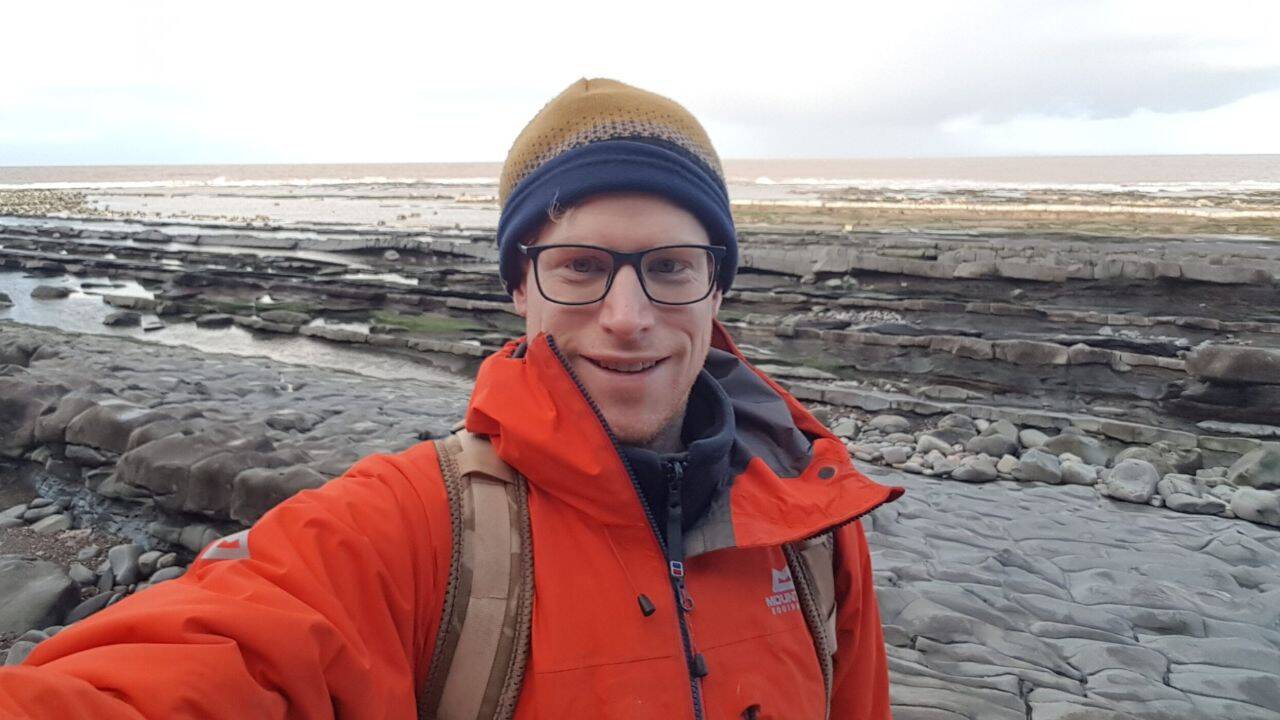
Back in 2014, a routine climb up Yr Wyddfa, also known as Snowdon, turned into a nightmare. An unexpected snow slide buried the civil engineer under a meter of snow. He spent twenty terrifying minutes unconscious beneath the freeze before rescuers pulled him out. Surviving a near-death ordeal changes your brain. For Myerscough, it shattered his connection to mountaineering. The peaks that once offered solace now carried the heavy weight of post-traumatic stress.
So, he traded the vertical heights for the horizontal stretch of the Welsh coastline. He didn't know it yet, but searching through ancient stone would heal what the mountain broke. That coastal shift led directly to the discovery of a 201-million-year-old marine reptile jawbone, stunning the scientific community and putting amateur fossil hunting back on the map.
The Mindful Shift from Peaks to Pebbles
Recovery rarely looks like sitting in a quiet room with your eyes closed. For Myerscough, recovery meant staring intently at limestone slabs and shale formations along the beaches of Lavernock Point in the Vale of Glamorgan.
Fossil hunting demands a specific kind of hyper-focus. You aren't moving fast. You're scanning textures, hunting for anomalies, and looking for shapes that do not belong in natural rock patterns.
- Hours dissolve into the background.
- Every pebble becomes a potential puzzle piece.
- The rhythmic crashing of the tide clears out mental clutter.
He compares the mental state to deep meditation or total immersion in a complex film. When your mind has survived trauma, finding small, concrete things to fixate on helps anchor you to the present moment. The coast didn't judge him. The stones didn't trigger old panic loops. Instead, the beach offered a quiet classroom where patience mattered more than physical endurance.
Uncovering the Rhomaleosaurus Jaw
Lavernock Point is no stranger to prehistoric fragments, but what happened during one routine low-tide scan changed everything.
Myerscough and two fellow fossil enthusiasts spotted an odd contour embedded directly in the limestone. At first glance, it looked like standard coastal debris. Closer inspection revealed organic symmetry. They had stumbled upon the lower jaw of a rhomaleosaurus.
This creature was no ordinary fish. It was a massive apex predator of the early Jurassic period, a terrifying marine reptile often dubbed a sea dragon.
The scientific weight of the find hit hard once experts at the National Museum Cardiff examined the piece. It marked the very first time a rhomaleosaurus fossil of this era had ever been recorded in Wales. A man who barely escaped death under an avalanche had just pulled a piece of a 201-million-year-old beast out of a Welsh beach.
Why Amateur Discoveries Still Matter
Professional paleontologists cannot be everywhere at once. Coastlines stretch for thousands of miles, and erosion constantly tears new layers of history out of the cliffs. That is where independent fossil hunters like Myerscough bridge the gap.
You don't need a multi-million-dollar research grant to make a groundbreaking discovery. You just need a sharp eye, proper footwear, a hand lens, and an endless supply of patience. The beaches around South Wales and Somerset hide remnants of ancient ichthyosaurs, plesiosaurs, and ancient shark waste known as coprolites in plain sight.
The barriers to entry are remarkably low. Families and weekend hobbyists walk these exact stretches of sand every week. Most people walk right past millions of years of history because they are looking at their phones instead of the ground.
How to Start Searching the Coastline Yourself
If this story makes you want to grab a hammer and head to the nearest rocky shore, keep a few hard realities in mind. Real fossil hunting is tedious. You will look at ten thousand ordinary rocks for every one interesting fragment you find.
Start by researching local geological maps. Learn which rock layers hold fossils in your region, whether those are Jurassic limestones or Cretaceous chalks. Respect local tide timetables because getting trapped by incoming water against a cliff face is a fast way to invite your own emergency. Keep your tools simple. A sturdy pack, a hand lens, and a notebook are plenty for a beginner.
Leave heavy quarrying to the professionals and focus on loose scree fields at the base of eroding cliffs. That is where nature does the heavy lifting for you, breaking heavy stone apart and leaving ancient secrets waiting in the gravel.