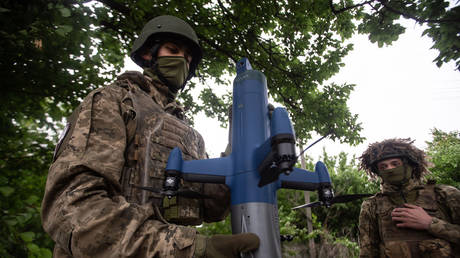
The modern defense acquisition paradigm is structurally broken, failing to reconcile the physics of rapid industrial iteration with legacy regulatory frameworks. While traditional Western defense procurement is optimized for the production of low-volume, high-margin "exquisite" systems—such as the Patriot or THAAD interceptor missiles costing upwards of $4 million to $5 million per unit—the contemporary operational theater demands mass, expendability, and continuous software adaptation. The United States Army’s decision to establish domestic and international testing ranges that mimic the forward line of troops in Ukraine is not merely an incremental training update; it is a forced restructuring of the defense industrial base designed to compress a paralyzing 12-to-18-month range bottleneck down to a continuous feedback loop.
To understand why this infrastructure shift is mandatory, one must look at the stark arithmetic of modern attrition warfare. Data from the Army’s Strategic Threats Office indicates that Russian industrial capacity produces approximately 3,000 to 5,000 one-way attack drones (such as the Shahed-class) and roughly 600,000 small first-person-view (FPV) strike drones per month. In contrast, Ukrainian defensive operations consume approximately 30,000 interceptor drones monthly to sustain baseline localized parity. When inexpensive commercial components are weaponized at this scale, defending a fixed point using multi-million-dollar kinetic interceptors creates an unsustainable economic deficit. The defense system eventually collapses not from a failure of technology, but from inventory depletion and financial exhaustion. Tipping the cost curve back in favor of the defender requires a rapid, decentralized influx of low-cost, mass-producible counter-unmanned aerial systems (c-UAS). However, the primary friction point preventing non-traditional defense tech startups from scaling these solutions is not capital or engineering capability; it is physical access to contested testing environments.
The Three Operational Bottlenecks of Domestic Proving Grounds
The existing U.S. domestic testing ecosystem operates under peacetime constraints that create a severe systemic learning deficit. By opening specialized ranges over a four-to-six-week horizon, the Army is attempting to bypass three distinct operational bottlenecks:
1. Regulatory Decoupling of the Electromagnetic Spectrum
Under Federal Communications Commission (FCC) and domestic aviation guidelines, the active deployment of high-power electronic jamming is highly restricted within the continental United States. Consequently, standard c-UAS testing historically occurred in artificial, electromagnetically clean environments. On a peer-contested battlefield, however, the electromagnetic spectrum is dense with localized electronic warfare (EW), GPS spoofing, and frequency-hopping interference. Testing a drone or an interceptor without active EW environmentals is fundamentally useless, as the system's guidance laws, sensor fusion algorithms, and communication tethers fail immediately when subjected to real-world jamming. The new ranges are designed to intentionally corrupt the spectrum, forcing developers to harden their systems against active denial mechanisms before fielding.
2. The Multi-Month Range Booking Backlog
Small-scale defense tech innovators and venture-backed startups routinely face wait times of 12 to 18 months to secure slots at major military test ranges like White Sands or Aberdeen Proving Ground. In a conflict where drone software architectures and electronic counter-countermeasures iterate on a two-to-three-week cycle, a year-long testing delay renders a technology obsolete before its first live-fire trial. Shortening this lead time down to weeks allows for an agile software development methodology applied directly to hardware.
3. Separation of Developer and End-User
Traditional procurement insulates defense contractors from the tactical realities experienced by frontline operators. By co-locating drone manufacturers, counter-drone tool builders, and active-duty soldiers on the same physical range, the Army establishes a tight, triadic feedback loop. Engineers can diagnose unexpected system anomalies under realistic operational stress, alter code or component configurations on-site, and have soldiers validate the modifications within hours rather than fiscal quarters.
The Technical Framework of a Replicated Battlefield
A high-fidelity replication of a contested theater requires more than physical trenches; it demands the synthesis of an all-domain contested layer. The architecture of these new installations must structurally integrate three core technical components:
- Layered Synthetic Contested Environments: Synthetic EW environments must generate dynamic, multi-band jamming signatures that replicate both tactical Russian systems and broader strategic blocking networks. This forces autonomous systems to rely on alternative navigation methods, such as optical flow, vision-based navigation, or fiber-optic tethers, rather than standard satellite-guided telemetry.
- Unified Sensing and Tracking Networks: Modern drone defenses suffer from severe data siloing, where individual sensors (radar, acoustic, radio frequency) function in isolation. The testing infrastructure must deploy a unified command-and-control network—similar to Ukraine’s distributed "Delta" system—that aggregates inputs from disparate sensors into a single, real-time air picture. This allows multi-vendor interceptors to hook into a standardized data bus, ensuring track continuity across different operating areas.
- High-Velocity Kinetic and Kinetic-Alternative Engagements: Ranges must safely accommodate high-velocity, close-in engagements, testing everything from drone-on-drone kinetic rams and frangible close-range ammunition to directed-energy systems. Capturing high-rate telemetry on FPV drones traveling at speeds exceeding 40 miles per hour under active jamming is critical to mapping the actual probability of kill ($P_k$) for low-cost interceptors.
The Boundaries of Domestic Emulation
While the creation of these specialized ranges solves immediate localized validation problems, the strategy possesses clear operational boundaries. Domestic installations, no matter how progressive their regulatory waivers, must still operate under macro-level safety profiles that prevent absolute realism. High-end, long-range capabilities—such as hypersonic system integration, multi-axis saturated cruise missile salvos, and deep electromagnetic degradation over hundreds of square kilometers—cannot be safely or legally executed within the continental United States.
Recognizing this baseline limitation, the strategic plan explicitly bifurcates the testing pipeline: domestic ranges will serve as rapid-iteration incubators for low-cost, high-volume tactical technologies, while a separate, undisclosed international range will be established with an allied nation to facilitate highly aggressive, unconstrained operational testing.
The long-term strategic play requires defense leadership to aggressively shift from a procurement philosophy based on buying units to an infrastructure philosophy based on buying capability velocity. To survive an industrial war of attrition, the goal cannot be the selection of a single, static "winner" of a multi-year c-UAS contract. Instead, the Army must maintain a continuously warm, open-access testing architecture where software patches can be deployed to the field weekly and hardware components can be swapped dynamically as the threat profile mutates. The physical ranges are merely the venue; the true asset is the compressed time-to-field metric that this infrastructure unlocks.