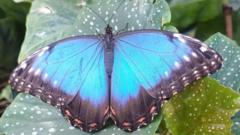
When pupils at a primary school in the south of England gathered to release a swarm of Painted Lady butterflies in honor of Sir David Attenborough’s centenary milestones, the scene was a masterpiece of optics. Tiny hands opened mesh cages, vibrant wings flapped against a blue sky, and a generation of children felt a fleeting, physical connection to the natural world. It is the kind of story that warms the heart and pads out the local news cycle. However, behind the slow-motion footage of fluttering wings lies a complex and often troubling reality about the state of British biodiversity and the efficacy of "nature-on-demand" education.
Releasing captive-bred butterflies has become the go-to tribute for the world’s most famous naturalist. It is visual, it is emotional, and it is easy to organize. But as we look closer at the ecological data, these ceremonial releases often mask a much grimmer narrative. The UK is currently one of the most nature-depleted countries on Earth. While a classroom release provides a momentary spike in local butterfly sightings, it does nothing to address the systemic collapse of the habitats these insects require to survive longer than a few days.
The Mechanics of a Vanishing Act
To understand why a few dozen butterflies in a schoolyard won't fix the problem, you have to look at the math of the British countryside. Over the last five decades, 80% of butterfly species in the UK have declined in abundance or distribution. This isn't a minor dip. It is a sustained crash.
Butterflies are the ultimate "canary in the coal mine" for the environment. They react almost instantly to changes in temperature, chemical loads, and habitat fragmentation. When a school releases Painted Ladies, they are often releasing a migratory species that is relatively hardy. This creates a false sense of security. If children see butterflies in June, they assume the ecosystem is healthy. In reality, the specialist species—the ones that rely on specific ancient woodlands or chalk grasslands—are blinking out of existence in the shadows.
The Problem with Captive Breeding
There is a significant difference between a wild butterfly and one raised in a plastic tub in a classroom. Biology isn't just about the physical form; it is about the timing. Captive-bred insects are often out of sync with the local flora. If they emerge too early because of classroom heating, or if they are released into an area sprayed with neonicotinoids, their contribution to the gene pool is zero.
Worse, there is the risk of disease. Large-scale commercial breeding for "release kits" can occasionally introduce pathogens into wild populations. While reputable suppliers take precautions, the sheer volume of these kits being shipped across the country creates a biological footprint that rarely gets discussed in the press releases. We are prioritizing the "experience" of nature over the actual health of the species.
Beyond the Attenborough Iconography
Sir David Attenborough has spent the better part of a century telling us to stop looking at the screen and start looking at the dirt. He has become a secular saint of conservation, but there is an inherent irony in using his name to justify what essentially amounts to a staged event. Attenborough’s core message has always been about habitat preservation, not temporary intervention.
If we want to honor his legacy, we have to move past the performative. A butterfly release is a one-day event. A wildlife corridor is a multi-generational commitment. The former is easy to photograph; the latter requires fighting local planning committees, changing agricultural subsidies, and convincing homeowners to stop mowing their lawns into green concrete.
The Illusion of Education
There is a psychological trap in classroom nature projects. When kids see butterflies being "made" in a box, they risk viewing wildlife as a commodity or a pet rather than a functional part of a massive, interlocking system. We are teaching them how to witness a miracle, but not how to protect the machinery that makes the miracle possible.
A more effective—though less "Instagrammable"—tribute would be the conversion of that same school's playing fields into scrubland or wildflower meadows. This provides the host plants like nettles, thistles, and bird’s-foot-trefoil. Without the host plants, a released butterfly is just a colorful snack for a sparrow. It has nowhere to lay its eggs. The cycle stops with the photo op.
The Brutal Truth of the British Landscape
The UK landscape is currently dominated by industrial agriculture and urban sprawl. We have traded our hedgerows for high-yield monocultures. This has led to a phenomenon known as "shifting baseline syndrome," where each new generation accepts a degraded environment as the "normal" starting point.
The pupils releasing those butterflies today will likely see 50% fewer insects by the time they reach adulthood if current trends hold. They are celebrating a naturalist while the very thing he loves is being paved over.
- Habitat Fragmentation: Small pockets of green are not enough. Species need to move to survive.
- Chemical Overload: Even "bee-friendly" plants sold in garden centers are often pre-treated with pesticides.
- Climate Instability: Early springs followed by "Beasts from the East" kill off larvae that have been tricked into emerging too soon.
Moving the Needle on Real Conservation
If we are serious about the "Attenborough Effect," we have to shift the focus from the insects to the soil. Real change happens when we stop treating nature as an ornamental addition to our lives and start treating it as the infrastructure it is.
For a school, this means digging up the asphalt. It means planting native hedges that provide winter shelter for hibernating Brimstones or Peacocks. It means teaching children that a "tidy" garden is a dead garden. Deadwood, long grass, and "weeds" are the true requirements for a butterfly population that doesn't need to be replenished by a courier service.
We need to stop asking children to release butterflies and start asking them to build homes for them. The difference is subtle, but it represents the gap between a hobby and a survival strategy.
The High Cost of the Easy Win
It is easy to see why charities and schools lean into these events. They generate donations, they make for great social media content, and they provide a sense of agency in a world that feels increasingly out of control. But we have to be honest about the trade-offs. Every pound spent on a temporary release kit is a pound not spent on land acquisition or legislative lobbying.
The "Definitive Article" on this subject isn't about the joy of a child seeing a butterfly. It is about the responsibility of the adult to ensure that child doesn't grow up in a world where the only way to see a butterfly is to order one in the mail.
We are currently at a crossroads. We can continue to fund the spectacle, or we can begin the hard, unglamorous work of rewilding the gaps between our homes. Sir David doesn't need more tributes. He needs more territory.
Stop focusing on the release. Start focusing on the landing.