The media is taking a victory lap for the Fourth Amendment, and they are completely missing the point.
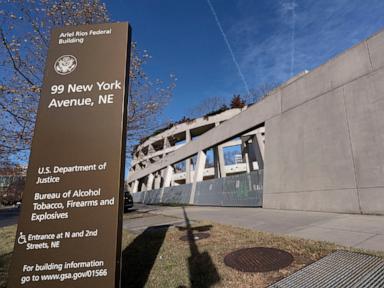
When the news broke that the Bureau of Alcohol, Tobacco, Firearms and Explosives (ATF) terminated its contract for Penlink’s Webloc—a tool that extracts location data from mobile advertising networks without a warrant—privacy advocates celebrated. Senator Ron Wyden called it "a victory for Americans' constitutional rights." Representative Michael Cloud cheered the end of a "privacy quagmire."
This reaction is dangerously naive. It treats a routine federal procurement pivot as a landmark legal triumph.
I have spent years analyzing federal law enforcement procurement pipelines. I have watched agencies blow through tens of millions of dollars shuffling software licenses around just to quiet a noisy congressional committee. This is not a structural defeat for the surveillance state. It is a calculated retreat to a much stronger, more permanent position.
The mainstream press wants you to believe the ATF stopped tracking phones because their conscience caught up to them. The truth is far uglier: the commercial data broker market has become too hot to handle politically, so the feds are simply shifting their data acquisition strategies deeper into the shadows.
The Lazy Consensus of the Warrantless Tracking Debate
The core argument of the competitor piece rests on a simple premise: the ATF used a shady tool, got caught by vigilant lawmakers, and was forced to stop to protect the Constitution.
This narrative relies entirely on a superficial reading of the 2018 Supreme Court ruling Carpenter v. United States. In Carpenter, the court ruled 5-4 that the government needs a warrant to grab historical cell site location information (CSLI) from telecommunications carriers. The lazy consensus assumes Carpenter covers all phone tracking. It does not.
Webloc did not pull data from AT&T or Verizon. It scraped mobile ad identifiers (MAIDs) from ad networks and consumer apps. When you download a free weather app, a casual mobile game, or a flashlight tool, you sign a terms-of-service agreement that allows data brokers to aggregate and sell your precise latitude and longitude coordinate history.
Because you technically consented to hand that data to a third party, the government has long argued under the third-party doctrine that you have no reasonable expectation of privacy. The ATF did not cancel this contract because the Supreme Court told them they could not buy the data. They canceled it because the mechanics of how they deployed it in one specific case created a massive paper trail.
The Arson Failure and the Carrier Pivot
Consider the case that broke the camel's back: an arson investigation at a defense contractor facility. The ATF ran more than 300 warrantless searches using Webloc, but when they tried to bring the ad-tech tracking into a real courtroom, the prosecutor and the judge choked.
Why? Because ad-tech location data is notoriously dirty. It is built for marketing, not criminal justice. It provides clusters of coordinates scraped when an app refreshes in the background, but it lacks the forensic chain of custody required to put someone in federal prison for twenty years.
To save the prosecution from collapsing under a wave of defense motions, the ATF simply backtracked. They marched to a judge, used traditional probable cause, and obtained a court order for bulk cell tower dumps directly from the cellular carriers.
This exposes the fundamental flaw in the "privacy victory" narrative. Law enforcement did not lose the ability to track the suspect. They just swapped an unvetted commercial tool for a traditional, state-sanctioned carrier dump.
The Commercial Loophole Is Not Closing
If you think the termination of one pilot program at the ATF means the federal government is out of the data broker game, you are blind to the wider bureaucratic machine.
Look at the broader federal data purchasing strategy:
- The Department of Homeland Security (DHS) issued a formal request for information to private industry to explore how commercial advertising data can assist in mass deportation and immigration enforcement missions.
- FBI Director Kash Patel openly confirmed to the Senate that the bureau buys commercially available information under the Electronic Communications Privacy Act, calling it "valuable intelligence."
- Customs and Border Protection (CBP) and Immigration and Customs Enforcement (ICE) maintain millions of dollars in active contracts with data vendors like Venntel and Babel Street.
The ATF dropped Penlink's Webloc because the tool became a legal liability in open court. They did not drop it because they suddenly believe buying data brokers' scraps is immoral. By framing this as a definitive win, lawmakers are giving the public a false sense of security while leaving the actual legal framework untouched.
The Flawed Premise of Legislative Fixes
Bipartisan groups of lawmakers are pushing bills to ban the government from purchasing commercial data without a judicial order. On paper, it sounds like a real solution. In practice, it ignores how federal procurement actually operates.
Imagine a scenario where Congress passes a total ban on federal agencies directly purchasing commercial location data. What happens the next morning? The data brokers do not go out of business. Instead, defense contractors build custom analytical layers that ingest this exact same data. The government then buys an "intelligence analysis subscription" from a defense giant rather than a raw location feed from a broker. The data stays the same; only the line item on the federal budget changes.
The downside to acknowledging this reality is painful: there is no easy legislative button to press. As long as consumer technology relies on an ad-supported infrastructure that treats human movement as a monetization asset, that data will exist. And as long as that data exists, federal law enforcement will find a pathway to consume it.
The Real Actionable Strategy for Digital Sovereignty
Stop waiting for Congress or the ATF to protect your location data. They will not. If you want to stop federal agencies from tracking your movements without a warrant, you have to cut the data off at the source.
The only strategy that actually works requires changing how you interact with your hardware:
- Purge Mobile Advertising Identifiers: Go into your device privacy settings and reset or entirely disable your personalized ad tracking identifier. This breaks the link between your real identity and the data broker pools.
- Audit App Location Permissions: If an app does not strictly require your location to execute its primary function, set its permission to "Never." Weather apps and retail apps are the primary funnels for the ad-tech data that Webloc and Venntel scrape.
- Abandon the Free App Delusion: If you are not paying for the software, you are the infrastructure. The commercial tracking ecosystem exists because consumers demand free utilities in exchange for behavioral telemetry.
The ATF's contract cancellation was a tactical media play designed to lower the temperature in a congressional hearing room. It was an operational adjustment, not a constitutional awakening. The surveillance state did not shrink; it just streamlined its optics.