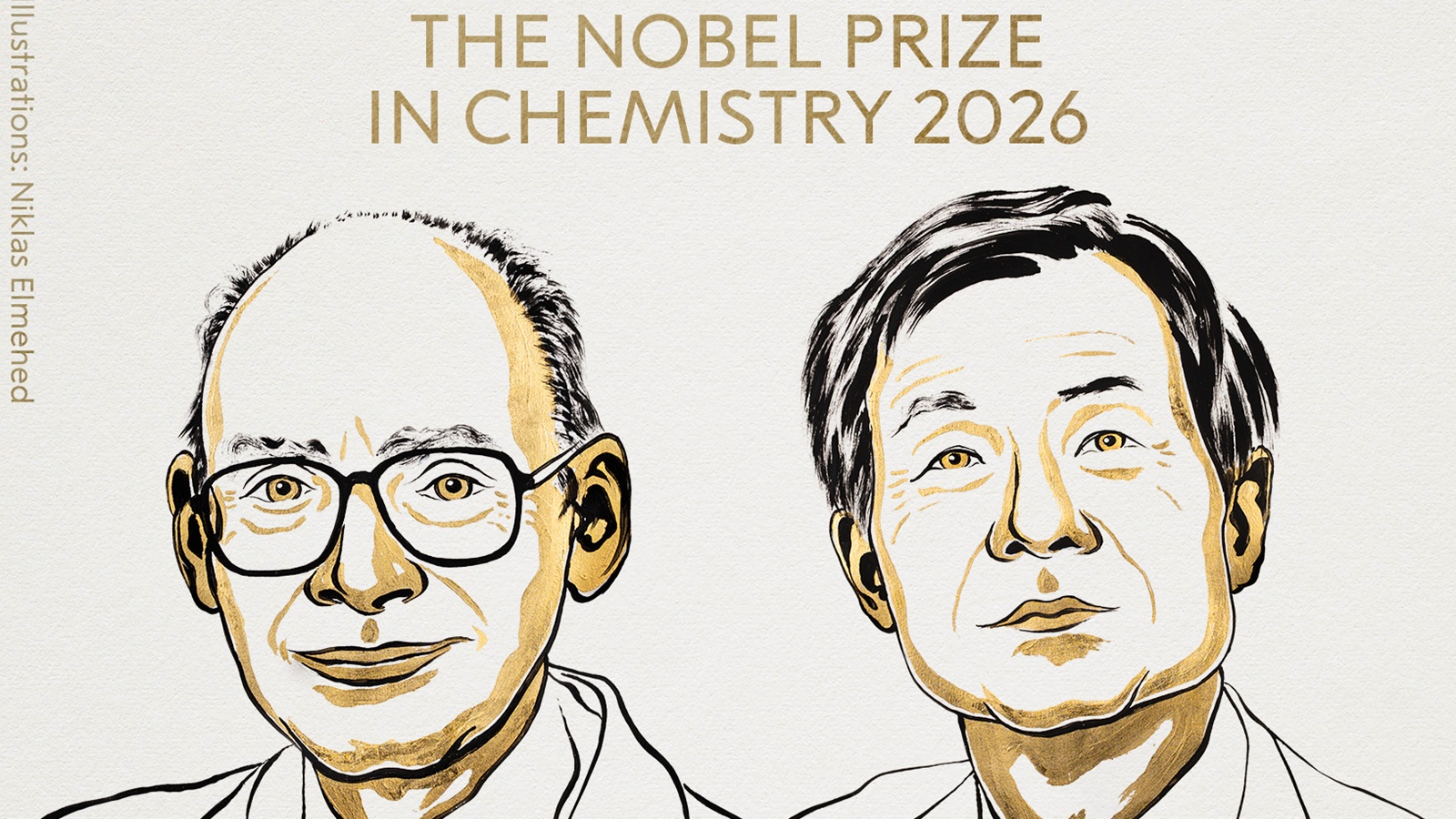
The recent awarding of the Nobel Prize in Chemistry to Henri Kagan and Kenso Soai marks a structural turning point in molecular science. For decades, the spontaneous emergence of absolute chirality—the distinct left- or right-handedness of organic molecules—stood as an unresolved thermodynamic and kinetic paradox. Biological systems operate on strict homochirality, relying exclusively on left-handed amino acids and right-handed sugars. Replicating this unidirectional selection in synthetic environments without pre-existing chiral bias has historically suffered from runaway inefficiencies and stochastic failure rates. Kagan and Soai did not merely discover isolated chemical reactions; they formulated the underlying kinetic frameworks that explain how microscopic asymmetry amplifies into macroscopic dominance.
To understand the magnitude of this breakthrough, one must discard the assumption that chemical mirror images possess identical interaction vectors in standard environments. Enantiomers share identical physical properties in isotropic media, yet their reaction rates diverge sharply under asymmetric influence. The core challenge in asymmetric synthesis has always been the amplification of minute initial imbalances—enantiomeric excess—into homochiral outputs. Without catalytic amplification, any stochastic deviation is immediately neutralized by entropic forces, resulting in racemic mixtures that possess zero net optical activity.
The resolution of this mirror-image mystery rests on two distinct mechanistic pillars: asymmetric catalytic amplification and autocatalysis. Kagan’s foundational work on asymmetric catalysis demonstrated that chiral ligands could transfer spatial information from a metal center to a growing molecule with exponential efficiency. Instead of requiring a stoichiometric quantity of a chiral auxiliary for every molecule produced, catalytic systems utilize a tiny fraction of a chiral trigger to direct thousands of subsequent turnovers. The economic and operational implications for pharmaceutical manufacturing are profound, shifting the cost function of chiral drugs from prohibitive stoichiometric waste to sustainable catalytic cycles.
The second pillar, pioneered by Soai, addresses the more radical phenomenon of asymmetric autocatalysis with amplification of enantiomeric excess, famously known as the Soai reaction. In this system, the product of the reaction acts as the catalyst for its own formation. Crucially, a minute initial excess of one enantiomer—even down to a fraction of a percent—triggers a positive feedback loop that systematically suppresses the formation of the opposite enantiomer. The reaction acts as a chemical amplifier, turning a negligible statistical fluctuation into a nearly pure single-enantiomer outcome. This self-replication model provides the most compelling laboratory analog for how prebiotic chemistry could have broken the initial racemic symmetry on early Earth.
The mathematical formulation governing these amplification systems relies on non-linear kinetics. In traditional linear systems, the enantiomeric excess of the product scales directly with the enantiomeric excess of the catalyst. Non-linear effects, particularly positive asymmetric amplification, break this linear proportionality. When the active catalyst is a hetero-aggregate composed of both enantiomers, the formation of inactive or less active hetero-dimers can disproportionately penalize the racemic pathway while accelerating the homochiral pathway. This kinetic bottleneck forces the system down a single energetic valley, effectively locking the reaction into a homochiral state.
Industrial applications of these principles dictate modern synthetic route design. Traditional methods relied on brute-force chiral resolution, where 50 percent of a synthesized batch was routinely discarded as unwanted waste. By implementing catalytic asymmetric amplification, process chemists now design workflows where the chiral economy approaches optimal efficiency. The capital expenditure required for enantioselective separation drops exponentially when the reaction itself enforces stereochemical control at the primary bond-forming step.
Yet, operationalizing these systems introduces severe constraints. Autocatalytic systems like those studied by Soai are notoriously sensitive to environmental perturbations. Trace impurities, temperature gradients, and minor variations in mixing efficiency can disrupt the delicate feedback loops required for asymmetric amplification. The operational window is narrow, demanding extreme process control that limits broad high-throughput adoption without rigorous kinetic modeling upfront.
The transition from theoretical curiosity to industrial standard requires a fundamental shift in how synthetic pathways are mapped. Chemists must stop treating chirality as a downstream purification problem and begin treating it as an upstream thermodynamic variable. By embedding amplification logic directly into the initial retrosynthetic analysis, manufacturing facilities can bypass the traditional trial-and-error optimization cycle that plagues fine chemical production.
Integrating these asymmetric principles into continuous flow manufacturing represents the next operational horizon. Flow chemistry naturally stabilizes the thermal and concentration fluctuations that disrupt sensitive autocatalytic cycles. By maintaining steady-state conditions, continuous reactors can harness non-linear amplification kinetics reliably over extended production runs, neutralizing the batch-to-batch variance that has historically hindered scale-up.