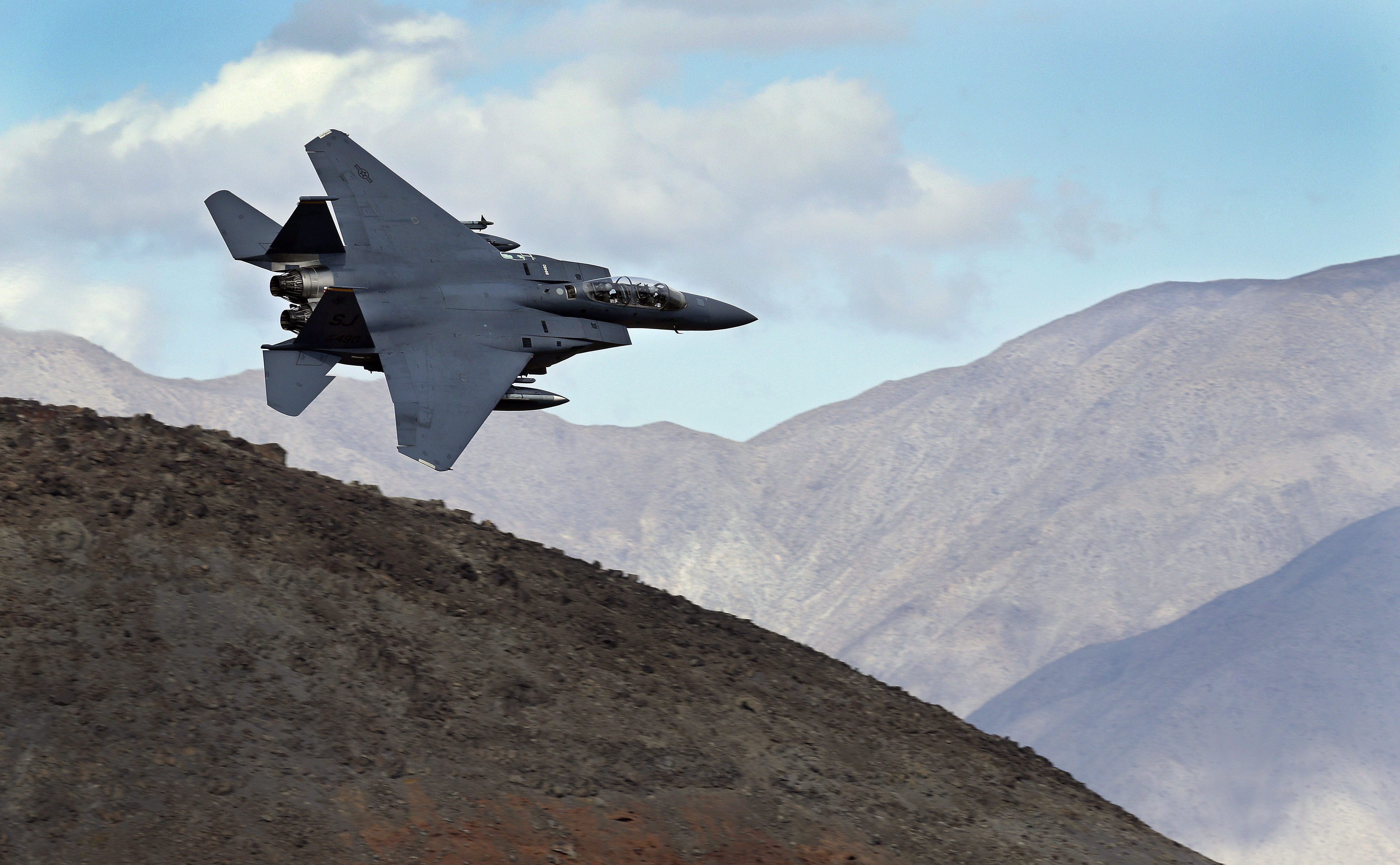
The loss of a fifth-generation kinetic asset like the F-35 over contested or proximity-sensitive territory initiates a race defined not by speed, but by the convergence of signal intelligence, geographical attrition, and the management of "Information Voids." When an aircraft disappears—as seen in recent incidents involving US hardware near Iranian maritime or terrestrial borders—the search operation functions as a high-stakes inventory of strategic vulnerabilities. The Iranian call for public assistance in locating "enemy" wreckage is not a desperate measure; it is a calculated crowdsourcing of human intelligence designed to saturate a search grid faster than technical sensors can scan it.
The Triad of Recovery Failure
Recovery operations fail or succeed based on three interlocking variables that dictate the probability of retrieval before an adversary can compromise the hardware: If you found value in this piece, you should look at: this related article.
- Kinetic Displacement: The distance between the ejection point and the final resting place of the airframe.
- Signal Decay: The degradation of emergency transponders (ELTs) or acoustic beacons due to battery life, physical damage, or environmental masking (e.g., deep-sea thermoclines or mountainous terrain).
- Adversarial Proximity: The logistical response time of a hostile actor relative to the friendly search-and-rescue (SAR) force.
In the current friction between US recovery assets and Iranian observation, the Iranian strategy centers on the Detection-to-Exploitation Gap. By mobilizing the civilian population, the state converts millions of "unfiltered sensors" (human eyes) into a preliminary detection net. This bypasses the need for advanced radar or thermal imaging, which the US might be able to jam or spoof.
Technical Obfuscation and the Stealth Paradox
A stealth aircraft is designed to be invisible to radar while operational, but this design philosophy becomes a liability once the aircraft is downed. Stealth coatings (Radar Absorbent Material or RAM) and serrated edge designs continue to minimize radar cross-sections even when the aircraft is stationary on the ground or submerged. For another angle on this event, refer to the latest update from Wired.
- The Search Bottleneck: Standard search radars struggle to distinguish a downed F-35 from natural terrain clutter. This forces recovery teams to rely on visual confirmation or side-scan sonar, both of which have extremely narrow swaths compared to wide-area radar.
- The Signal Variable: If the pilot's survival radio or the airframe’s Flight Data Recorder (FDR) fails to trigger, the search area expands exponentially. A search area that begins as a 5-mile radius can grow to 500 square miles within hours as drift patterns (in water) or uncertainty in the last known telemetry are factored in.
The Economics of Intellectual Property Capture
The drive to find the "enemy pilot" or the wreckage is rarely about the individual; it is about the Reverse Engineering Value Chain. For a state like Iran, capturing even a fragmented portion of an F-35 wing or a sensor suite provides a massive shortcut in domestic military development.
The Hierarchy of Value in Wreckage
- Tier 1: Software and Logic Boards: If the memory modules remain intact, the encryption keys and sensor-fusion algorithms are the highest-value targets. Even if encrypted, the physical architecture of the chips provides clues to processing power and signal handling.
- Tier 2: Propulsion and Materials: The F135 engine’s turbine blades utilize advanced single-crystal superalloys capable of operating above their melting points. Access to these materials allows an adversary to perform metallurgical "back-steps" to identify the cooling hole patterns and coating compositions.
- Tier 3: Low-Observable (LO) Coatings: Analyzing the chemical composition of the RAM allows an adversary to tune their radar frequencies to specifically target the "sweet spot" where the coating is least effective.
The Iranian government's public appeal functions as a low-cost, high-reward investment. The cost of a reward for a civilian is negligible compared to the billions of dollars in R&D required to develop indigenous stealth-detection capabilities.
Operational Friction in Search and Rescue
The United States’ "frantic search" described by observers is actually a standardized Joint Combat Search and Rescue (JCSAR) protocol. This protocol is governed by the necessity of "denying the enemy a win."
The friction arises from the Detection Lead Time. If the adversary (Iran) identifies the crash site first, they gain the ability to set up an Anti-Access/Area Denial (A2/AD) bubble around the wreckage. This forces the US into a binary choice: abandon the high-value IP or engage in a kinetic escalation to secure a debris field.
The Geometry of Search Grids
Search patterns are typically executed in expanding squares or sector searches.
- The Probability of Detection (PoD): This is a function of sensor sensitivity and the number of passes over a specific coordinate.
- The Time-Force Tradeoff: To increase PoD quickly, more assets (drones, ships, planes) must be committed. However, increasing the density of assets in a sensitive area like the Persian Gulf or near Iranian borders increases the risk of accidental engagement or "collision of intent" between the two nations.
Information Operations as a Search Multiplier
The Iranian state media's focus on the search serves a dual purpose: it creates a domestic narrative of vigilance and an international narrative of American fallibility. By framing the search as a hunt for an "enemy pilot," they shift the paradigm from a technical mishap to a security breach.
This creates a Psychological Pressure Manifold on the US recovery teams. The knowledge that a civilian might stumble upon the site at any moment forces the US to prioritize speed over thoroughness, which can lead to mistakes in evidence preservation or the overlooking of smaller, yet critical, debris.
Managing the Information Vacuum
When an aircraft goes down, there is a period of silence where the "Owner" (the US) knows more than the "Observer" (Iran). The US objective is to maximize this lead time. Iran’s counter-objective is to collapse this vacuum by flooding the zone with human observers. This is a classic example of Asymmetric Information Warfare, where the technologically superior power is hamstrung by the geographical and social integration of the local power.
The Logistics of Deep-Water vs. Terrestrial Recovery
The complexity of the search is dictated by the environment. If the F-35 is in the water, the search is a three-dimensional problem involving currents and depth. If it is on land, it is a two-dimensional problem complicated by topography and human interference.
Terrestrial Variables
On land, the debris field is usually localized but highly visible. The primary threat is "scavenging." Small components, such as the pilot's Helmet Mounted Display (HMD) system—which costs roughly $400,000 and contains sensitive optic technology—can be easily carried away by a single person.
Maritime Variables
In a maritime environment, the search relies on Pinger Locators and Remotely Operated Vehicles (ROVs). The "black box" emits a frequency at $37.5$ kHz. However, the range of these beacons is limited to approximately 2 miles. If the aircraft’s descent path was glide-heavy, the impact point could be miles away from the initial loss of signal.
Strategic Recommendation for Asset Protection
The current paradigm of relying on a single ELT or pinger is insufficient for fifth-generation assets operating in proximity to adversarial borders. Future deployments must integrate a Distributed Salvage Protocol.
- Redundant, Non-Radio Beacons: Implementing chemical or dye markers that trigger upon impact can provide a visual "short-term" fix for satellites that does not rely on electronic signals that can be jammed.
- Remote Neutralization: High-value components should be equipped with "thermal-soak" or "logic-kill" triggers. In the event of a non-recoverable crash (confirmed by G-load sensors and GPS coordinates), the system should initiate a localized thermite reaction to liquefy critical logic boards and RAM samples.
- Autonomous Perimeter Defense: Deploying micro-drones from the airframe during the ejection sequence to circle the crash site can provide an immediate overhead feed to recovery teams, closing the "Detection-to-Exploitation Gap."
The race to the F-35 is not merely a salvage operation; it is a battle over the future of low-observable warfare. If the wreckage is compromised, the stealth advantage of the entire fleet is degraded by the percentage of the RAM’s "masking" that is decoded. The priority must shift from "find and retrieve" to "find and, if necessary, sanitize."
The ultimate strategic play in this scenario is the immediate deployment of high-altitude long-endurance (HALE) UAVs to establish a 24/7 persistent surveillance loop over the high-probability impact zone. This forces the adversary to operate in the open, turning their "human sensor net" into a series of visible targets that can be monitored or deterred through diplomatic or kinetic signaling. If the asset cannot be recovered within the first 72 hours, the protocol must shift to "Neutralization from Distance" via precision-guided munitions to ensure the debris field yields no actionable intelligence for the adversary's reverse-engineering programs.
Would you like me to analyze the specific metallurgical properties of F-35 turbine blades to better understand what an adversary might gain from engine wreckage?