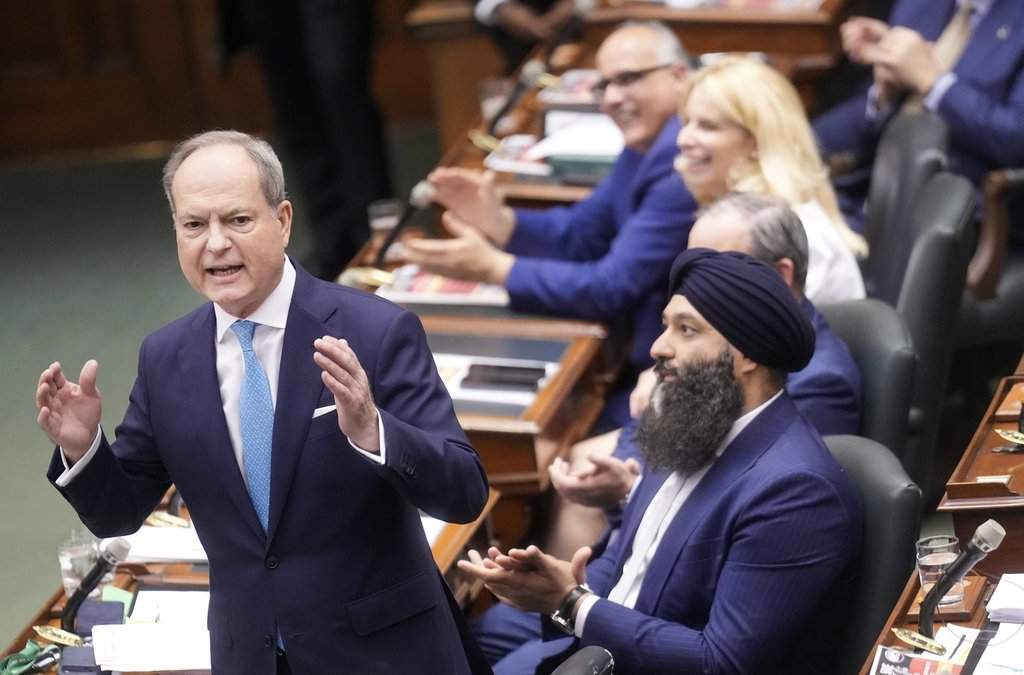
Political rallies in late-stage campaign cycles do not function as persuasion events; they operate as high-cost logistical mechanisms designed to solve the turnout equation through targeted voter mobilization. When Barack Obama and Donald Trump deployed to Georgia and Ohio respectively, their competing appearances demonstrated two distinct electoral strategies: institutional surrogate deployment aimed at coalition reactivation versus principal-led base consolidation in high-propensity regions. Understanding the mechanics of these rallies requires stripping away surface-level rhetorical clashes and examining the underlying geographic, demographic, and operational variables driving both campaigns.
Standard media coverage treats simultaneous rallies in separate states as a theatrical debate, cataloging insults and applause lines while ignoring the resource allocation logic that placed those specific principals in those exact media markets. Campaigns operate under strict budget and time constraints. Every hour a principal or tier-one surrogate spends on a tarmac represents an opportunity cost measured in lost fundraising, foregone media interviews, or unvisited precincts. Deploying Obama to Georgia and Trump to Ohio reflects calculated decisions rooted in elasticity models, early-voting infrastructure, and marginal vote yield.
The Structural Logic of Geographic Deployment
Campaign travel schedules are governed by the mathematical reality of the Electoral College and Senate map, where aggregate national popularity is irrelevant compared to precinct-level vote margins in battleground jurisdictions. Georgia and Ohio represent fundamentally different strategic problems requiring opposite tactical interventions.
Georgia as an Elasticity and Turnout Problem
Georgia functions as a classic elastic battleground characterized by rapid demographic shifts, high population growth in the Atlanta metropolitan area, and razor-thin statewide margins. In this environment, the Democratic operational challenge is rarely persuasion; the electorate is rigidly polarized, leaving few genuinely undecided voters. Instead, the primary variable is differential turnout among low-propensity voters—specifically younger demographics, transient suburbanites, and Black voters in metro counties such as Fulton, DeKalb, Gwinnett, and Cobb.
Deploying Barack Obama to Georgia addresses a specific organizational deficit. Incumbent administrations and down-ballot candidates frequently struggle to generate independent enthusiasm among peripheral coalition members during off-year or high-friction cycles. Obama acts as a high-yield validation mechanism. His presence is engineered to lower the psychological barrier to voting by reframing routine civic participation as an urgent, high-stakes collective action. Operatively, the rally serves as a centralized data-capture and ballot-chase hub. Attendees are funneled through digital registration checkpoints, geo-fenced for subsequent mobile ad targeting, and integrated into field organizing networks before the principal ever takes the stage.
Ohio as a Margin-Maximization Exercise
Ohio presents an inverse strategic profile. Once the quintessential swing state, Ohio has undergone structural realignment, trending reliably toward Republican candidates in statewide federal races due to shifts among non-college-educated voters in industrial and rural counties. Consequently, Trump’s deployment to Ohio is not a defensive maneuver to save a collapsing state; it is an offensive margin-maximization exercise aimed at influencing down-ballot Senate and House races while reinforcing national narrative dominance.
In states where a party holds a structural advantage, the primary risk is complacency. When voters believe an outcome is predetermined, turnout drops among the dominant coalition, creating unexpected vulnerabilities for down-ballot candidates who lack the top-of-ticket pull of a presidential nominee. Trump’s rally mechanics solve this by converting political support into an experiential subculture. By staging massive, high-energy events in secondary media markets, his operation generates intense local earned media coverage across television, radio, and digital platforms for days preceding and following the event. This saturation artificially inflates the perceived urgency of the election, ensuring that low-propensity rural and exurban supporters return their ballots.
Rhetorical Mechanics and Message Architecture
While the press focuses on the personal friction between Obama and Trump, their speeches follow strict architectural templates designed to trigger specific cognitive responses in their respective audiences.
The Institutionalist Framing Mechanism
Obama’s rhetorical framework relies on contrast-based institutionalism. Rather than engaging in direct, symmetrical mudslinging—which historically benefits populist challengers by dragging discourse into grievance-based territory—his script utilizes dry sarcasm and policy-centric framing to portray opponents as fundamentally unserious about governance.
This approach executes three specific functions:
- Cognitive Reframing: By mocking the eccentricities of an opponent’s platform or rhetoric rather than expressing outrage, the speaker strips the opponent of perceived strength. Outrage validates a populist’s power to disrupt; ridicule frames the populist as incompetent.
- Economic Attribution: Democratic messaging in inflation-pressured environments must overcome the basic retrospective voting model, wherein voters punish the incumbent party for cost-of-living increases. Obama’s scripts systematically redirect economic dissatisfaction away from macroeconomic policy and toward corporate price-gouging, legislative obstruction, and historical comparisons to pre-pandemic economic conditions.
- Institutional Threat Elevation: To motivate educated suburban voters who may be dissatisfied with current economic indicators, the rhetoric elevates institutional norms—judicial appointments, voting access, and reproductive rights—above immediate pocketbook concerns, forcing a hierarchy of values calculation at the ballot box.
The Populist Grievance and Attribution Loop
Trump’s rhetorical architecture operates on an entirely different frequency, utilizing stream-of-consciousness repetition, direct audience call-and-response, and clear enemy identification. His speeches are intentionally non-linear, allowing him to test applause lines in real time—a live A/B testing methodology refined over thousands of hours on stage.
The structural components of this approach include:
- Direct Causal Attribution: Complex macroeconomic phenomena—such as global supply chain disruptions, energy price fluctuations, and housing affordability—are reduced to binary outcomes directly caused by the opposing party’s leadership. This eliminates ambiguity and provides voters with a clear target for economic frustration.
- The Outsider-Protector Dynamic: Despite having held the presidency, Trump maintains an anti-establishment posture by framing federal agencies, media organizations, and rival politicians as a unified cartel acting against the interests of the average worker. This shields him from standard accountability metrics and transforms every legal or political challenge against him into an attack on his supporters by proxy.
- Comparative Nostalgia: By anchoring his economic pitch to specific, easily recalled metrics from his administration—such as pre-2020 gasoline prices and interest rates—he bypasses abstract macroeconomic projections and taps directly into lived consumer memory.
The Economics of Earned Media and Digital Amplification
The physical attendance at a rally—whether 5,000 people in a suburban arena or 15,000 at an airport hangar—represents a fraction of the event's actual return on investment. Modern campaign rallies are television studios and content factories built to exploit the algorithmic incentives of modern media ecosystems.
Legacy Broadcast Arbitrage
Local television news remains one of the most trusted and widely consumed information sources among older, high-propensity voters. National cable networks may cover a rally selectively or frame it through partisan commentary, but local affiliates in cities like Atlanta, Savannah, Dayton, or Youngstown treat a visit by a current or former president as a major civic event.
Campaign advance teams design stage visuals, lighting, and arrival sequences specifically for local broadcast cameras. A single 90-second package on the 6:00 PM local news broadcast delivers unvarnished message penetration into hundreds of thousands of households at zero direct media cost. When Obama and Trump trade barbs on the same day, national networks inevitably construct split-screen segments, granting both campaigns simultaneous national reach while reinforcing the binary nature of the race.
Algorithmic Micro-Targeting
Beyond broadcast, rallies generate raw video assets engineered for rapid distribution across social platforms. Campaign digital teams clip 15-to-45-second moments—a sharp quip from Obama, a dramatic crowd reaction for Trump—and deploy them immediately via paid and organic channels.
These micro-clips serve distinct purposes within the digital funnel:
- Fundraising Triggers: High-friction clips highlighting direct attacks from the opposing figure are immediately embedded into SMS and email fundraising appeals. Polarizing conflict remains the single most reliable driver of small-dollar online donations.
- Social Proofing: Videos showcasing massive crowds or enthusiastic local leaders act as social proof, signaling momentum to hesitant voters and encouraging peer-to-peer sharing within closed messaging apps.
- Counter-Programming: By saturating digital feeds with rally highlights, campaigns crowd out negative news cycles or opposition messaging, controlling the daily information environment during critical early-voting windows.
Operational Limitations and Strategic Vulnerabilities
Relying heavily on high-profile rallies introduces structural risks and diminishing returns that campaign strategists must actively manage. Neither the surrogate-driven model nor the principal-centric model is universally effective across all electoral environments.
The Surrogate Ceiling
Deploying a popular former president like Obama carries a distinct limitation: enthusiasm does not automatically transfer down the ballot. Voters who turn out to see a charismatic national figure may leave the down-ballot sections of their ballot blank—a phenomenon known as ballot roll-off—or fail to connect the surrogate’s rhetoric to the specific local candidates on their ticket. If the local candidate lacks independent message discipline or field infrastructure, the temporary surge generated by a high-profile rally dissipates within days without converting into banked votes. Furthermore, heavy reliance on a former president can inadvertently highlight the perceived communicative weaknesses of current party leaders, creating a subtle contrast that opponents can exploit.
The Saturation and Message Discipline Risk
Conversely, the principal-led rally strategy employed by Trump carries acute risks regarding message discipline and audience fatigue. Unscripted, multi-hour speeches inevitably generate off-message soundbites that opponents and media outlets use to distract from the campaign’s core economic arguments. In suburban swing districts where undecided or ticket-splitting voters prioritize stability and predictability, unfiltered rally rhetoric can alienate the exact marginal voters needed to secure a majority. Additionally, holding repeated rallies in safe or leaning-red territories like Ohio consumes valuable principal time that could otherwise be allocated to tipping-point states where the Electoral College outcome will actually be decided.
Tactical Execution for Down-Ballot Campaigns
Campaigns operating in the wake of these dueling rally strategies cannot treat the events as standalone victories; they must execute immediate operational follow-through to capture the residual value.
- Execute 48-Hour Contact Windows: Field directors must prioritize phone banks and canvassing universes built from rally RSVP lists within 48 hours of the event. Contact rates and persuasion metrics decay rapidly once the immediate emotional spike of the event fades.
- Localize the National Narrative: Down-ballot candidates must strip the nationalized rhetoric down to hyper-local economic impacts. Instead of repeating broad ideological talking points, local campaigns should pair clips of the national figure with specific local data points regarding infrastructure funding, manufacturing jobs, or property taxes.
- Shift Spend to Chase Operations: Once a major rally concludes in an early-voting state, advertising budgets in that media market should pivot immediately from broad persuasion creative to explicit instructional creative detailing early-voting locations, drop-box rules, and ballot-curing deadlines.
The divergent paths taken by Obama in Georgia and Trump in Ohio illustrate a fundamental reality of modern political warfare: victory belongs not to the candidate who delivers the sharpest line from the podium, but to the organization that most efficiently converts public spectacle into tracked, verified, and banked ballots before election day arrives.