More handcuffs. More press releases. More reassurances that the system works.
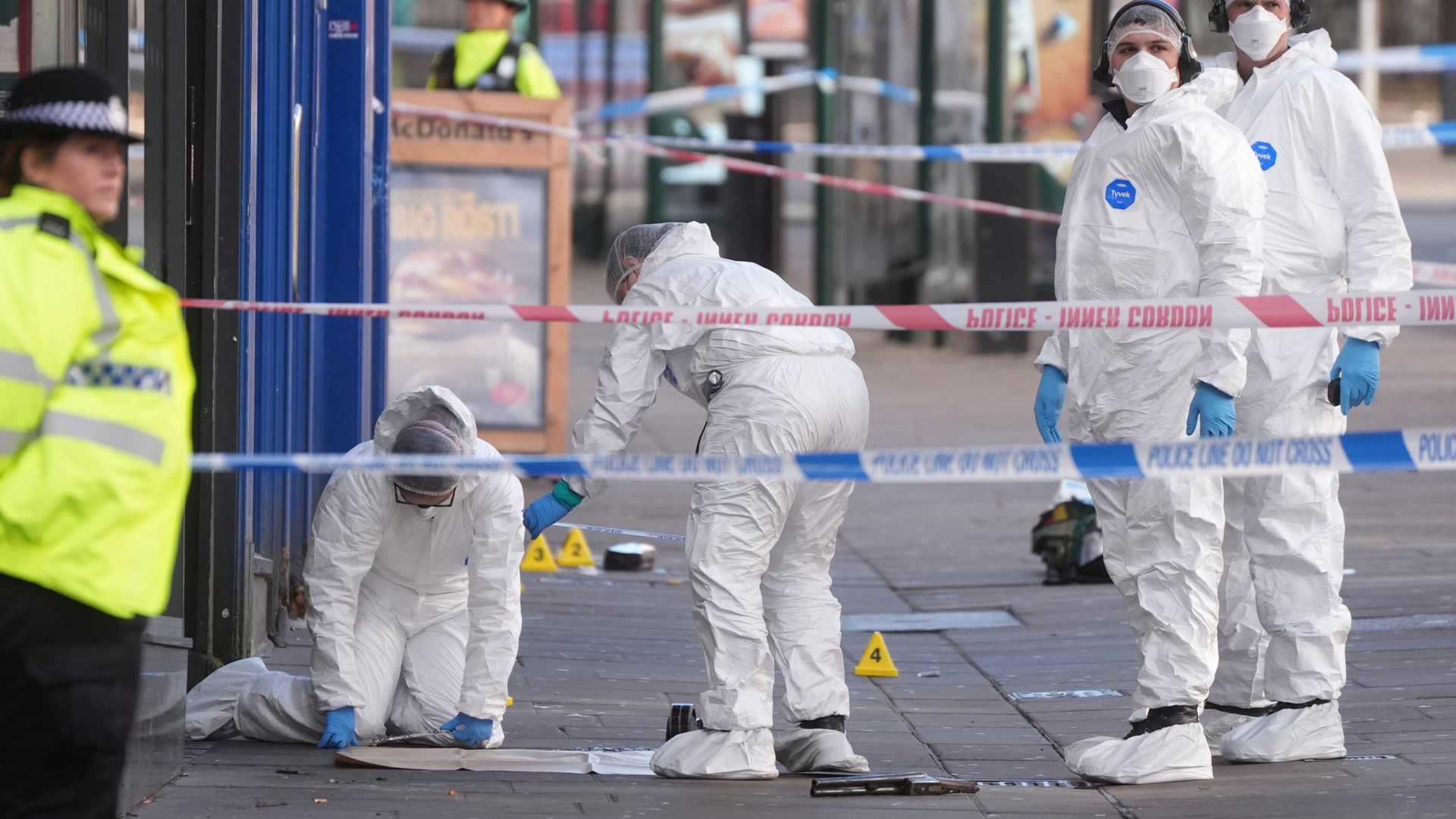
Read the standard coverage of the latest arrests following the Nottingham police officer shooting and you get the exact same script. An officer was shot in the foot near Angel Row in the early hours of October 18, 2026. Detectives rounded up more suspects on suspicion of offences like assisting an offender or firearms possession. Officials stepped up to express support for the injured officer, remind everyone of the dangers of frontline policing, and insist that Nottingham remains a safe city.
Job done, right? Arrests happen, charges are brought, and the headline moves on.
Wrong.
Celebrating a wave of arrests after a firearms discharge in a city centre is not a sign of control. It is a symptom of how reactive, fragmented, and backwards our conversation around urban gun crime and frontline policing has become.
Why Arrest Counts Are a Lazy Comfort Blanket
Standard crime reporting loves a tally. Four arrests here. Six more there. Three more in the next update. To a casual reader skimming a phone at breakfast, a rising arrest count feels like momentum. It creates the impression that detectives are methodically closing a net around a single, tidy plot.
Anyone who has spent years studying criminal investigations, urban violence, and operational policing knows how messy reality actually is.
Arrests in a sprawling inquiry like the Angel Row shooting often reflect widening concentric circles rather than neat, linear breakthroughs. Investigators pull in people on suspicion of assisting an offender, trace movement after the fact, check phone and CCTV trails, and test how a weapon moved before and after it discharged. Some people are charged. Others are released on bail while inquiries continue.
Treating every new arrest as proof of a solved problem confuses investigative activity with preventive security.
I have watched municipal leaders and commentators make this exact mistake for years across multiple cities. A violent incident occurs. Pressure mounts. Police make arrests. Officials point to the arrests as evidence that enforcement is working—ignoring the fact that an arrest happens after a firearm has already been carried into a public street and discharged in front of a frontline officer.
You do not prevent a 4:50 a.m. shooting at a bus stop by celebrating arrests three weeks later. You prevent it—or fail to prevent it—hours, days, and months earlier.
The Wrong Question Everyone Keeps Asking
When a police officer is shot, the public reflex is predictable. People ask: How could someone shoot a police officer? Or they ask: Are our streets safe?
Both questions miss the sharper operational point.
A better question is: How did an illegal firearm end up on a city-centre street in the first place, and why are unarmed or routine frontline officers still the first line of contact when suspicious activity escalates at night?
Look at the mechanics of what happened in Nottingham according to official accounts and court reporting. An officer approached people acting suspiciously in Angel Row in the early hours. Prosecutors alleged in court that a woman had taken a prohibited firearm from a man, placed it inside her jacket, and that the gun fell and discharged after the officer arrived, wounding the officer in the foot.
Whether a shot was fired intentionally in an attack or discharged during a chaotic scramble when a concealed weapon dropped, the outcome for the injured officer was the same: a bullet wound in the line of duty and a long recovery ahead.
Let us be clear on the terminology here, because lazy commentary blurs crucial distinctions:
- Proactive prevention disrupts illicit firearm supply, illegal possession, and street-level networks before a weapon reaches a nightlife or transit corridor.
- Reactive enforcement investigates a crime after shots are fired, arrests suspects, and builds prosecution files for court.
- Public reassurance messaging is political and institutional communications aimed at calming residents and protecting a city's reputation.
Competitor articles blend all three into a single warm glow whenever another batch of arrests is announced. That is sloppy analysis. A successful post-incident investigation can coexist with deep upstream failures in intelligence, illicit weapon movement, and late-night urban policing.
What Standard Coverage Misses About UK Firearms Incidents
Because Britain has strict firearm laws compared to the United States, any shooting involving a police officer triggers shock and wall-to-wall coverage. That shock often produces two competing myths.
Myth one claims that any shooting is proof of total lawlessness and spiralling gun chaos. Myth two claims that because gun crime is lower overall than in high-gun nations, a few arrests mean the system is essentially sound.
Both myths are lazy.
In policing and criminology, rare high-impact events are governed by tail risk and network dynamics, not neat averages. Even where baseline firearms offences are comparatively low, a single illegal firearm in circulation can pass through multiple hands, show up in an unrelated dispute or routine stop, and change a life in seconds. When prosecutors allege that a firearm was passed between individuals and concealed in clothing before a police encounter, you are looking at a chain of custody and decision-making—not a random lightning bolt.
Imagine a scenario where a city's crime statistics look calm on paper for months. Patrol teams conduct routine night-time checks around bus stops and city centres. One morning before dawn, a routine check turns into a firearms incident. Suddenly, the quiet statistical average means nothing to the injured officer or the detectives pulled off other cases to piece together who held what, when, and where.
That is why "Nottingham is a safe city" is such a hollow talking point in the middle of an active firearms investigation. Safety is not a slogan. It is an operational state tested at 4:50 a.m. on a wet pavement.
The Heavy Hitters and Hard Realities of Policing
Criminologists and policing researchers—from Herman Goldstein's work on problem-oriented policing to David Weisburd's research on hot spots and micro-places—have spent decades demonstrating a basic truth: crime is heavily concentrated in specific times, places, and repeat offending networks, and reactive arrest cycles alone rarely break those patterns.
Add the realities of modern policing budgets and demand pressures, and the picture gets even sharper. Forces across England and Wales have faced years of shifting demand, complex digital and forensic workloads, and intense scrutiny over stop-and-search powers, community trust, and officer safety. When an officer is shot, institutional leaders naturally rally behind their colleague. Nobody faults solidarity with an injured officer.
What deserves scrutiny is the reflex to turn investigative progress into institutional victory.
Arresting people on suspicion of assisting an offender shows detectives are chasing down the aftermath—people who may have helped conceal, move, or distance others from a weapon or scene. That matters for justice in court. It does not, by itself, answer how illicit guns enter local networks or how frontline officers are protected during unpredictable early-morning encounters.
Where My Contrarian Take Has Real Flaws
A sharp critique has to survive its own mirror. Pushing hard against arrest-count headlines carries real risks if taken too far.
First, undermining investigative momentum has a cost. When detectives are actively working a live firearms case, public skepticism can easily morph into unfair cynicism toward frontline investigators doing grueling forensic, CCTV, and witness work. Catching offenders and putting evidence before a court is essential for accountability.
Second, over-indexing on systemic root causes can sound like excuses. Talking about supply chains, late-night economies, and policing pressures should never dilute individual responsibility for carrying or handling an illegal firearm. Someone who chooses to possess or pass around a gun owns the consequences of that choice.
Third, hindsight is cheap. Real-time street policing happens in split seconds with incomplete information. Criticizing from a desk weeks later is easy; standing in front of suspicious individuals at 4:50 a.m. is not.
Admitting those trade-offs does not weaken the argument. It separates serious analysis from cheap outrage.
What Actually Needs to Happen Next
If you care about fewer injured officers and fewer illegal guns on city streets, stop grading success by how many press releases list new arrests. Grade it by hard, unglamorous operational shifts.
- Track the firearm's entire lifecycle, not just the immediate suspects. Treat every recovered or discharged illegal weapon as a supply-chain failure. Map where it came from, who stored it, who moved it, and how it entered the local area—then hit that network relentlessly even after the headline fades.
- Audit late-night city-centre deployment and risk. Look closely at early-hours transit and nightlife corridors where officers routinely encounter unpredictable behavior. Make sure staffing, backup response times, intelligence briefings, and tactical support match actual risk rather than historic shift templates.
- Demand plain language from leaders instead of comfort slogans. When officials speak after a shooting, press them on concrete operational changes—intelligence leads, weapon recovery metrics, court outcomes—rather than letting "safe city" platitudes substitute for accountability.
- Separate court accountability from public safety. Let the courts handle charges, bail, and trials without spin. Measure public safety by whether fewer weapons reach the street in the first place.
Arrests prove the investigation is moving. They do not prove the threat is solved.