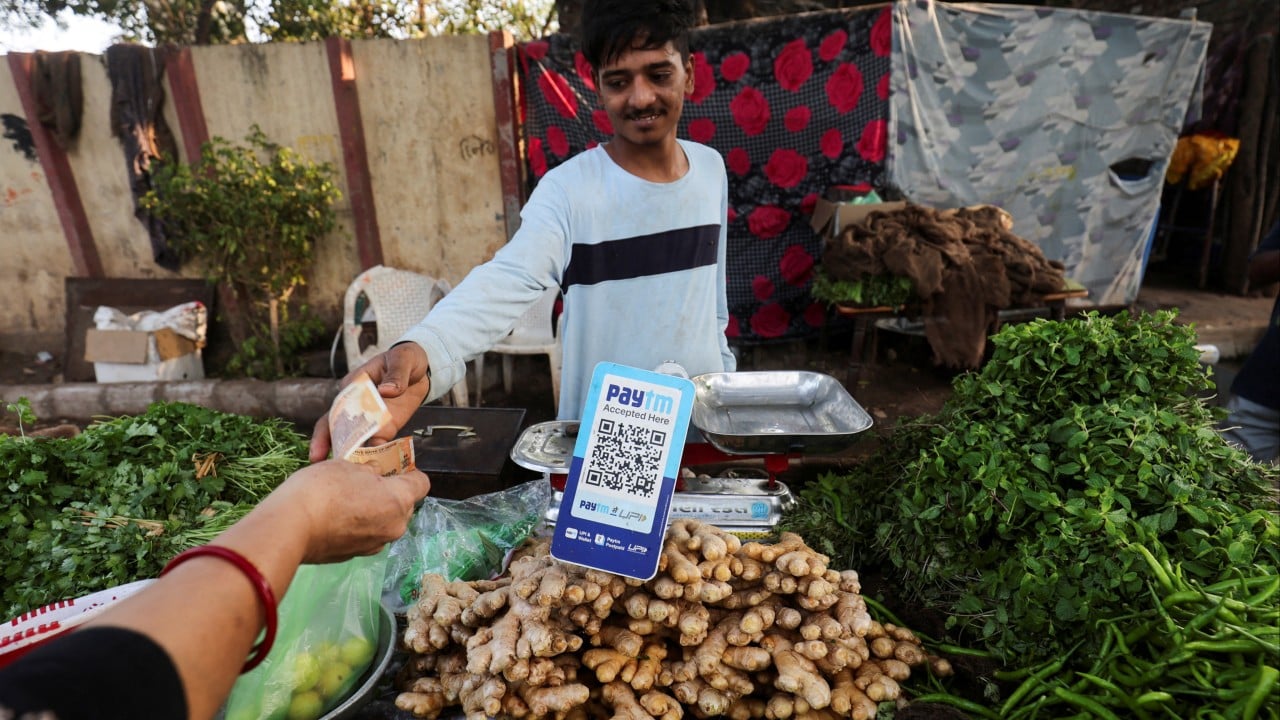
A wooden cart rattles over potholes on the outskirts of Jakarta. Under a plastic tarp shielding her from the midday heat, a fruit vendor named Siti waits for customers. For decades, her business existed in the shadows of the formal economy. Cash was her only language. If a sudden storm ruined her mangoes, or if her daughter fell ill, she relied on high-interest neighborhood lenders. She had no bank account, no credit history, and no official digital identity. To the global financial system, Siti was invisible.
Then came a small square of black-and-white pixels. A QR code pasted to the wooden pillar of her cart changed everything. In related updates, read about: Why the Pentagon Just Spent Half a Billion Dollars on Airborne Missile Trackers.
When Indonesia launched its Quick Response Code Indonesian Standard (QRIS), it didn't just give Siti a way to accept digital payments. It gave her a digital footprint. Today, that footprint is expanding into something much larger, driven by an ambitious, quiet geopolitical partnership. India is offering Indonesia the blueprint for its own digital infrastructure. This is not a story about apps or tech startups. It is a story about how two nations are rewriting the rules of national sovereignty, economic inclusion, and human dignity in the digital age.
The Plumbing of a Nation
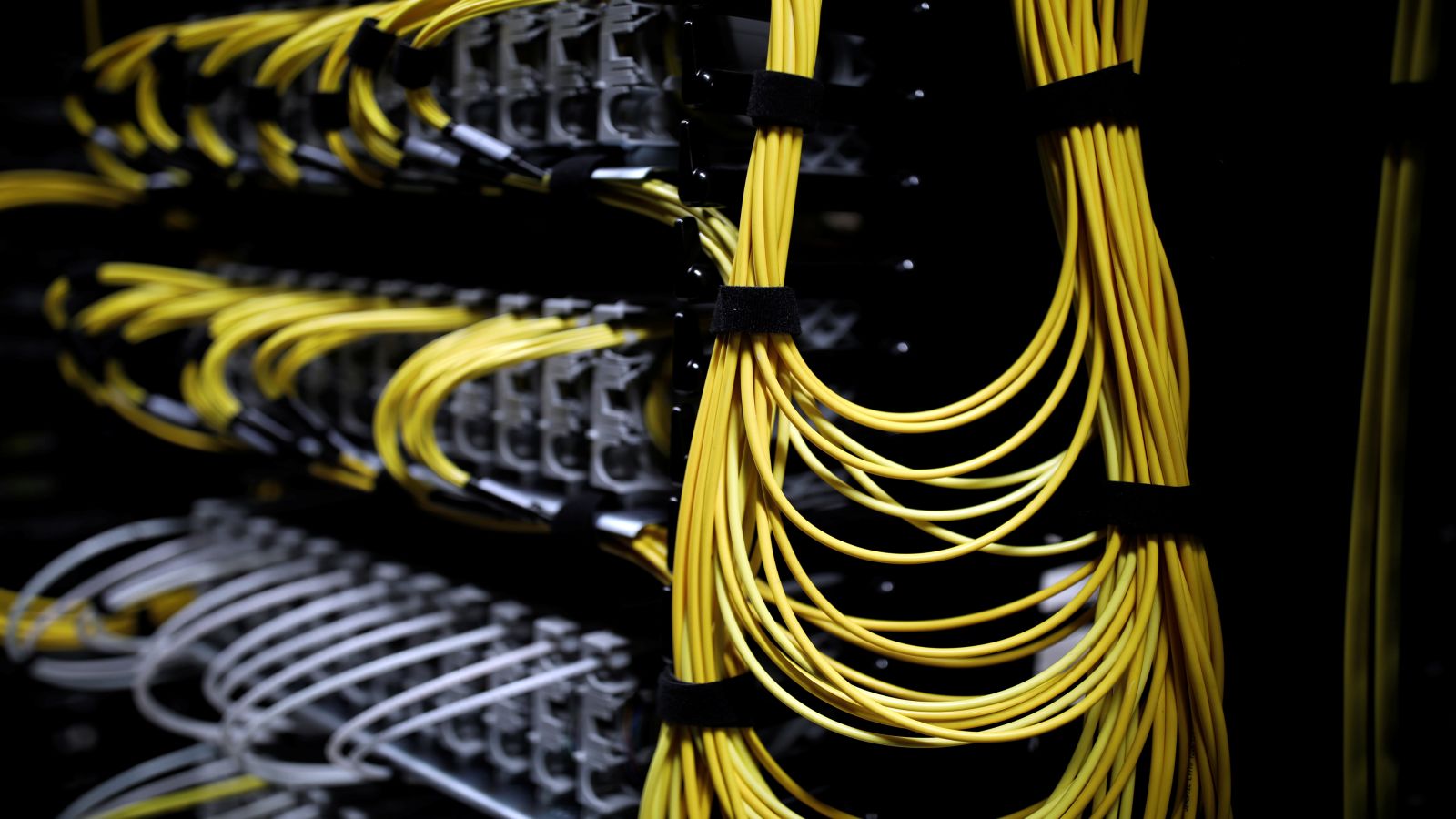
We tend to think of digital transformation as a series of flashy consumer products. We talk about ride-hailing apps, e-commerce giants, and crypto wallets. But these are just the topsoil. The real power lies in the deep bedrock underneath—the digital public infrastructure, or DPI. Engadget has analyzed this fascinating issue in great detail.
Think of DPI as the basic utilities of the internet era. In the physical world, a government lays down roads, builds water pipes, and strings up electrical grids. Private companies then use those roads to deliver goods, those pipes to run factories, and that electricity to power homes. For decades, however, the digital world was built differently. Private monopolies built the roads, owned the pipes, and charged heavy tolls for anyone wanting to pass.
India chose a different path. Over the last fifteen years, it constructed a public digital highway system. First came Aadhaar, a biometric identity system. Then came the Unified Payments Interface (UPI), which made moving money across different banks instantaneous and free. Finally, data-sharing protocols allowed citizens to own and control their personal information.
This three-tiered system—identity, payments, and data management—is often called the "India Stack." It is public plumbing designed for private innovation.
Now, Jakarta wants its own version. The cooperation agreement between the two nations aims to replicate this architectural philosophy across the Indonesian archipelago. The goal goes far beyond helping people scan a phone to buy fruit. It is about creating a unified, secure foundation upon which an entire modern economy can sit.
The Vulnerability of the Middleman
To understand why this matters so deeply, we have to look at the alternative. Before public digital rails existed, developing nations had two choices. They could rely on Western big-tech conglomerates, or they could adopt closed, proprietary systems from authoritarian states.
Both options come with heavy, invisible costs.
When a country relies entirely on private global credit card networks or mega-apps, it surrenders a piece of its economic sovereignty. Every transaction chips away a percentage of a local merchant's profit, sending it overseas to Silicon Valley or Wall Street. More importantly, those private networks choose whom to include and whom to exclude. They build high walls. If you are a small-scale farmer in Sumatra, you do not move enough capital to interest a multinational bank. You are left out.
There is a psychological weight to this exclusion. Imagine walking into a bank and being told your life cannot be verified because you lack a formal address or a payroll slip. It creates a permanent class of economic outsiders.
Public infrastructure flips this dynamic. By making the identity and payment rails public property, the cost of transactions plummets to near zero. Suddenly, it becomes profitable for banks and tech startups to serve the poorest citizens. The system does not care how much money you have; it only cares that you are a citizen with a right to participate.
Indonesia has already made massive strides with QRIS, which connects tens of millions of merchants across its thousands of islands. But a payment system without a unified digital identity layer is like a train network without a central timetable. It works, but it cannot scale to its full potential. By aligning with India’s architectural philosophy, Indonesia is preparing to build the missing pieces of its puzzle.
The Friction of Reality
Moving a digital blueprint across an ocean is not as simple as copying code from a server in New Delhi to one in Jakarta. Geography and culture matter, even in the digital realm.
India is a massive, contiguous landmass with a highly centralized push toward digitization. Indonesia is an archipelago of over seventeen thousand islands, stretched across three time zones, with a deeply decentralized political structure. What works in Uttar Pradesh might stall in East Kalimantan.
Consider the challenge of connectivity. In a dense city like Surabaya, digital payments flow effortlessly. But in remote island villages, internet access is sporadic, flickering like a dying candle. A digital infrastructure that requires constant, high-speed connection will fail the very people it is meant to rescue.
The partnership faces real engineering hurdles. Architects must design systems that can operate offline, batching transactions and synchronizing them when a signal returns. They must ensure that biometric data remains secure in a region increasingly targeted by sophisticated cybercriminals.
There is also the delicate matter of trust. Western commentators often look at these massive state-led data systems with deep skepticism. They worry about surveillance, data leaks, and government overreach. These are valid fears. When a state holds the keys to your identity, your money, and your data, the potential for abuse is staggering.
But for millions in the Global South, the immediate danger is not the abstract threat of state surveillance; it is the daily reality of poverty, exclusion, and financial predation. The calculation is different. The risk of being invisible to the state is far higher than the risk of being seen by it. The success of the India-Indonesia partnership will hinge on whether they can build robust legal frameworks alongside the digital ones, ensuring that the citizen remains the owner of their data, not the product.
A New Global Balance
The collaboration between India and Indonesia signals a massive shift in how global technology is exported. For decades, tech transfers moved from North to South, from West to East. Wealthy nations built software and sold it to developing ones, establishing a form of digital colonialism.
This agreement represents a horizontal transfer of knowledge. It is the Global South building for the Global South.
India understands the chaotic, informal nature of a developing economy because it is navigating those same realities at home. It knows that a digital identity system cannot require a fixed address or a pristine credit history. It must work for a citizen who lives in a temporary dwelling and earns their living day to day in cash.
By exporting this model, India is positioning itself as a democratic alternative to other major tech powers. It is offering a blueprint that values national autonomy. When Indonesia builds its digital public infrastructure based on these principles, Jakarta retains absolute control over the data, the regulations, and the economic levers. No foreign company can pull the plug.
The Horizon Underneath the Surface
Go back to Siti and her wooden cart.
When she uses a public digital system, her transaction history becomes an un-falsifiable record of her economic viability. When she wants to expand her business, she no longer walks into a bank begging for a loan, empty-handed. She brings her digital record. She proves she is a reliable economic actor.
The scale of this transformation is difficult to grasp because it happens in increments of pennies and seconds. But when multiplied across hundreds of millions of people, it alters the trajectory of a nation. It creates a resilient, bottom-up economy that can withstand global shocks.
The collaboration between India and Indonesia is not a spectacular headline event. It is tedious work. It is a slow, methodical alignment of protocols, APIs, regulatory frameworks, and security standards. It is the invisible engineering that shapes the modern world.
Two ancient maritime trading partners are laying down new, invisible lines of commerce and trust across the Indian Ocean. They are building a world where geography matters less than connectivity, and where a street vendor on a remote island possesses the same economic weight and digital power as a corporate executive in a glass tower.