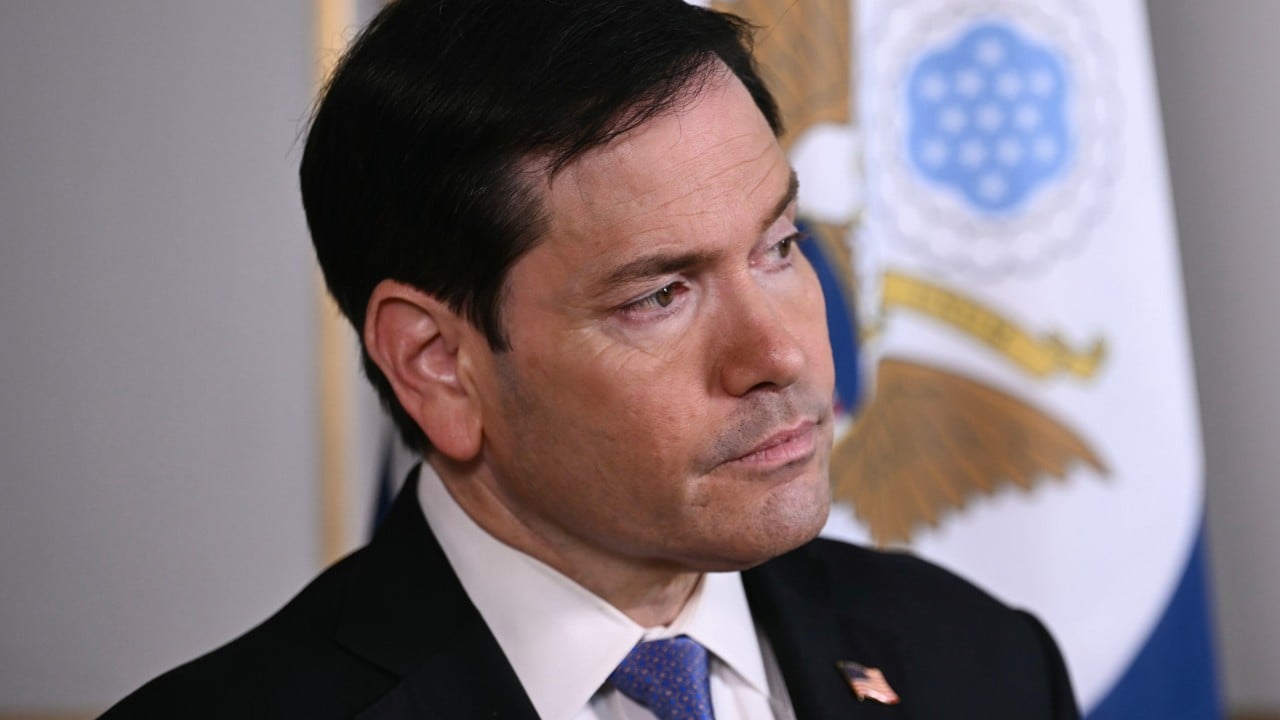
High-stakes head-of-state diplomacy rarely produces spontaneous breakthroughs; instead, the outcomes of a leader-level summit are engineered days or weeks earlier through ministerial-level signal alignment. When US Secretary of State Marco Rubio and Chinese Foreign Minister Wang Yi conduct a pre-summit phone call ahead of a scheduled meeting between President Donald Trump and President Xi Jinping, the primary function is not casual dialogue, but structural risk mitigation and agenda gating. Standard news coverage treats these calls as routine procedural steps, missing the underlying game-theoretic mechanics that govern US-China crisis management and bilateral negotiation.
The Structural Function of Pre-Summit Ministerial Calls
In international relations theory, particularly within two-level game frameworks and rationalist bargaining models, direct communication between top foreign policy principals serves three distinct operational purposes prior to a leader-level engagement. Without this preparatory layer, a face-to-face meeting between heads of state risks either diplomatic gridlock or unintended escalation driven by mismatched expectations.
Agenda Gating and Scope Definition
Leaders operate under severe time constraints and immense domestic political scrutiny. A ministerial call establishes the exact boundaries of the upcoming conversation. Rubio and Wang must determine which dossiers are actionable, which remain strictly declaratory, and which must be temporarily quarantined to prevent the entire summit from collapsing. If an issue like advanced semiconductor export controls or maritime disputes in the South China Sea lacks a viable compromise zone, foreign ministers isolate that friction point so it does not contaminate parallel discussions on trade tariffs, fentanyl precursor enforcement, or military-to-military communication channels.Signaling Red Lines Without Domestic Audience Costs
Public rhetoric in Washington and Beijing is heavily calibrated for domestic consumption, creating high audience costs if either leader appears to back down. Private ministerial channels strip away the theatrical constraints of press briefings. Wang Yi can communicate Beijing's non-negotiable parameters regarding Taiwan or technological self-reliance directly to Rubio, while Rubio can outline Washington's domestic political thresholds on trade deficits and industrial security. By establishing these red lines privately before Trump and Xi sit across from one another, both sides reduce the probability of a public diplomatic ambush.Deliverable Calibration
Heads of state require tangible outputs to justify the political capital expended on a summit. Foreign ministers act as the clearinghouse for low-hanging agreements—such as resuming specific bilateral working groups, adjusting visa restrictions, or issuing parallel statements on global stability—that allow both leaders to claim tactical victories upon departure.
Mapping the Asymmetric Bargaining Incentives
To understand the mechanics of the Rubio-Wang exchange, one must analyze the divergent institutional pressures and strategic priorities operating on both sides of the Pacific. Washington and Beijing do not enter pre-summit negotiations with identical objective functions; their incentives are structurally asymmetric.
Washington's Strategic Priorities
For the Trump administration, bilateral engagement with Beijing is heavily weighted toward transactional reciprocity, economic rebalancing, and deterrence credibility. Secretary Rubio's institutional mandate combines traditional State Department diplomatic architecture with a historically hawkish posture toward the Chinese Communist Party. This dual identity creates a specific operational dynamic during pre-summit calls:
- Credibility Signaling: Because Rubio enters the diplomatic arena with an established record of advocating strict measures against Beijing on human rights, supply chain decoupling, and regional security, his engagement signals to domestic skeptics that diplomacy does not equate to unilateral concession.
- Economic Leverage Conversion: The administration views tariffs, market access, and investment restrictions not merely as defensive tools, but as active bargaining chips. In preparatory talks, Washington seeks to map how Beijing will respond to specific economic pressures and whether Xi Jinping is prepared to offer structural concessions on industrial overcapacity or agricultural purchases.
- Crisis Guardrails: Despite intense strategic competition, Washington requires functional communication channels between the Pentagon and the People's Liberation Army to prevent tactical miscalculations in the Taiwan Strait or the Western Pacific from spiraling into kinetic conflict.
Beijing's Strategic Priorities
Foreign Minister Wang Yi operates within a centralized system that prioritizes regime stability, predictable external environments during periods of domestic economic adjustment, and the prevention of unified Western containment. Beijing's pre-summit calculus centers on different variables:
- Stabilizing External Shocks: Facing domestic structural headwinds—including real estate sector deleveraging, demographic shifts, and local government debt—Beijing seeks to manage the pace and severity of US economic friction. Wang Yi uses pre-summit calls to gauge whether Washington is aiming for a negotiated economic truce or an accelerated decoupling trajectory.
- Protocol and Status Parity: For the Chinese diplomatic apparatus, the optics and procedural equality of a Xi-Trump summit carry substantial weight. Wang's objective is to secure commitments that the summit will be conducted on terms of mutual respect, avoiding unilateral lectures or unexpected diplomatic slights that would undermine Xi's domestic authority.
- Sovereignty Containment: Beijing consistently attempts to lock Washington into reiterating established diplomatic formulas regarding cross-strait relations, aiming to constrain US security assistance to Taipei before the leaders even meet.
The Mechanics of Diplomatic Friction and Bottlenecks
A major flaw in superficial commentary on US-China calls is the assumption that "talking" inherently resolves underlying structural contradictions. In reality, pre-summit calls frequently expose severe operational bottlenecks that limit what Trump and Xi can realistically achieve.
The first bottleneck is Verification Asymmetry. In past bilateral agreements, particularly concerning trade commitments and law enforcement cooperation against synthetic opioid precursors, disputes rapidly emerged over compliance verification. When Rubio and Wang discuss potential deliverables, the central technical hurdle is not agreeing on a broad goal, but defining the exact metrics, inspection mechanisms, and snap-back penalties if one side fails to execute. Without agreed-upon verification protocols, any verbal commitment made by Trump and Xi risks disintegrating within months, leaving bilateral relations worse off than before the summit.
The second bottleneck is Interagency Alignment. Neither Rubio nor Wang exercises absolute unilateral control over all instruments of national power. In Washington, trade policy, export controls, and defense posture are distributed across the Office of the US Trade Representative, the Department of Commerce, the Treasury, and the Department of Defense. Similarly, in Beijing, the Ministry of Foreign Affairs must coordinate with the Ministry of Commerce, the Central Military Commission, and state security organs. A ministerial phone call can align diplomatic messaging, yet bureaucratic friction within either capital can delay or dilute the implementation of agreements reached at the top.
The third bottleneck is Third-Party Spillover. A bilateral call between Washington and Beijing does not occur in a vacuum. Allies and partners—ranging from Tokyo and Manila to Brussels—monitor pre-summit signaling closely for signs of a "G2" accommodation that might compromise their own security or trade interests. Rubio must calibrate his discussions with Wang to reassure regional allies that Washington is not trading away collective deterrence commitments in exchange for bilateral economic concessions.
Distinguishing Known Facts from Analytical Hypotheses
Rigorous geopolitical analysis requires strict separation between verified diplomatic events and structural projections regarding summit outcomes.
Confirmed Operational Realities:
- Pre-summit ministerial calls between the US Secretary of State and the Chinese Foreign Minister are standard protocol designed to finalize logistics, sequence talking points, and manage expectations ahead of leader-level meetings.
- Marco Rubio and Wang Yi represent distinct institutional approaches to bilateral competition, making their direct channel the primary conduit for translating political priorities into diplomatic text.
- The structural drivers of US-China friction—technological competition, trade imbalances, and Indo-Pacific security—remain entrenched and cannot be resolved through a single phone call or summit.
Analytical Hypotheses on Summit Trajectory:
- Hypothesis A (Managed Stabilization): If the Rubio-Wang call results in the announcement of new bilateral working groups or the restoration of specific suspended dialogues, the upcoming Xi-Trump meeting will likely focus on establishing a temporary tariff truce and institutionalizing crisis-communication guardrails.
- Hypothesis B (Transactional Brinkmanship): If post-call readouts remain terse, emphasize "candid" or "in-depth" exchanges without concrete deliverables, and highlight sharp divergences over core interests, the summit will function primarily as a high-stakes coercive bargaining session where both leaders test each other's threshold for economic escalation.
- Hypothesis C (Compartmentalized Engagement): The most probable operational outcome is a bifurcated agenda where Rubio and Wang isolate intractable security and technology disputes while clearing a narrow lane for transactional cooperation on trade flows, counternarcotics, and diplomatic staffing.
Limitations of Ministerial Crisis Management
Practitioners who manage complex bilateral negotiations recognize that pre-summit diplomacy has hard structural limits. No phone call between foreign ministers can eliminate the fundamental security dilemma operating in the Western Pacific, nor can it reconcile incompatible industrial policies where both nations view technological dominance as an existential necessity.
Furthermore, leader-centric diplomacy introduces high variance. Both Donald Trump and Xi Jinping exercise centralized decision-making authority that can override pre-negotiated bureaucratic scripts in real time. While Rubio and Wang can build the diplomatic scaffolding, either leader can unilaterally alter the agenda during the live meeting, rendering weeks of ministerial preparation obsolete. Relying exclusively on pre-summit readouts to predict final policy outcomes ignores the inherent unpredictability of executive-level bargaining.
Strategic Monitoring Framework for the Upcoming Summit
To accurately assess the trajectory of US-China relations following the Rubio-Wang call and leading into the Xi-Trump meeting, analysts and market participants must ignore generic diplomatic pleasantries and track four specific operational indicators:
- Readout Symmetry: Compare the official statements released by the US State Department and the Chinese Ministry of Foreign Affairs. Divergence in the stated sequence of topics or the inclusion of specific ideological formulations indicates unresolved friction during the call.
- Working Group Announcements: Look for the creation or reactivation of sub-cabinet mechanisms (such as economic, financial, or military dialogues). Institutionalized follow-up mechanisms signal an intent to sustain stability beyond the summit photo-op.
- Unilateral Actions During the Buffer Window: Monitor whether either capital imposes new sanctions, export controls, or military exercises in the days immediately following the call. Restraint during the pre-summit buffer window confirms that the ministerial channel successfully established a temporary moratorium on escalation.
- Deliverable Specificity: Evaluate whether anticipated summit outcomes rely on vague pledges of "cooperation" or contain measurable, time-bound benchmarks regarding tariff rates, market access quotas, or communication protocols.
The Rubio-Wang call serves as the diagnostic baseline for the summit. If the readouts reflect tight alignment on procedural mechanics and restrained public posturing, expect the Xi-Trump meeting to yield a tactical stabilization framework designed to freeze current friction levels. Conversely, if public messaging emphasizes unyielding red lines without parallel institutional deliverables, position for heightened bilateral volatility and immediate coercive economic measures following the leaders' departure.