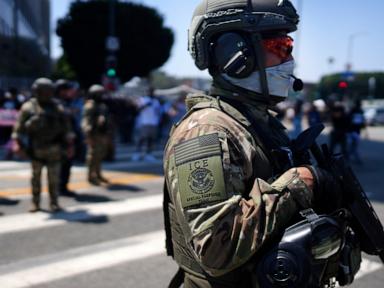
Immigration and Customs Enforcement operates under an operational model where institutional self-preservation dictates transparency. The agency's implementation of Directive 19010.3 establishes a framework for body-worn cameras that conditions the public release of high-consequence footage not on public accountability, but on institutional utility. By embedding a discretionary threshold that limits disclosure to instances deemed "in the best interests of the agency," the policy institutionalizes an asymmetric information exchange between federal enforcement bodies and the public.
The Mechanics of Selective Disclosure
The governance of video evidence within federal law enforcement relies on structural bottlenecks designed to filter high-liability media. Under the ICE directive, encounters resulting in death or serious bodily injury trigger an internal review committee composed of top officials and agency lawyers. This committee assesses whether rapid publication within a 72-hour window serves agency objectives.
[Critical Incident: Death or Injury]
       │
       ▼
[Internal Review Committee Evaluation]
       │
       ├──> Serves Agency Image ──> Expedited Public Release (72 Hours)
       │
       └──> Risks Institutional Brand ──> Indefinite Withholding via Director Discretion
This protocol introduces a bifurcation in evidentiary release mechanics:
- Expedited Pro-Brand Disclosures: Footage that corroborates officer narrative compliance or highlights external threats is fast-tracked to validate agency operations.
- Indefinite Administrative Delay: Incidents generating high legal or political friction are subjected to prolonged review loops under the designation of "specific and compelling circumstances".
The structural reliance on director-level discretion eliminates predictability. Unlike municipal jurisdictions bound by statutory deadlines—such as Chicago's mandatory 60-day release window for use-of-force video—federal immigration enforcement retains unilateral authority to suppress recordings indefinitely pending investigative completion.
The Cost Function of the Agency Brand
Public institutions operating under intense political scrutiny optimize for institutional survivability rather than raw transparency. The introduction of body-worn cameras into an enforcement apparatus shifts the nature of liability management from post-hoc litigation defense to real-time narrative control.
The economic and political variables governing this calculus can be expressed through an operational utility function where public release $R$ depends on expected institutional benefit $B$ minus anticipated political friction $F$:
$$Utility(Release) = \sum (B_{exoneration} + B_{deterrence}) - (F_{litigation} + F_{brand_degradation})$$
When $F$ exceeds $B$, the optimization strategy defaults to non-disclosure. This explains why high-visibility enforcement actions involving fatalities frequently result in extended data withholding. The marginal cost of public outrage associated with controversial tactics routinely outweighs the marginal utility of transparency. Consequently, the evidentiary asset functions primarily as a risk-mitigation instrument for internal operations rather than an external accountability mechanism.
Redaction Protocols and Information Loss
Even when the agency authorizes release, technical constraints embedded in the policy dilute the forensic value of the digital record. Mandatory redaction protocols dictate the systematic obscuring of officers' facial features, name tags, and badge numbers prior to distribution.
This systematic sanitization creates distinct analytical limitations:
- Attribution Deficit: Obscuring individual identifiers breaks the chain of accountability, preventing independent verification of officer conduct across sequential operations.
- Contextual Fragmentation: Audio muting and visual blurring applied for Law Enforcement Sensitive (LES) security purposes remove critical conversational exchanges that preceded tactical escalations.
- Asymmetric Identity Exposure: While state agents remain anonymous through mandatory redaction, encountered civilians frequently experience public dissemination of identifying details, creating an imbalance in privacy protection.
These redaction parameters transform raw evidentiary capture into curated media artifacts. The technical apparatus designed to record objective reality is thus re-engineered to protect institutional personnel from individualized scrutiny while retaining the capacity to broadcast operational narratives that favor the agency's enforcement posture.
Resource Allocation and Deployment Asymmetries
The rollout of body-worn cameras across field offices nationwide highlights operational discrepancies between policy mandate and resource availability. Although enterprise-wide deployment schedules target completion by the end of the fiscal third quarter, historical funding infusions have encountered friction in practical execution.
Enforcement teams operating without continuous device coverage expose a fundamental compliance gap. Incidents occurring prior to complete technological saturation or within areas designated as exempt from active recording—such as specific investigative interviews or sensitive tactical entries—fall outside the purview of the directive. This operational lag ensures that accountability metrics remain unevenly distributed across different field office jurisdictions, rendering system-wide performance measurement statistically unreliable during transition phases.
Strategic Deployment of Evidentiary Oversight
To align evidentiary policy with verifiable accountability, the decision matrix governing footage release must be decoupled from internal executive discretion. Transitioning from an internal review model to a standardized statutory release schedule eliminates the variance introduced by institutional self-interest.
Future governance models require distinct structural adjustments:
- Establish fixed statutory timelines for unedited footage release following any incident involving serious bodily injury, mirroring municipal best practices.
- Transfer authority for redaction approvals from internal agency committees to independent civilian oversight boards to maintain evidentiary integrity.
- Enforce mandatory activation standards with automated logging systems that eliminate manual override capabilities during routine enforcement actions.


