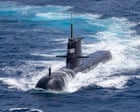
Australia’s decision to commit to the AUKUS security pact represents a structural realignment of its sovereign defense posture, shifting from a strategy of regional denial to one of forward projection. The trilateral agreement, valued at an estimated $368 billion over three decades, rests on the acquisition and domestic production of nuclear-powered submarines (SSNs). Evaluating this strategy requires separating political rhetoric from structural realities. An analytical breakdown reveals three core operational pillars, a deeply asymmetric risk-reward calculus, and structural industrial bottlenecks that present severe systemic risks to Australian national security.
The Three Pillars of AUKUS Operational Architecture
The execution of the AUKUS agreement operates across a phased timeline designed to transition the Royal Australian Navy (RAN) from its aging conventional Collins-class fleet to a joint nuclear-capable force. This architecture is divided into three distinct operational horizons.
Pillar I: The Submarine Rotational Force West (SRF-W)
Beginning in the late 2020s, Australia will host rotational deployments of US Navy Virginia-class and UK Royal Navy Astute-class submarines at HMAS Stirling in Western Australia. This phase functions as an operational training mechanism. It is designed to establish the regulatory, maintenance, and nuclear-safety infrastructure required to operate nuclear propulsion systems on Australian territory.
Pillar II: Sovereign Transfer of Virginia-Class Hulls
In the early 2030s, subject to US Congressional approval, Australia is scheduled to purchase three to five configuration-ready US Virginia-class submarines. This phase introduces an immediate, off-the-shelf capability boost, mitigating the projected capability gap caused by the decommissioning profile of the Collins-class fleet.
Pillar III: The SSN-AUKUS Trilateral Build
The long-term state of the program involves the design and construction of an entirely new structural platform: the SSN-AUKUS. This vessel incorporates a British design foundation, advanced US weapon and propulsion systems, and a highly complex assembly pipeline divided between shipyards in Barrow-in-Furness (UK) and Osborne (South Australia).
The Strategic Cost Function: Deterrence vs. Sovereign Independence
The fundamental justification for AUKUS is the acquisition of an asymmetric strategic deterrent. Conventional diesel-electric submarines must surface or use a snorkel to recharge batteries, exposing them to modern radar and infrared detection systems. In contrast, nuclear-powered submarines offer near-infinite range and submerged endurance, limited only by onboard food supplies and crew fatigue.
This technical capability provides the RAN with the capacity to operate far outside its immediate maritime approaches, specifically within Indo-Pacific chokepoints. The strategic trade-off, however, can be modeled through a cost function where long-range deterrence is bought at the expense of operational autonomy.
                    [AUKUS Strategic Cost Function]
                                   │
         ┌─────────────────────────┴─────────────────────────┐
         ▼                                                   ▼
[Asymmetric Deterrence]                            [Sovereign Dependences]
 • Near-infinite range                             • Fixed US supply chain
 • High submerged endurance                       • Embedded command lines
 • Deep Indo-Pacific reach                         • Tech transfer locks
The primary vulnerability within this model is the structural dependency it creates on the United States defense industrial base. Australian SSN operations will rely entirely on lifetime-sealed nuclear reactors fueled by highly enriched uranium (HEU), supplied and maintained by the United States. Because Australia lacks a domestic nuclear power sector or enrichment capabilities, the maintenance, refueling, and complex servicing of these reactors require deep integration into American logistics channels.
This integration alters the nature of alliance commitment. If a conflict arises where Australian and American national interests diverge, the operational availability of Australia's primary strategic asset remains contingent on foreign supply chains.
Furthermore, the deployment of these assets alongside US carrier strike groups effectively embeds Australian capabilities into a broader Allied command structure. This reduces unilateral deployment options, creating a scenario where the deterrence asset itself limits independent foreign policy execution.
Industrial Friction and the Illusion of Execution Optimism
The execution of Pillar III demands an unprecedented expansion of industrial capacity across three sovereign jurisdictions simultaneously. The probability of project delivery on the stated timeline is constrained by three structural bottlenecks.
US Naval Shipyard Backlogs
The United States defense industrial base is currently experiencing severe production constraints. The US Navy requires a construction rate of two Virginia-class submarines per year alongside one Columbia-class ballistic missile submarine to meet its own force structure goals. Current production averages roughly 1.2 to 1.4 Virginia-class hulls annually.
For the US to transfer three to five operational hulls to Australia in the 2030s, the American industrial base must achieve a sustained production surge that historically has proved elusive. A failure to clear this backlog introduces a risk that the US Congress invokes domestic security clauses to halt or delay the transfer of hulls to the RAN.
Complexities of Tri-National Co-Production
The SSN-AUKUS platform requires combining a British hull design with American combat systems and nuclear propulsion components, assembled in an Australian shipyard that has never constructed a nuclear-capable vessel.
The integration of three distinct regulatory environments, engineering standards, and supply chain protocols introduces exponential points of failure. Managing intellectual property under International Traffic in Arms Regulations (ITAR) presents an ongoing bureaucratic bottleneck that slows down the technology-transfer pipeline.
The Labor Deficit
Operating and building a nuclear-powered fleet requires a massive influx of highly specialized labor, including:
- Nuclear engineers and physicists
- Specialized naval architects
- Certified marine welders and technicians
- Command-ready nuclear-trained naval officers
Australia lacks the immediate domestic training pipelines to scale this workforce at the speed required by the AUKUS deployment schedule. Attempting to build this talent pool from scratch creates an acute labor drain, pulling skilled personnel away from other critical sectors of the economy and competing defense procurement programs.
Extended Nuclear Deterrence and the Rational Actor Fallacy
A core pillar of Australian strategic defense planning since World War II has been the reliance on the ANZUS Treaty and the concept of extended US nuclear deterrence. The AUKUS agreement deepens this integration, working on the assumption that an attack on Australian sovereignty would trigger a decisive American military response.
From a realpolitik perspective, this assumption overlooks the fundamental principles of extended deterrence theory. A rational state actor evaluates alliance commitments through a strict national survival lens. The calculation that a future US administration would risk high-intensity conflict—potentially involving nuclear retaliation against its own mainland—to defend an ally’s secondary assets or distant territory is an unreliable foundation for defense policy.
History demonstrates that security guarantees are highly contingent on the shifting domestic politics and geopolitical priorities of the patron state. By transforming its primary naval base in Western Australia into an indispensable hub for forward-deployed US nuclear assets, Australia structurally alters its target profile. Instead of functioning purely as a defensive force, the nation integrates itself into the frontline of great-power competition, increasing its vulnerability to pre-emptive targeting without an absolute guarantee of external protection.
The Opportunity Cost and Alternative Force Architectures
The allocation of $368 billion to a single capability asset inevitably starving other branches of the Australian Defence Force (ADF) of necessary capital represents a significant strategic risk. The opportunity cost of AUKUS can be measured by the alternative defense architectures that must be discarded to fund it.
An alternative approach to continental defense would prioritize a highly diversified, high-density, asymmetric denial strategy. Rather than relying on a small number of extremely expensive, long-range nuclear submarines, the same capital envelope could fund a distributed network of defensive systems:
- A Vast Fleet of Advanced Conventional Submarines: Modern air-independent propulsion (AIP) conventional submarines are exceptionally quiet and highly effective at operating within littoral waters and regional maritime chokepoints.
- Mass-Produced Autonomous Systems: Deploying thousands of low-cost, long-endurance uncrewed underwater vehicles (UUVs) and uncrewed surface vessels (USVs) to build a persistent surveillance and interdiction matrix across northern approaches.
- Expanded Integrated Air and Missile Defence (IAMD): Investing heavily in land-based anti-ship missile batteries, hypersonic strike capabilities, and robust multi-layered air defense grids to turn the Australian continent into an unassailable defensive zone.
The current strategy risks a capability cliff. If the Collins-class submarines reach the end of their operational fatigue limits before the Virginia-class transfers occur or the domestic build comes online, Australia will face a prolonged period of reduced maritime patrol capacity.
The final strategic assessment hinges on whether a middle power can successfully execute an industrial and military program of this magnitude without compromising its economic stability and sovereign flexibility. The data indicates that while the technical capabilities of an SSN fleet are undeniable, the structural frictions within the global defense supply chain, the loss of strategic optionality, and the sheer scale of the financial commitment create a fragile security posture.
The optimal move forward requires building rigorous, legally binding off-ramps within the trilateral framework. Australia must maintain the technical ability to pivot toward a diversified, conventional, and autonomous defense posture should the US industrial base or the tri-national co-production pipeline show signs of systemic failure in the coming decade.


