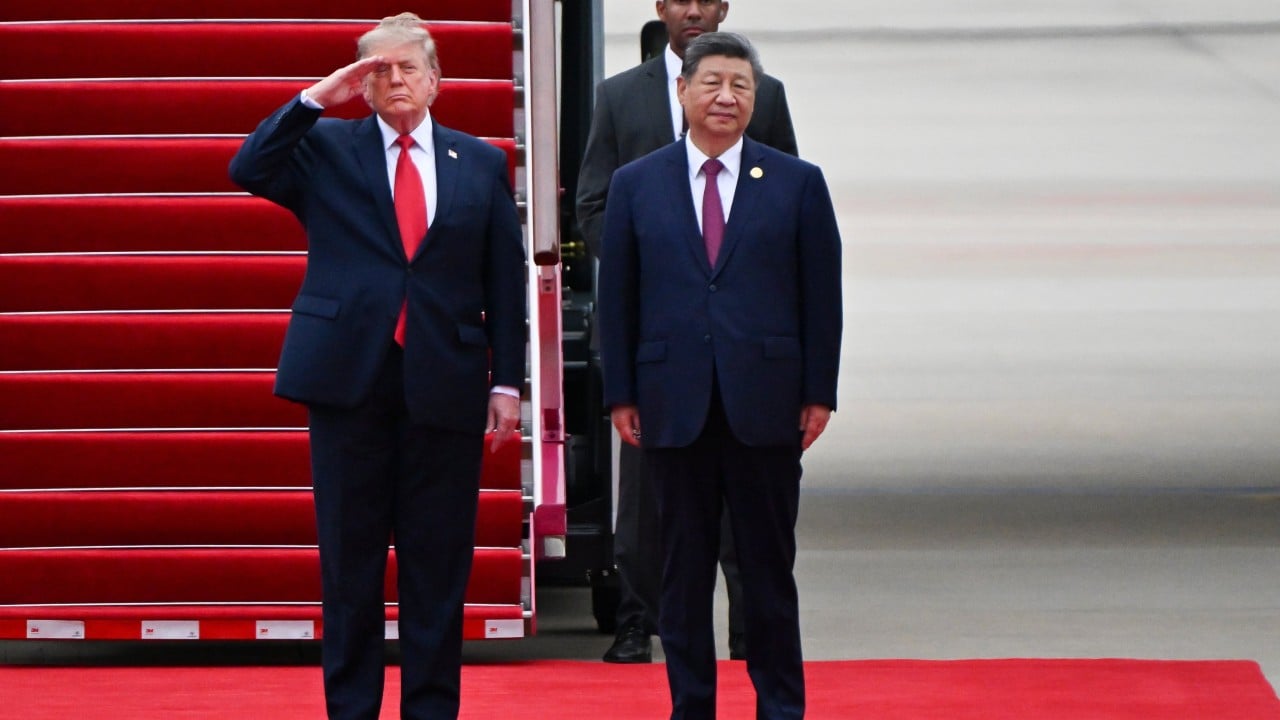
Diplomatic protocol at the Asia-Pacific Economic Cooperation (APEC) summit functions as a leading indicator of negotiation posture, not mere ceremonial theater. When Chinese President Xi Jinping personally welcomes U.S. President Donald Trump ahead of bilateral talks, the gesture establishes a calibrated equilibrium of reciprocity. In high-stakes statecraft, the physical choreography of a greeting—who travels to whom, the rank of the welcoming delegation, and the sequence of arrival—serves as a non-verbal signaling mechanism. This reciprocity neutralizes status asymmetry before substantive economic discussions begin, shifting the baseline from adversarial posturing to transactional parity.
Standard coverage of U.S.-China summits often treats personal greetings as superficial pleasantries or signs of sudden ideological alignment. That interpretation misreads the mechanics of Great Power diplomacy. Personal welcomes between heads of state represent calculated investments in political capital designed to lower the domestic audience costs of subsequent compromises. By matching prior hospitality, Beijing signals that the bilateral channel remains operational despite structural friction over tariffs, semiconductor export controls, and regional security architectures.
The Reciprocity Equilibrium in Statecraft
In international relations theory, reciprocity operates as a foundational stabilizer when formal enforcement mechanisms do not exist. A personal welcome directly answers a previous diplomatic concession—such as a state visit, a specific reception format, or a prior personal greeting—closing an open ledger of diplomatic debt.
- Status Equalization: Neither leader can afford to appear as a supplicant to domestic constituencies. A personal welcome by the host head of state elevates the visiting leader's standing, ensuring both parties enter the negotiation room on equal footing.
- Audience Cost Management: Leaders face severe domestic political penalties if they appear weak during foreign negotiations. High-level ceremonial respect provides domestic cover, allowing both executives to frame engagement as a position of strength rather than a retreat.
- Friction Reduction: Protocol disputes can derail summits before agendas are finalized. Pre-emptively executing a high-status welcome eliminates procedural friction, preserving finite summit bandwidth for core disputes.
This mechanism does not alter the underlying structural competition between the two largest economies. Instead, it creates a controlled container within which zero-sum disputes can be managed without triggering immediate escalation.
The Three Pillars of Pre-Summit Signaling
To evaluate the strategic weight of a personal welcome ahead of APEC talks, analysts must separate theatrical optics from operational intent. The pre-summit environment relies on three distinct signaling channels.
1. Spatial and Temporal Choreography
The physical location of a greeting carries precise hierarchical meaning. Greeting a counterpart on the tarmac, at the threshold of a state guesthouse, or inside a neutral multilateral venue communicates different levels of bilateral prioritization. When a host steps outside standard multilateral protocol—where all visiting leaders receive uniform ministerial greetings—to offer a personal reception, it isolates the bilateral track from the broader APEC agenda. This temporal prioritization signals to global markets and regional allies that the U.S.-China relationship remains the primary axis of the summit, regardless of the multilateral communique's stated focus.
2. Delegation Composition and Rank
The officials standing immediately behind the principals during the initial greeting reveal the operational scope of the upcoming talks. The presence of top economic policymakers, trade representatives, and national security advisors indicates that the meeting is structured for transactional bargaining rather than purely symbolic reassurance. Conversely, a streamlined entourage suggests an executive-level alignment exercise aimed at establishing broad guardrails while deferring technical execution to working groups.
3. Linguistic Framing in Initial Remarks
The brief, scripted exchanges captured by pool cameras establish the semantic boundaries for the closed-door session. Phrases emphasizing mutual respect, stability, and shared responsibility function as diplomatic circuit breakers. They instruct lower-level bureaucracies on both sides to temporarily suspend maximalist rhetoric, creating a narrow window for tactical concessions.
The Cost Function of Bilateral Engagement
Entering a high-stakes bilateral meeting at APEC involves a strict cost-benefit calculation for both administrations. The decision to elevate the meeting through personal hospitality reflects an assessment that the costs of unmanaged decoupling exceed the domestic political risks of engagement.
For Washington, the primary variables in this cost function include inflationary pressures from broad-based tariffs, supply chain vulnerabilities in critical minerals and pharmaceuticals, and the need to maintain alignment with Indo-Pacific allies who resist being forced into a binary choice between the two powers. Engaging directly allows the U.S. administration to test whether Beijing will offer tangible market access or enforcement commitments on issues like fentanyl precursors in exchange for tariff relief or regulatory predictability.
For Beijing, the cost function is dominated by domestic macroeconomic headwinds, including property sector deleveraging, local government debt constraints, and the urgent need to stabilize foreign direct investment. A high-profile, respectful reception for the U.S. president projects stability to international capital markets and mitigates the risk of coordinated Western export restrictions expanding further into legacy technology sectors.
Structural Constraints on APEC Deliverables
While a personal welcome optimizes the conditions for dialogue, it cannot resolve fundamental divergences in economic governance. Observers must distinguish between tactical stabilization and structural convergence. Several hard constraints limit what any single bilateral meeting on the sidelines of APEC can achieve.
- Industrial Policy Asymmetry: Beijing's state-directed capital allocation model and export-led manufacturing strategy directly collide with Washington's shift toward domestic industrial subsidies and defensive trade barriers. Neither leader possesses the domestic mandate to dismantle these foundational economic frameworks during a multilateral summit.
- Technology Security Nexus: Dual-use technologies—specifically advanced semiconductors, artificial intelligence compute infrastructure, and quantum computing—have migrated from the trade ledger to the national security ledger. Once an issue is securitized, it becomes largely immune to traditional commercial horse-trading.
- Multilateral Dilution: APEC operates on consensus and non-binding commitments. While the summit provides a convenient venue for a bilateral pull-aside, the multilateral forum itself lacks the institutional teeth to enforce bilateral agreements, placing the entire burden of compliance on unilateral monitoring mechanisms.
Historical Precedents and Negotiation Mechanics
The pattern of using heightened personal protocol to unlock stalled negotiations has clear precedents in U.S.-China relations. During previous periods of acute trade friction, direct leader-to-leader engagement has consistently served as the only mechanism capable of breaking bureaucratic deadlocks.
In systems characterized by high centralization of authority, lower-level negotiators lack the mandate to offer unilateral concessions for fear of political reprisal. Consequently, working-level talks frequently degenerate into repetitive exchanges of talking points. Only when the top principals establish personal rapport—signaled publicly through reciprocal hospitality—do subordinate officials receive the political authorization required to draft compromise language.
However, this top-down model carries an inherent fragility. Agreements forged through executive-level chemistry without deep bureaucratic buy-in often suffer from implementation drift. Within weeks of a successful summit, technical disputes over verification metrics, subsidy definitions, or licensing timelines frequently re-emerge, eroding the goodwill generated by the initial handshake.
Evaluating Post-Summit Trajectory
To accurately forecast the trajectory of U.S.-China relations following a high-profile APEC welcome, focus strictly on observable policy outputs rather than diplomatic rhetoric.
Monitor three concrete indicators over the thirty days following the summit:
- Working Group Cadence: Track whether dormant bilateral economic and financial working groups schedule formal, in-person technical sessions. Sustained bureaucratic follow-through confirms that the personal welcome translated into operational mandates.
- Regulatory Pausing: Observe whether planned escalations—such as new entity list additions, tariff rate increases, or retaliatory agricultural inspections—are quietly delayed or narrowed in scope. Tactical restraint in regulatory execution is the most reliable currency of bilateral stabilization.
- Military-to-Military Communications: Verify the resumption or maintenance of theater-level operational dialogues. Diplomatic warmth at the executive level only proves durable if it insulates crisis-management channels from routine maritime and aerial friction in the Indo-Pacific.
Treat the personal welcome as a tactical floor under the relationship, not a ceiling for cooperation. Allocate resources and adjust supply chain exposure based on verifiable regulatory shifts rather than the optics of diplomatic reciprocity.