Commercial aviation security operates as a reactive feedback loop, where structural policy transformations emerge almost exclusively from acute system failures. When an aircraft is destroyed in flight or weaponized as a kinetic projectile, the baseline cost of compliance resets globally. This dynamic reveals a distinct regulatory pattern: vulnerabilities exposed by catastrophic events drive systemic overhauls that shift the economic, operational, and psychological equilibrium of civil aviation. Understanding how aviation security evolved requires dissecting the mechanics of these shocks, moving past historical narratives to examine the operational adjustments, economic externalities, and institutional frameworks that define modern air travel.
The baseline of civil aviation security shifted fundamentally in December 1988 with the destruction of Pan Am Flight 103 over Lockerbie, Scotland. Prior to this event, airport security protocols focused primarily on preventing the hijacking of aircraft for political ransom or diversion. Baggage reconciliation was inconsistent, explosive detection technology was in its infancy, and cargo security operated on the assumption that checked luggage posed minimal systemic risk. Lockerbie shattered this paradigm by demonstrating that a sovereign state or well-funded non-state actor could exploit unmanifested, unaccompanied baggage to destroy an aircraft at high altitude. In other developments, read about: Inside the Quebec Campus Ballot Battle Shaping a High-Stakes Election.
The immediate operational response to the Lockerbie bombing was the institutionalization of positive passenger bag matching. Under this framework, an airline must ensure that no checked bag is loaded onto an aircraft unless the passenger who checked it has boarded the flight. This single operational change introduced a complex logistical bottleneck at major hubs, requiring real-time data synchronization between gate agents, baggage handlers, and cargo manifests. The economic friction of bag matching forced airlines to invest heavily in early departure control systems and passenger tracking infrastructure.
Beyond passenger matching, Lockerbie catalyzed the development and deployment of thermal neutron analysis and early-generation X-ray screening systems for baggage. The physical architecture of airports began to change. Terminal layouts required retrofitting to accommodate centralized explosive detection systems, transforming baggage handling halls from simple conveyor networks into secure, multi-stage screening nodes. The cost of these upgrades was absorbed into ticket prices, embedding the economic burden of counter-terrorism directly into the cost of consumer mobility. The Washington Post has provided coverage on this important topic in great detail.
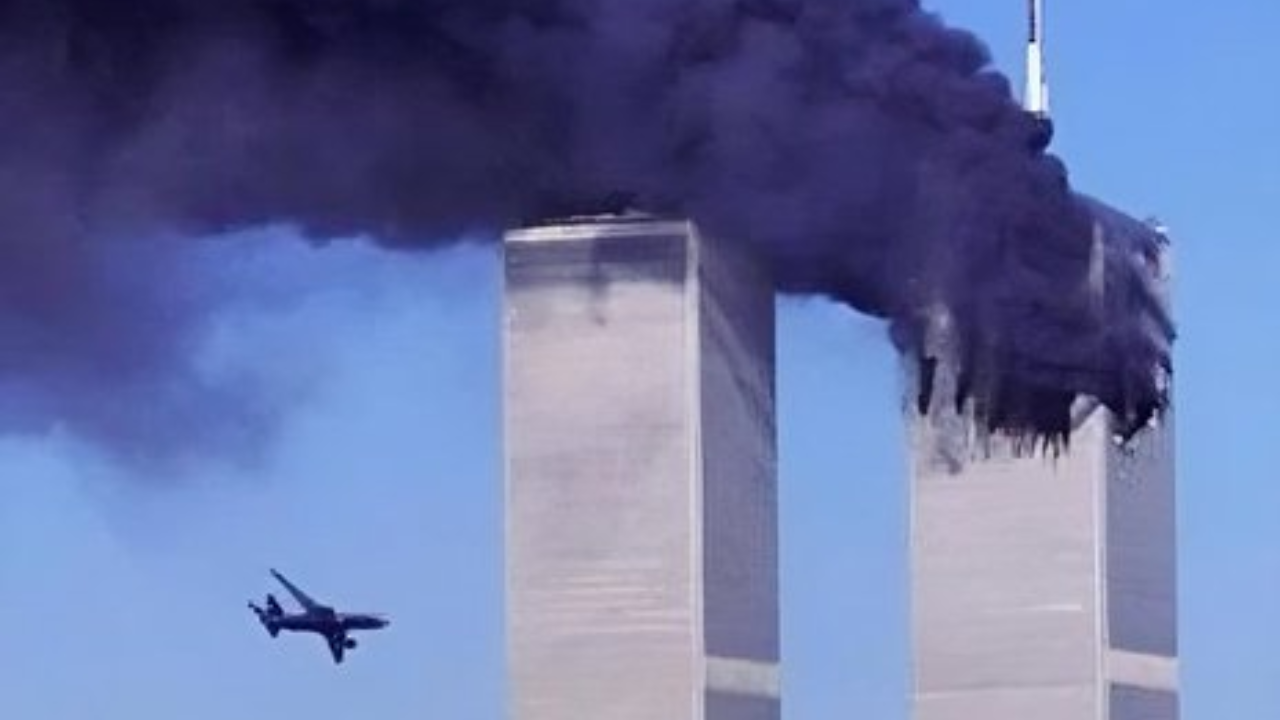
While Lockerbie redefined the hazard profile of checked baggage, the events of September 11, 2001, fundamentally altered the threat vector of the aircraft itself, transforming the cabin into a battlespace and the commercial airliner into a kinetic weapon. The systemic failure that enabled 9/11 was not a technological gap in baggage screening, but a vulnerability in cockpit access control and an operational assumption regarding the behavior of hijackers. The prevailing security logic of the late 20th century dictated that hijackers sought hostages, leverage, or safe passage to a third-party destination, making compliance the rational survival strategy for crew and passengers.
The operational response to 9/11 dismantled this assumption and replaced it with a multi-layered hardening strategy. The most direct structural change was the physical reinforcement of cockpit doors. Modern commercial aircraft are now equipped with ballistic-resistant, intrusion-proof doors designed to withstand small arms fire and forced physical entry. This engineering modification permanently altered the relationship between the flight crew and the cabin, creating a hard physical barrier that isolates the flight deck from any internal disturbance.
Concurrently, the institutional apparatus of state security underwent a complete centralization. In the United States, the Aviation and Transportation Security Act of 2001 created the Transportation Security Administration, stripping private security contractors of airport screening responsibilities and establishing a federalized workforce. This centralization standardized screening protocols across hundreds of commercial airports, eliminating the variance in security efficacy that had previously existed between different municipal jurisdictions and private carriers.
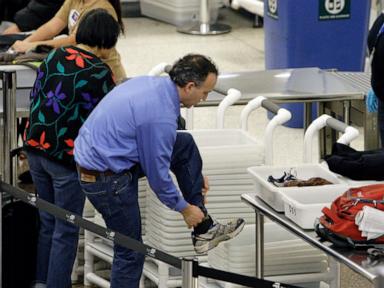
The introduction of 100% checked baggage explosive detection systems, advanced imaging technology, and explosive trace detection portals transformed the airport checkpoint from a cursory ticket-and-bag check into a rigorous bureaucratic filter. The cost of this systemic hardening was immediate and sustained. Passenger processing times lengthened, requiring early arrival windows and generating non-trivial economic drag through lost productivity and increased airport operational overhead.
Evaluating the trajectory from Lockerbie to 9/11 reveals a consistent economic trade-off between security friction and systemic resilience. Each major shock event increases the total cost of ownership for commercial aviation. This cost function comprises three primary variables: capital expenditure on hardware, operational expenditure on personnel and compliance processes, and the time-cost imposed on the consumer.
Capital expenditure follows an episodic spike pattern. When regulatory mandates change, airlines and airport authorities must procure millions of dollars in specialized detection equipment, retrofit terminal architecture, and upgrade software systems. These costs are capital-intensive and front-loaded, creating significant barriers to entry for smaller regional airports and putting downward margin pressure on regional carriers.
Operational expenditure exhibits structural stickiness. Once a security protocol is introduced, it is rarely dismantled, even if the specific threat vector evolves. The workforce required to maintain these protocols represents a permanent fixed cost for airport operators and security agencies. Furthermore, as threat detection standards increase, the required cognitive and technical proficiency of security personnel rises, necessitating more rigorous training and higher compensation structures to reduce human error rates at the checkpoint.
The time-cost borne by passengers represents an invisible economic externality. Every minute added to the processing queue translates to billions of dollars in aggregate lost time across the global economy. This friction creates a competitive threshold for air travel compared to high-speed rail or digital alternatives. Consequently, the aviation industry faces an ongoing imperative to deploy biometric boarding systems, automated CT scanners, and algorithmic threat assessment tools designed to compress processing times without degrading the security baseline.
The evolution of aviation security is not a linear march toward absolute safety, but an ongoing calibration against adaptive adversaries. State and non-state actors continuously study the vulnerabilities created by regulatory bottlenecks, shifting their tactics toward soft targets, cargo supply chains, and cyber-physical interfaces. Cargo security, long considered the secondary frontier compared to passenger screening, has undergone successive regulatory tightening following attempted attacks utilizing printer cartridges packed with explosives in 2010. This shifted the focus toward supply chain provenance, requiring known shipper programs and multi-tier auditing of freight forwarders.
As the physical checkpoint reaches its technological limits in terms of throughput and detection capability, the frontier of aviation security is migrating toward digital identity and predictive analytics. The integration of advanced passenger information systems and secure credentialing allows security architecture to evaluate risk before the traveler arrives at the physical airport boundary. By shifting the verification burden upstream into data networks, the system aims to decouple security thoroughness from physical queue length, addressing the fundamental economic friction that has defined post-9/11 infrastructure.
Capitalize on this systemic evolution by redirecting risk assessment models away from reactive compliance checkboxes and toward real-time behavioral and supply-chain verification pipelines.