We forget that air has weight. We walk through it, fill our lungs with it, throw open windows to let it stir the dust on a Tuesday afternoon, and never once feel the crushing tonnage of the sky.
Consider a room. Empty, save for the sunlight slicing through the blinds. That room contains roughly one hundred kilograms of invisible gas pressing against every square inch of your skin. Now, multiply that room by eight billion people. Multiply it by every forest, every ocean basin, every industrial chimney coughing grey plumes into the troposphere. We have treated that immense atmospheric ocean as an infinite drain, a bottomless sink capable of absorbing whatever smoke, exhaust, and unburned ambition we choose to cast into it. If you found value in this article, you should check out: this related article.
The drain is clogged.
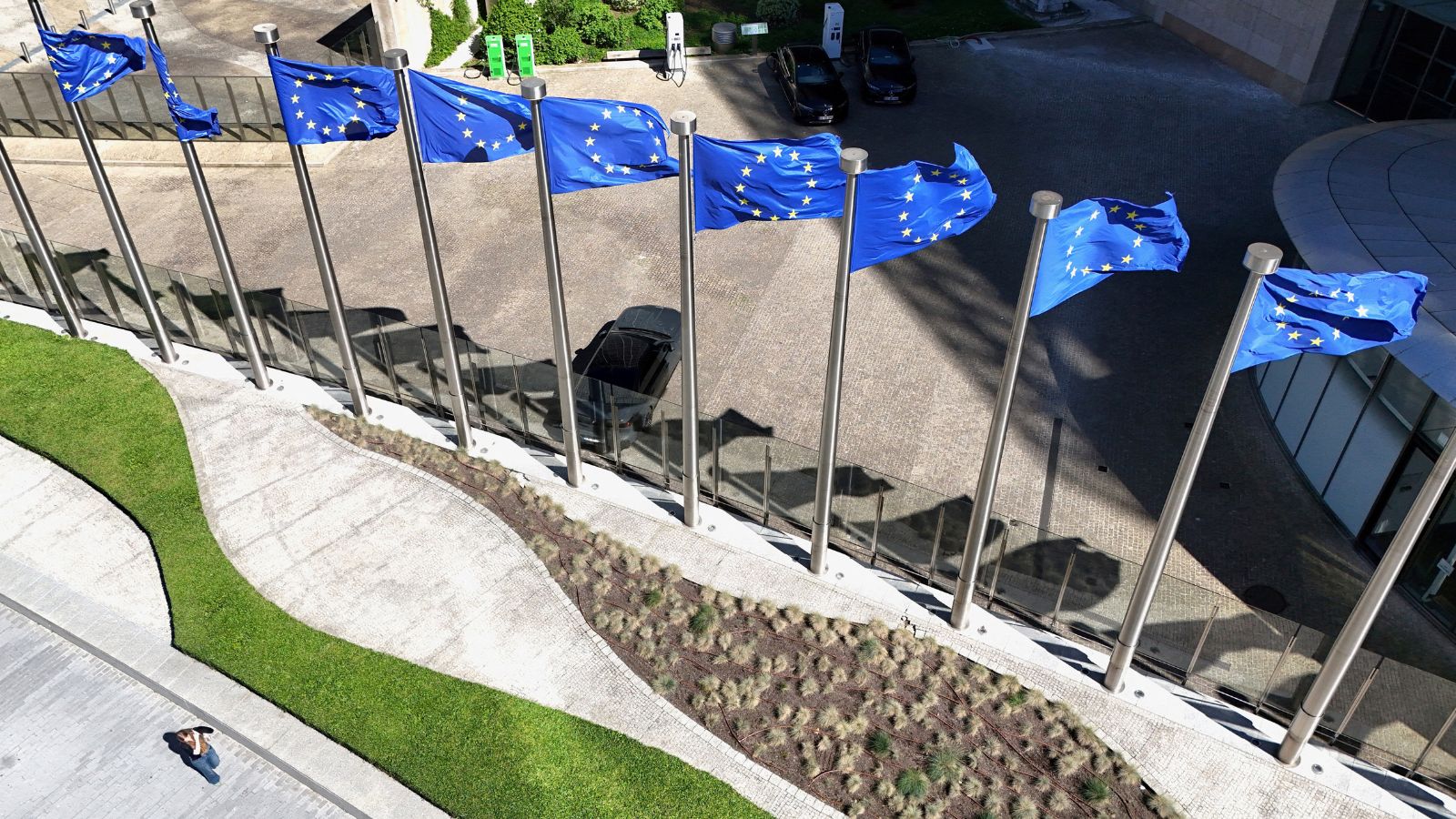
Behind closed doors in Brussels and Geneva, technocrats and diplomats are quietly sketching the blueprints for COP31, hunting for a climate deal that might finally accelerate carbon dioxide cuts before the arithmetic of physics catches up to our politics. Leaked internal documents suggest the European Union is pushing for tougher binding targets, looking to reshape global trade corridors and industrial subsidies in one synchronized heave. For another angle on this event, check out the recent coverage from The New York Times.
Dry words. Bureaucratic ink.
To understand what is actually happening, you have to leave the glass-walled conference rooms and walk out onto the concrete of an asphalt alley in southern Spain during a July heatwave, where the air itself feels like a heavy woolen blanket soaked in boiling water. Or sit with a wheat farmer in the central plains of Europe whose soil has turned to flour after three consecutive winters without a proper frost.
We are living inside a slow-motion collision between human economics and planetary chemistry.
For decades, the global strategy for emissions reduction has relied on voluntary targets and distant horizons. Politicians love dates that end in zero, fifty years in the future, safely beyond the expiration date of their own careers. They promise that future generations will invent wondrous, magic-bullet machines to suck carbon out of the sky while we continue burning coal today. It is the political equivalent of maxing out a credit card with the firm conviction that a wealthy relative you have never met will eventually pay off the balance.
That relative does not exist.
The documents circulating regarding the upcoming climate summit reveal a stark shift in tone. The European bloc is realizing that voluntary diplomacy is a polite way to watch the house burn down. Instead, they are eyeing mechanisms that sting: carbon border adjustments, financial penalties for laggard nations, and strict timetables that demand measurable drops in greenhouse gas outputs every single year, not every decade.
This is where the story gets uncomfortable.
Because reducing carbon dioxide isn't simply a matter of flipping a switch on a power plant. It means rewiring the plumbing of modern civilization. It means cement factories figuring out how to cure concrete without baking limestone. It means steel mills replacing coal blast furnaces with green hydrogen, transforming ancient industrial behemoths into clean-tech laboratories overnight.
Imagine a steelworker in the industrial heartland of Germany. His grandfather poured molten iron into molds when Europe was rising from the rubble of war. His father did the same during the economic booms of the late twentieth century. Now, his son stands on the same factory floor, but the air smells different. The roar of the old furnaces is giving way to the quiet hum of electric arcs. There is pride in the shift, certainly. But there is also a cold knot of anxiety in the stomach. Will the electricity stay cheap enough? Will cheap imports from nations with lax environmental rules undercut the local market and turn this historic town into a ghost grid?
That is the human element missing from every spreadsheet.
Climate policy is not an abstract math problem. It is a massive, high-stakes negotiation over who pays for the transition and who gets left behind in the dark. If we implement aggressive cuts without protecting working-class communities, we trigger populist backlash that sweeps away green governments and replaces them with climate-denying arsonists. If we move too slowly, the atmosphere warms past the tipping points, melting permafrost and releasing ancient methane traps that render our political debates entirely irrelevant.
There is no middle ground left. The physics of carbon do not negotiate. Carbon dioxide molecules do not care about election cycles, GDP growth, or sovereign borders. They trap infrared radiation with the exact same blind, indifferent efficiency whether they were emitted by a coal plant in Ohio, a diesel truck in Warsaw, or a container ship crossing the Mediterranean.
This brings us to the core tension of the upcoming international agreements. Can sovereign nations surrender a fraction of their immediate economic sovereignty for long-term survival?
History suggests it is nearly impossible until the crisis is right at the throat. We built our entire modern civilization on fossil fuels. Oil, coal, and gas are the invisible muscle behind every loaf of bread on the supermarket shelf, every microchip in your smartphone, every vaccine rushed to a clinic. To unhook ourselves from that dense, portable energy source is like performing open-heart surgery on a marathon runner while he is still sprinting up a mountain.
Yet, the runners are starting to stumble.
Glaciers in the Alps are not retreating; they are evaporating into memory. Vineyards in regions historically famous for crisp white wines are harvesting grapes a month earlier than they did fifty years ago, watching the chemical balance of the fruit shift toward sour heavy sugars. Insurance companies, institutions built entirely on cold, sober risk assessment, are quietly pulling out of flood-prone and fire-prone coastal zones, leaving homeowners stranded with assets they cannot insure and cannot sell.
The market is already voting, even if the politicians are still filibustering.
When the European Union eyes a new climate deal to accelerate cuts, it is reacting to these tremors. The strategy is moving from diplomacy to economic self-preservation. By threatening to tax goods entering the continent based on the carbon footprint required to make them, Europe is attempting to erect a global firewall. Comply with clean standards, or lose access to five hundred million affluent consumers.
It is
The Paper Trail That Could Decide the Earths Next Century
news
The ink on an international agreement rarely smells like revolution. Usually, it smells like lukewarm coffee and stale hotel carpets, damp with the quiet exhaustion of diplomats who have traded sleep for footnotes. But tucked inside a draft document circulating through European Union corridors, something sharper is taking shape.
The European Union is setting its sights on COP31, quietly assembling a diplomatic toolkit designed to force a global acceleration of carbon dioxide cuts. Behind the sterile title of the leaked internal document lies an urgent admission: the slow march of current pledges will not save the math.
Consider what happens next if the status quo holds.
Imagine Elena, a viticulturist whose family has coaxed grapes from the limestone slopes of the Rhône Valley for four generations. She does not read climate journals. She simply watches her harvest shift forward by three weeks every decade, tasting a desperate, cooked sweetness in grapes that once ripened with a slow, balanced patience. The frost comes too late; the summer heat arrives like a hammer. Her livelihood is a living ledger of degrees Celsius, an ongoing computation written in shriveled fruit and exhausted soil.
The negotiators in Brussels and Bonn are debating percentages and baselines, but Elena is living the margin of error.
The internal EU document reveals a strategy centered on urgency. Brussels wants to use the upcoming COP31 climate summit not as another polite forum for voluntary handshakes, but as a pressure cooker. The goal is clear: push nations to sharpen their nationally determined contributions, known in the diplomatic shorthand as NDCs, forcing them to commit to deeper, faster CO2 reductions before the window of avoidability snaps shut entirely.
Why the sudden push for teeth? Because the gap between what countries promised under the Paris Agreement and what the atmosphere is actually absorbing has widened into a chasm.
Think of the Earth's atmosphere as a sinking ship with a fixed bucket brigade. Right now, some crew members are bailing with enthusiasm, others are using teacups, and a few are arguing about whether water is actually getting inside the hull. The EU's proposed stance at COP31 is essentially an attempt to mandate industrial-sized pumps for everyone on board, backed by financial levers and diplomatic pressure that make non-compliance uncomfortably costly.
Yet, diplomacy is a delicate choreography of carrot and stick. The European bloc faces an uphill battle. Developing nations, many of which contributed the least to the historical accumulation of atmospheric carbon while suffering the most acute shocks, look at Europe's historical emissions with a justified grievance. They ask a fair question: Why should an industrial powerhouse demand rapid decarbonization from economies still fighting to lift their populations out of energy poverty, without adequate financial backing?
The document acknowledges this friction, pointing toward a dual approach. It couples the demand for aggressive CO2 cuts with promises of green finance and technology transfer. But trust in climate finance is fragile. It is easy to pledge billions in conference halls; it is entirely another to deliver them when domestic political winds shift and inflation bites local taxpayers.
This is where the human element collides with geopolitical cold calculation.
If you sit in a high-rise office in Frankfurt or Paris, carbon reduction looks like a line on a spreadsheet—a series of targets to be met by 2035 or 2050. It looks clean. It looks manageable. But if you stand on a coastline in the Pacific, where salt water is slowly poisoning the freshwater wells, or in an urban heat island where concrete traps the summer nights into suffocating ovens, that same spreadsheet is a matter of survival.
The EU’s blueprint for COP31 is an acknowledgment that time has run out for incrementalism. The negotiators know that the next round of pledges cannot merely tweak the edges of industrial output. They must fundamentally bend the emissions curve downward, steeply and immediately.
The documents will be finalized. The delegations will pack their bags for the summit. Speeches will be delivered beneath blinding television lights, full of solemn declarations and polite applause.
Back in the vineyards, Elena will prune her vines against the chill of an unpredictable spring, wondering if the people in the distant rooms are moving fast enough to save the only home she has ever known. The papers in Brussels are dry, but the future they are trying to write is soaked through with human consequence.