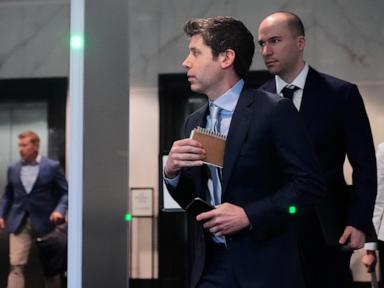
Sam Altman likes to sit in a specific kind of silence. It is the quiet of a man who knows that every word he utters is currently being weighed against the future of the human species. But lately, that silence has been punctured by the rhythmic thud of legal filings hitting a courthouse floor. Across the aisle stands Elon Musk, a man whose public persona is defined by the very noise Altman avoids.
This is not a mere spat between billionaires over a broken contract. It is a war for the soul of the most consequential technology ever conceived. If you enjoyed this article, you should read: this related article.
When OpenAI began, it was a nonprofit dream shared in the flickering light of Silicon Valley idealism. The mission was simple: build Artificial General Intelligence (AGI) that benefits everyone. Musk provided the capital and the megaphone. Altman provided the strategic glue. They were brothers-in-arms against the closed-garden monopolies of Google and Meta. Now, they are the primary protagonists in a courtroom drama that could dismantle the world’s most valuable startup or, conversely, cement a corporate hegemony that makes the oil tycoons of the nineteenth century look like hobbyists.
The stakes for Musk are reputational. For Altman, they are existential. For another perspective on this event, check out the recent coverage from Engadget.
The Paper Trail of a Broken Vow
Musk’s lawsuit hinges on a "Founding Agreement." He claims OpenAI abandoned its philanthropic roots to become a de facto subsidiary of Microsoft. He paints a picture of a betrayal so profound it borders on the Shakespearean. To Musk, OpenAI is no longer the open-source shield he helped forge; it is a closed-source sword wielded by a profit-hungry board.
But the facts on the ground are more tangled than a simple narrative of greed.
Building AGI is not cheap. It requires a thirst for compute power that cannot be quenched by donations alone. As the models grew from GPT-2 to GPT-4, the electricity and hardware bills spiraled into the billions. Altman realized that to stay in the race, he needed a structure that could attract serious capital. He pivoted. He created a "capped-profit" entity. He invited Microsoft to the table.
This move saved OpenAI from irrelevance, but it created the very opening Musk is now exploiting. If a court decides that OpenAI has technically achieved AGI—the point where a machine matches human intellect—the licensing deals with Microsoft might theoretically expire. Musk wants the court to declare that GPT-4 is already there. He wants to force the doors open.
The Ghost in the Boardroom
Think of Altman’s position like a captain navigating a ship through a narrow strait. On one side are the regulators demanding safety. On the other are the investors demanding growth. In the middle is the ghost of his own past.
The 2023 board coup, where Altman was briefly fired and then reinstated, revealed a fractured internal culture. Some saw him as a visionary leader; others saw him as a man who had become too comfortable with the opacity of power. Musk’s lawsuit acts as a magnifying glass held over those fractures. If the legal discovery process forces Altman to reveal the internal mechanics of GPT-4, the "secret sauce" that gives OpenAI its edge could evaporate.
The risk for Altman is a total loss of control. If the nonprofit board is found to have breached its fiduciary duty to humanity, the entire corporate structure could be forcibly dissolved or restructured. Altman would be a king without a kingdom. He would be the man who touched the sun only to have his wings clipped by a lawsuit.
The Invisible Stakes for the Rest of Us
We often view these battles as a clash of titans, but the shockwaves hit the sidewalk. If OpenAI is forced to open-source its most powerful models tomorrow, the immediate result is a chaotic democratization. A teenager in Jakarta could use the same tools as a researcher at MIT. That sounds like a victory for equality.
However, consider the flip side. A "state-actor" or a bad actor with the same access could weaponize that intelligence for cyber-warfare or biological engineering at a scale we aren't prepared to defend against. Altman’s defense is built on this very fear. He argues that the world is too fragile for total transparency right now. He believes the "lab" needs walls.
Musk argues the opposite. He believes that a closed AGI controlled by a single corporation is the ultimate existential threat. He sees himself as the whistleblower for a future that hasn't happened yet.
The Human Cost of the Hot Seat
Altman is often described as "composed." In interviews, his eyes rarely blink, and his voice maintains a steady, melodic cadence. It is the composure of a man who has practiced for this moment since he was a teenager coding in Missouri. But under the hood, the pressure is tectonic.
He is fighting a multi-front war. He is lobbying world leaders to create a global regulatory body for AI. He is trying to secure trillions of dollars for a global semiconductor supply chain. And now, he must defend his integrity against the man who gave him his first big check.
The trial isn't just about "breach of contract." It is a public referendum on Altman’s character. Is he the benevolent architect of a new era, or is he a clever opportunist who outmaneuvered his mentors?
The courtroom will look at emails, memos, and Slack messages. They will dissect the moments when the "nonprofit" began to look like a "product." They will ask if Altman ever intended to keep his promise.
Beyond the Verdict
Legal battles of this magnitude rarely end with a clean win or loss. They end in settlements, in forced compromises, and in a permanent shift in public perception. Even if Altman wins every legal point, the "Open" in OpenAI has been irrevocably tarnished. He has lost the luxury of being the underdog.
The reality is that we are watching two different philosophies of power collide. Musk represents the old Silicon Valley ethos: move fast, break things, and let the market (and the public) sort it out. Altman represents a new, more cautious, and perhaps more elitist philosophy: move carefully, build alliances with the state, and keep the most dangerous toys in the hands of the "responsible" few.
One man wants to blow the roof off the building to see the stars. The other wants to make sure the foundation doesn't crumble under the weight of the sky.
As the proceedings grind forward, Altman remains the face of the most significant transition in human history. Every night, he returns to a world where the code is getting smarter, the GPUs are getting hotter, and the legal net is tightening. He is the man who holds the keys to the future, but right now, he is being asked to prove he didn't steal them from the front porch.
The light in his office stays on long after the sun goes down. Outside, the world waits to see if the architect can survive the demolition of his own myth. If he fails, it won't just be a company that changes hands; it will be the blueprint for the next century of human progress, rewritten in the ink of a court reporter’s pen.
The gavel is coming down, and for the first time in his life, Sam Altman cannot code his way out of the result.