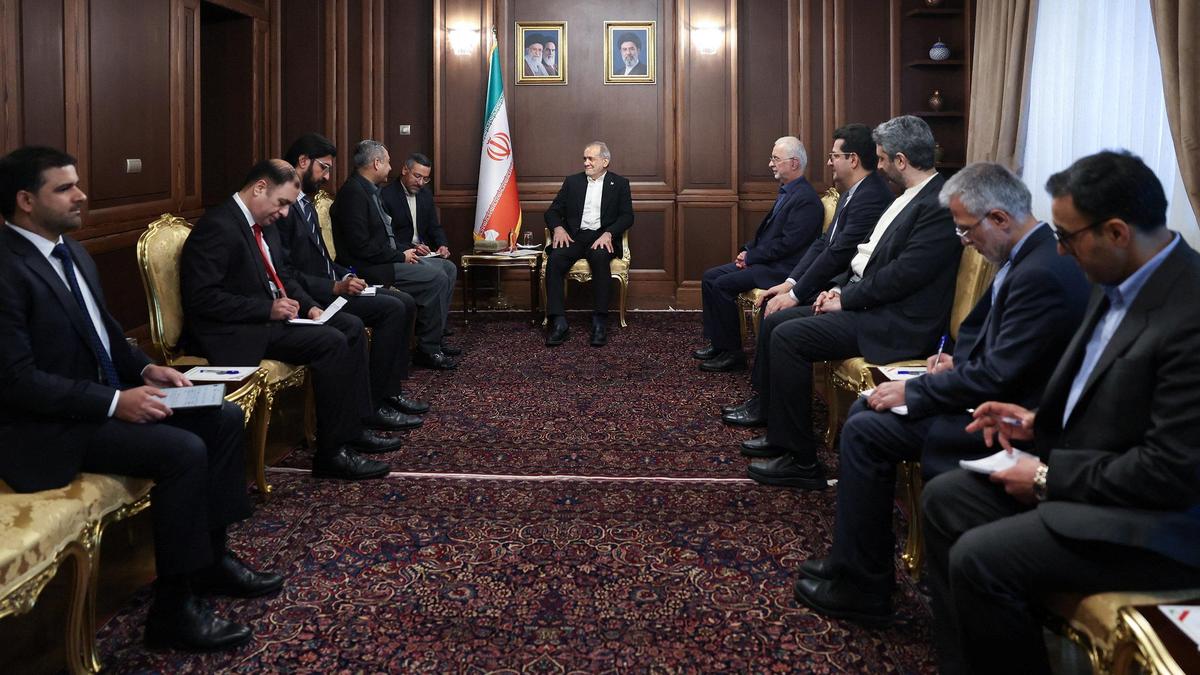
The diplomatic backchannel between Washington and Tehran, mediated through Islamabad, has hit a structural impasse that conventional diplomatic reporting routinely mischaracterizes as a mere failure of political will. The delivery of Iran’s revised counterproposal via Pakistani intermediaries reveals a deeper, structural divergence. It is a fundamental mismatch in how both states calculate the strategic cost function of continuing the war versus accepting a flawed peace. The current ceasefire, initiated on April 8, 2026, after six weeks of intensive US-Israeli airstrikes and Iranian asymmetric retaliation, remains highly unstable. It functions not as a bridge to peace, but as a tactical pause during which both sides are attempting to rewrite the rules of regional deterrence.
The fundamental breakdown in negotiations stems from a core structural reality: the United States treats the conflict as a discrete, localized campaign to enforce counter-proliferation and maritime freedom. Conversely, Iran views the war through an existential, theater-wide lens. Tehran’s diplomatic maneuvering is designed to secure its regional proxy architecture, establish permanent financial sovereignty over global energy corridors, and extract war reparations. These objectives are completely incompatible with Washington's minimum acceptable terms.
The Strategic Cost Function: Why Diplomacy Stalls
To understand why the latest Iranian proposal was rejected by the White House as a non-starter, the conflict must be broken down into its core operational variables. Every war termination framework requires both parties to believe that the net utility of peace exceeds the expected utility of continued hostilities. Currently, this condition is unmet.
The bargaining friction is dictated by three primary structural bottlenecks.
1. The Nuclear Verification Bottleneck
The Trump administration’s primary demand centers on structural counter-proliferation. Washington requires a 20-year moratorium on uranium enrichment, the complete dismantling of core enrichment facilities at Natanz, Fordow, and Isfahan, and the physical extraction of Iran’s highly enriched uranium stockpile—estimated to include over 400 kilograms of material enriched close to weapons-grade levels.
The Iranian counterproposal deliberately separates the nuclear file from the immediate war-termination framework. Tehran's strategy seeks a 30-day "confidence-building" window during which sanctions are lifted and ports are unblocked before any preliminary talks on its nuclear infrastructure can commence. This creates a severe sequencing asymmetry:
- The US Position: Denuclearization and stockpile extraction are prerequisites for structural sanctions relief and permanent cessation of hostilities.
- The Iranian Position: Sanctions relief and maritime unblocking must occur first, transforming the nuclear stockpile into a permanent leverage mechanism to prevent future US or Israeli strikes.
2. The Maritime Sovereignty Conflict
The Strait of Hormuz represents the primary economic chokepoint of the conflict, normalizer of one-fifth of global oil and liquefied natural gas supplies. The US strategic objective is an immediate, unconditional reopening of the waterway under a global maritime security framework that prevents future asymmetric interdiction by the Islamic Revolutionary Guard Corps (IRGC).
Iran’s counterproposal attempts to formalize its de facto blockade into a permanent legal and financial asset. Tehran has proposed a joint management framework with Oman to govern the strait, paired with a mandatory $2 million transit fee per commercial vessel. This is a calculated effort to institutionalize a sovereign toll system over an international waterway. By utilizing these transit fees under the guise of "infrastructure reconstruction funds" rather than direct state reparations, Tehran seeks to bypass the legal mechanisms of Western asset freezes. For Washington, accepting this framework would mean legitimizing the disruption of global commerce and validating maritime interdiction as a viable tool of statecraft.
3. Theater Interdependence vs. Localized Containment
The third friction point is geographic scope. The United States and Israel view the military campaign as an operation specifically aimed at degrading Iran’s domestic military infrastructure and its immediate command-and-control capabilities.
Iran's proposal demands an integrated, multi-front termination of hostilities. This explicitly includes a total cessation of Israeli military operations against Hezbollah in Lebanon, along with an end to strikes on pro-Iranian groups in Iraq and Yemen. Tehran recognizes that its regional deterrence architecture relies entirely on the survival of its forward-deployed proxies. If the US and Israel isolate Iran while continuing to dismantle Hezbollah's remaining operational capacity in Lebanon, Iran's strategic depth is structurally compromised. Therefore, Iran refuses any peace deal that does not provide a comprehensive security umbrella for its entire network of non-state allies.
Internal Domestic Pressures and the Credibility Paradox
The structural deadlock is reinforced by the domestic political constraints operating within both Washington and Tehran. Neither leadership structure can accept a compromise without triggering a significant domestic backlash that threatens its political survival.
+-----------------------------------------------------------------------+
|                       THE CREDIBILITY PARADOX                         |
+-----------------------------------------------------------------------+
|  UNITED STATES:                                                       |
|  - High domestic political audience costs ahead of mid-term elections |
|  - Demands verifiable, irreversible capitulation on nuclear file      |
|  - Compelled to project absolute deterrence via military dominance    |
+-----------------------------------------------------------------------+
|                                  v                                    |
|                       Structural Incompatibility                      |
|                                  ^                                    |
+-----------------------------------------------------------------------+
|  IRAN:                                                                |
|  - Dominated by an ascendant, ultra-hardline IRGC faction              |
|  - Rejects any foreign removal of sovereign enriched uranium stocks    |
|  - Compelled to maintain regional proxy cohesion to survive           |
+-----------------------------------------------------------------------+
In Washington, the upcoming mid-term elections create a highly sensitive environment regarding foreign policy concessions. The administration has leveraged maximum rhetorical and economic pressure, threatening "Stone Age" strikes to completely destroy Iran's remaining industrial base if a deal is not reached. Having set this standard, the White House cannot accept a one-page memorandum of understanding that defers the nuclear issue or allows Iran to collect revenues from the Strait of Hormuz. Doing so would be interpreted domestically as a significant strategic defeat.
In Tehran, the internal dynamics are dictated by a notable shift in the domestic balance of power. The six weeks of direct conflict have significantly empowered the ultra-hardline factions within the IRGC and the supreme leadership apparatus, effectively sidelining more moderate diplomatic actors within the foreign ministry. The military establishment views the current US naval enforcement measures—which have intercepted or redirected dozens of commercial vessels attempting to access Iranian ports since mid-April—as acts of maritime piracy. The IRGC's internal legitimacy is tied directly to its defiance of Western pressure. Agreeing to hand over its highly enriched uranium stockpile to a foreign power like the United States or China would be viewed as an unacceptable surrender of the regime's ultimate deterrent.
Tactical Equilibrium and the Failure of Asymmetric Leverage
The underlying reason both sides continue to shift goalposts is that neither has achieved decisive leverage over the other. Instead, the conflict has reached a temporary, highly destructive equilibrium.
The United States has successfully demonstrated structural air superiority, severely degrading fixed Iranian military infrastructure, logistics nodes, and air defense systems. This degradation has compromised Iran's conventional command-and-control capabilities. However, this air campaign has not translated into political capitulation. As military analysts observe, air strikes alone cannot secure deep, heavily fortified underground nuclear facilities like Fordow without a massive, prolonged ground operation that Washington is explicitly trying to avoid.
Concurrently, Iran has demonstrated its capacity to inflict sustained economic costs through asymmetric warfare. Despite the presence of the US Navy, Iran’s drone and missile strikes targeting shipping lanes and energy infrastructure within the United Arab Emirates and the broader Persian Gulf have driven global oil prices higher and increased maritime insurance premiums. This has introduced persistent inflationary pressures into global financial markets. Tehran calculates that the global economy's sensitivity to energy supply shocks serves as an effective shield against total military devastation.
This tactical balance creates a dangerous miscalculation: Washington believes that a resumption of intensive bombing will finally force the regime to collapse or capitulate. Meanwhile, Tehran believes that its ability to disrupt global energy markets and strike regional targets will eventually force the United States to abandon its maximalist nuclear demands.
Strategic Play: Resumption of Hostilities and Target Selection
Given these structural incompatibilities, the probability of the current ceasefire holding is exceedingly low. The diplomatic track has exhausted its viable permutations through the Pakistani channel. With the 45-day framework collapsing under the weight of irreconcilable demands, a return to active kinetic operations is the highly probable outcome.
The next phase of the conflict will likely abandon the broad, infrastructure-heavy bombardment that characterized the first six weeks. Instead, operations will shift toward high-value, highly specific targets designed to break the tactical equilibrium.
- The US-Israeli Kinetic Vector: Future operations will likely bypass generic military assets and focus intensely on the physical infrastructure of the nuclear enrichment chain, specifically targeting the electrical grids, access tunnels, and ventilation systems of Fordow and Natanz. This will be paired with targeted operations against senior IRGC leadership nodes to fracture the regime's internal command continuity.
- The Iranian Asymmetric Vector: Deprived of conventional defense mechanisms, Tehran will likely operationalize its proxy network for synchronized strikes. This means a simultaneous escalation involving intensified drone salvos from Yemen targeting Red Sea shipping, direct ballistic missile strikes against energy desalination and processing facilities in the Gulf, and low-tech, deniable sabotage operations within the Strait of Hormuz to completely stop maritime transit.
The conflict is transitioning out of its diplomatic phase. The latest proposal from Tehran was not an opening bid for a realistic peace; it was a baseline document designed to formalize its strategic gains and signal to its domestic audience that it refused to back down under threat of destruction. As both states prepare for the collapse of the April 8 truce, the theater is adjusting for a more precise, high-stakes phase of escalation where the margin for diplomatic miscalculation no longer exists.