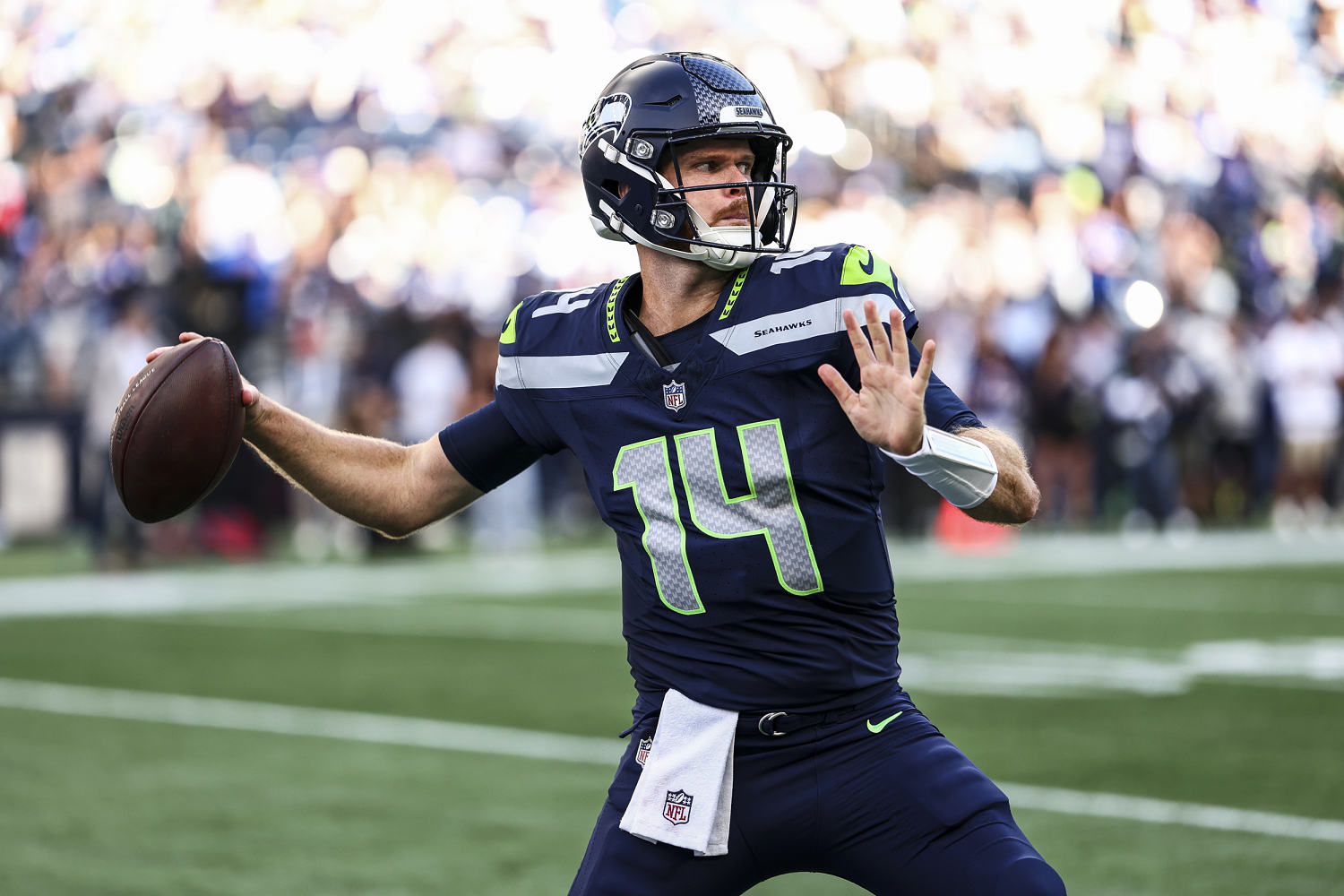
Quarterback injuries fundamentally alter offensive architecture, shifting calculations from strategic play-calling efficiency to organizational risk management. When Sam Darnold exited a game due to a hip injury, the immediate public discourse focused narrowly on the loss of a single roster asset. This approach obscures the systemic impact on play sequencing, pass protection assignments, and tactical constraints. Hip pathology in a throwing athlete creates a mechanical bottleneck. The kinetic chain relies entirely on hip rotation to generate torque; any disruption at this anatomical fulcrum diminishes velocity, compromises accuracy, and accelerates the degradation of overall offensive output.
Evaluating the true cost of this injury requires stripping away standard media narratives and analyzing the event through three distinct operational lenses: mechanical compensation limits, roster construction risk, and play-calling contraction.
The Kinetic Failure Point
The quarterback delivery system functions as a sequential summation of forces. Energy originates in the ground, travels upward through the lower extremities, passes through the core, and discharges through the shoulder and arm. The hip complex acts as the primary transmission gear in this chain. When a quarterback experiences a structural compromise in the hip joint, the kinetic chain breaks down before energy reaches the upper body.
To compensate for reduced rotational capacity, an athlete must alter their throwing mechanics. This adaptation typically manifests in one of two ways:
- Arm-Only Throwing: The quarterback bypasses lower-body rotation, relying exclusively on scapular and shoulder strength to drive the ball downfield. This approach induces rapid fatigue in the rotator cuff and significantly limits deep-third accuracy.
- Stifled Lower-Body Follow-Through: The athlete arrests their stride early to protect the injured joint, changing the release angle and flattening the ball trajectory. Defensive backs read these micro-adjustments instantly via route anticipation and altered arm slots.
Biomechanical inefficiency directly correlates with operational failure. Without optimal hip internal rotation, the ability to throw accurately outside the numbers drops precipitously. Defences respond by compressing the field horizontally and vertically, shrinking the operational window for wide receivers.
Roster Vulnerability and Contingency Economics
An NFL franchise operates under strict resource constraints defined by the salary cap and the collective bargaining agreement. Backup quarterback deployment tests the elasticity of these constraints. When a starter leaves due to injury, the front office faces an immediate valuation crisis regarding marginal utility.
The replacement quarterback rarely replicates the specific cognitive processing speed or scheme familiarity of the incumbent starter. Consequently, the offensive coordinator must recalibrate the game plan to account for reduced execution capacity. This dynamic introduces three distinct organizational challenges:
- Playbook Shrinkage: Complex route combinations requiring precise timing must be excised from the call sheet, replaced by simplified half-field reads or max-protection concepts.
- Protection Scheme Alteration: Less mobile or less experienced backups require tighter pockets, often necessitating extra blockers (tight ends or running backs) in the backfield. This reduces the number of eligible receivers running routes, compounding defensive dominance.
- Cap Allocation Strain: Over-investing in a high-cost backup limits resources available for foundational positions like offensive line or defensive secondary, magnifying the impact when the primary asset goes down.
Organizations that manage this transition effectively rely on procedural redundancy. They maintain a weekly practice cadence where the backup takes a predetermined percentage of high-leverage reps, ensuring the systemic transition remains seamless if an in-game injury occurs.
The Strategic Fallout of Structural Loss
The departure of a starting quarterback forces an immediate paradigm shift in game theory execution. Win probability models fluctuate wildly based on the capability differential between the starter and the backup.
When Darnold left the field, the tactical math changed instantly. Standard early-down passing efficiency metrics no longer applied. The offensive play-caller transitioned from an expansive playbook designed to stress defensive leverage points to a conservative survival matrix. This matrix prioritizes avoiding catastrophic turnovers over maximizing yardage gains.
Defensive coordinators exploit this shift aggressively. Without the threat of an expansive vertical passing game, second-level defenders abandon deep zone responsibilities and compress toward the line of scrimmage. Run-stopping boxes become heavier, forcing the offense into predictable passing situations on third down.
Addressing this vulnerability demands structural resilience within the coaching staff. Play-callers must design manufactured touches through screens, motion, and play-action variants that create artificial separation, bypassing the quarterback's mechanical limitations through scheme design rather than individual execution.
Implement a mandatory tiered contingency protocol for all foundational skill positions, establishing strict snap-share distributions in practice to ensure immediate operational continuity during high-variance game events.