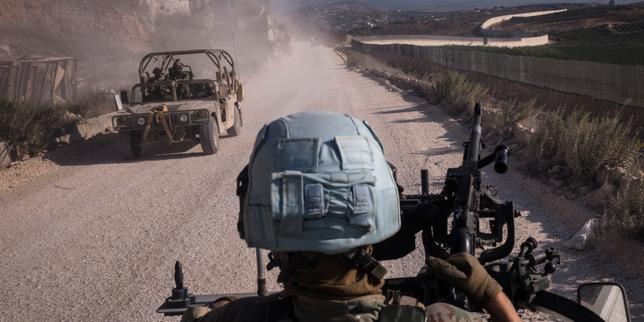
The impending termination of the United Nations Interim Force in Lebanon under Security Council Resolution 2790 introduces a critical inflection point in the geopolitical architecture of the Levant. Scheduled to conclude operational mandates by December 31, 2026, the drawdown of approximately 7,500 peacekeepers from 46 contributing nations dismantles a foundational institutional buffer that has operated along the Blue Line since 1978. Beyond the immediate diplomatic anxiety in Beirut and foreign capitals lies a structural vacuum: the transition from a multilateral, codified observation mechanism to an undefined security paradigm. This analysis deconstructs the systemic risks, institutional deficits, and operational mechanics governing the post-UNIFIL environment in southern Lebanon.
The Cost Function of Impartial Observation
International peacekeeping missions rarely function as kinetic deterrents; their primary utility lies in their function as institutional witnesses. In asymmetric conflict zones, the presence of neutral observers introduces friction into military calculation by imposing an immediate diplomatic and reputational cost on unilateral escalation. UNIFIL’s presence along the Blue Line provided a continuous, friction-producing data stream of violations, movements, and structural infringements by both state and non-state actors.
When this observation apparatus dissolves, the information asymmetry between belligerents collapses into a bilateral contest of unmonitored capabilities. Without a third-party verification entity, the baseline cost of military action drops significantly. Intelligence is no longer mediated or checked by an independent ledger of events. Consequently, the operational theater shifts toward an environment where deterrence relies entirely on direct, unverified threat reciprocation rather than multilateral transparency. The fear expressed by local populations—that actors can operate without witnesses—is fundamentally a fear of unobserved escalation, where the absence of a neutral metric accelerates the cycle of preemptive engagement.
The Lebanese Armed Forces Capacity Deficit
A primary pillar of post-UNIFIL stability arguments posits that the Lebanese Armed Forces (LAF) will seamlessly absorb the security responsibilities relinquished by international peacekeepers. However, an operational audit of the LAF reveals severe structural constraints that limit its ability to police the southern frontier effectively.
The LAF operates under acute fiscal, logistical, and political handicaps. Decades of macroeconomic collapse have eroded military readiness, straining maintenance budgets, fuel reserves, and basic soldier compensation. More critically, the LAF faces a complex sovereignty dilemma. Southern Lebanon remains politically and militarily fractured, historically dominated by non-state armed groups whose infrastructure intersects deeply with civilian population centers.
For the LAF to establish an exclusive security monopoly in the south, it requires three distinct variables:
- Complete logistical mobility unhindered by localized political vetoes.
- Enhanced intelligence, surveillance, and reconnaissance assets to match the technological sophistication of neighboring military forces.
- Unambiguous political backing from central state authorities to enforce compliance across all factions.
Presently, none of these variables exist in a mature state. Deploying the LAF into a vacuum without these prerequisites transforms the military from a national security guarantor into an exposed target caught between entrenched local dynamics and superior external operational capabilities.
Competing Frameworks and the Diplomatic Stalemate
The diplomatic vacuum left by the expiration of Resolution 1701 and the conclusion of UNIFIL’s mandate has triggered a competition between rival security frameworks. Chief among these is the tension between multilateral institutionalism and bilateral or trilateral verification mechanisms.
Western and regional capitals have floated various proposals, including targeted verification committees and localized pilot zones governed by specialized coordination groups. However, these alternative frameworks suffer from fundamental flaws of legitimacy and execution:
- The Enforcement Gap: Unlike UN missions backed by broad international consensus, ad-hoc verification committees often lack mandatory enforcement powers or broad troop-contributing frameworks.
- The Sovereignty Friction: Bilateral security arrangements or externally imposed monitoring regimes frequently infringe upon national sovereignty, prompting domestic political resistance within Lebanon that delegitimizes the mechanisms they seek to enforce.
- The Verification Asymmetry: Proposals favored by external actors often emphasize unilateral monitoring of non-state actors while offering limited mechanisms to document and restrain violations committed by technologically advanced state militaries across the border.
This divergence creates a diplomatic paralysis. While the UN Security Council debates successor structures, the ground reality outpaces institutional consensus, leaving local populations to navigate the immediate aftermath of active conflict without an established protective architecture.
Socioeconomic Vulnerability and the Reconstruction Bottleneck
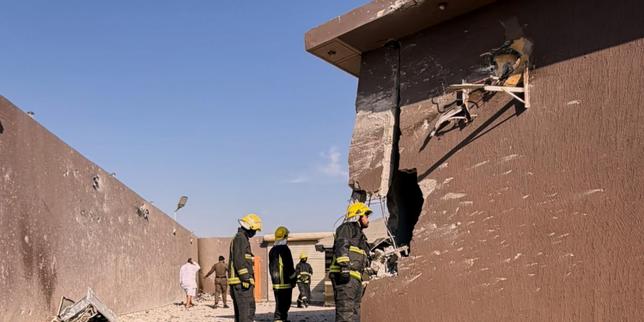
Security voids do not exist in a vacuum; they interact directly with demographic realities and economic recovery indices. The southern sector of Lebanon faces a staggering reconstruction deficit. Following extensive military operations, infrastructure—including potable water networks, electrical grids, agricultural land, and housing stock—remains severely degraded.
The rate of civilian return and internal displacement reversal is directly tethered to perceived security predictability. When the operational environment is guarded by an impartial international presence, displaced populations calculate risk based on fixed institutional parameters. As that presence withdraws, the perceived risk premium skyrockets, stalling capital investment, deterring agricultural rehabilitation, and suppressing permanent repopulation.
Farmers and local merchants in border districts cannot commit capital to replanting or rebuilding while facing an unmonitored military frontier. The economic cost of the security void is therefore measured in protracted displacement, permanent brain drain from the southern provinces, and the entrenchment of a war economy that inhibits national recovery.
Strategic Forecast
The transition past December 31, 2026, marks the end of an era of managed friction along the Blue Line. Without an international monitoring body possessing genuine operational independence and financial backing, southern Lebanon will transition into a high-risk security market characterized by bilateral deterrence and frequent localized escalations.
To mitigate total destabilization, policymakers must abandon the illusion that a purely domestic military force can absorb a multi-decade multilateral mission without massive material and political augmentation. International actors committed to regional stability must pivot from debating withdrawal timelines to structuring an adequately funded, highly mobile, and genuinely impartial observer framework that preserves a transparent ledger of border activity. Absent such a mechanism, the region faces an era defined entirely by unmitigated operational freedom for the strongest actor on the ground.